· Vol. 1, No. 1 · Port Angeles, Wash.

The Albright Daily News

Local · Markets · AI · Tech · Weather — for Albright Networks

The Daily Grind

The Daily Grind ☕️ Run To Him Not From Him

Listen

Good Morning! ☕️ We get to do this! Let’s make Heaven crowded!

Have you ever let guilt or shame keep you from coming to God? Here’s the good news! He sits on a throne of grace, and He’s inviting you to come boldly. Mercy and grace are waiting to help in your time of need!

Don’t run away. Run to Him. Whatever you’ve been carrying today, remember, you can come with confidence! - Pastor Jimmy

Source: Jimmy Pruitt / The Daily Grind · Read the original

West Coast Bible Study · WCBS

Humility and Trust in God's Inscrutable Ways

2026-11-09 · Amateur radio Bible study

TL;DR
  • The reading: Psalm 131 (read by George, K1KOY) is a short psalm about humility before an infinite God whose ways finite people cannot fully understand. Humility is pictured as lowering yourself before God rather than lifting yourself up in pride, and trusting Him even when His providence makes no sense to you.
  • The weaned child: just as a weaned child has to trust a parent who withholds milk, believers must trust God when He withholds comforts or changes their circumstances. The group saw this as God's tool for maturity and Christ-likeness, not a sign of His absence, and said surrender comes before real hope.
  • Examples and practice: David refusing to kill Saul showed trust in God's timing; the Pharisee and the tax collector showed that God resists the proud and gives grace to the humble. Practically, focus on the duties inside your own sphere rather than fretting over national or world events, and take the long view that present distress can serve eternal good.

The study focused on Psalm 131, a short psalm emphasizing the need for humility in the face of God's infinite wisdom and the inscrutability of His ways. The discussion highlighted that as finite creatures, humans cannot fully comprehend the infinite Creator, making it essential to trust God even when His actions or providences are not understood. The text was read by George, K1KOY, and the group explored the concept of lowering oneself before God rather than lifting oneself up in pride.

Participants discussed the metaphor of a weaned child, noting that just as a child must trust a parent when weaned from milk, believers must trust God when He withholds comforts or changes circumstances. This process is seen as a means to maturity and Christ-likeness. The study connected this to the example of David, who trusted God and refrained from killing Saul despite having the opportunity, demonstrating that God's promises are fulfilled in His timing, not ours.

The conversation extended to practical applications, such as focusing on actionable responsibilities within one's sphere of influence rather than worrying about global or national matters beyond personal control. The group also referenced the parable of the Pharisee and the tax collector to illustrate that God resists the proud but gives grace to the humble. The session concluded with a reminder to take a long-range view of life, trusting that God's purposes are for eternal good rather than immediate comfort.

Read / listen on WCBS · Archive

Source: wcbsdev.albrightnetworks.com

Clallam County Watchdog

Smoke and Mirrors Goes to Court

TL;DR
  • The fight: Luminary Resorts’ Grouse Glen project (32 mirrored cabins + events center off Hwy 101 between Forks and Lake Crescent) got a conditional-use approval on March 4 with 23 conditions. The developer is in Clallam County Superior Court under LUPA trying to kill four of them.
  • The four limits at issue: 20 cabins instead of 32; season April 1–Sept 30 (not year-round); no mirrored/reflective exteriors; community center for registered cabin guests only — not a public wedding/event venue for up to 122.
  • County stance: the Oct 23 response brief defends all four and asks for dismissal with prejudice, stressing that 19 neighbors’ sworn testimony is “evidence,” including Heather Cantua’s winter-storm notes for the Sol Duc Valley.
  • Next: hearing Thursday, Nov 12 at 2:30 p.m. before Judge Simon Barnhart at the Clallam County Courthouse; open to the public. CC Watchdog’s point — showing up mattered enough that the County is still leaning on that record in court.

Neighbors spoke. The Hearing Examiner imposed limits. The developer sued. Now Clallam County is telling a judge that residents’ sworn testimony matters: “This is evidence.” On November 12, the fight over Grouse Glen’s resort proposal moves into Superior Court.

Check your ballot status here . Read how to cure a challenged ballot here .

The Resort That Didn’t Get Everything It Wanted When CC Watchdog published “Smoke and Mirrors” on February 10 , the question was straightforward: What happens when a developer proposes a sizable resort in the middle of a quiet rural neighborhood?

Thanks to Heather Cantua , who shared the court filings and provided this update, we now know the next chapter. The resort received approval—but not on the developer’s preferred terms. Those restrictions are now being challenged in court.

Grouse Glen sits off Highway 101 between Forks and Lake Crescent. The neighborhood consists of 23 five-acre parcels, many with homes, reached by a single private gravel road maintained by residents.

Luminary Resorts, through 9999GrouseGlen LLC , purchased roughly 21 forested acres in the middle of that neighborhood, with the shared road running through the property.

The original proposal called for 32 mirrored cabins, saunas, pickleball courts, a 4,800-square-foot community center, and a 50-space overflow parking lot. The community center could accommodate weddings and events of up to 122 people. The original layout included eight vehicle connections to the road residents use to get home.

Four Conditions the Developer Wants Gone Residents testified at the February hearing about the road, fire and emergency response, wells, rural character, and elk moving through the property.

On March 4, the Hearing Examiner approved the conditional use permit with 23 conditions. Four are at the center of this appeal:

20 cabins instead of 32.

An operating season of April 1 through September 30 , rather than year-round use.

No mirrored or reflective cabin exteriors.

A community center limited to registered cabin guests , rather than a public event venue.

The distinction matters. The County did not reject the resort. It approved a smaller, seasonal project with restrictions intended to address its surroundings.

The developer wants those four limits removed.

“This Is Evidence” The company challenged the decision under Washington’s Land Use Petition Act in Clallam County Superior Court .

Its petition argues that the disputed conditions exceed the County’s authority and amount to unconstitutional demands on the project.

Lupa 26 2 00261 05 Petition 2026 03 24 3.37MB ∙ PDF file Download Download In short, the developer contends that the restrictions lack the required legal justification.

The County disagrees.

In its October 23 response brief , Clallam County defends all four conditions and asks the court to dismiss the petition with prejudice.

Brief 10 29 2026 12 585KB ∙ PDF file Download Download One passage deserves particular attention. Defending the seasonal restriction, the County emphasizes that nineteen witnesses testified under oath about specific facts they had observed. Its blunt conclusion: “This is evidence.”

The brief also cites Cantua’s testimony about winter storms in the Sol Duc Valley.

For residents wondering whether showing up accomplishes anything, there is your answer. Their testimony became part of the record. It helped support permit conditions. And now the County is relying on it in court.

That does not guarantee the conditions will survive. It does show that public participation was more than a box checked before approval.

The November 12 Hearing According to Cantua’s update, the hearing is scheduled for Thursday, November 12, at 2:30 p.m. , before Judge Simon Barnhart at the Clallam County Courthouse.

The hearing is open to the public. It is a…

Source: ccwatchdog.com

Clallamity Jen

11/9/26 Voting & Top 5 Update

TL;DR
  • Still not over: as of end of day Monday, Nov. 9, Clallam County had 12,731 uncounted accepted ballots, enough to swing local races. Only 48% of ballots have been counted, up from 45% Friday evening.
  • Ranking: Clallam rose to #2 on Jen's statewide list of counties with the most uncounted accepted ballots, behind King (22,514) and ahead of Thurston (11,131), Walla Walla (10,568) and Stevens (10,346). Spokane and Skagit dropped off the list.
  • What to do: returned and accepted ballots are still around 69%; challenged ballots are down to 337, so check your ballot status. Ballots are accepted through Nov. 23 and certification is Nov. 24. Her video walks through the West End Voter site and the county Agendas & Minutes site, and she'll post Tuesday's numbers next.

Happy New Week!

Today’s important number: 12,731.

That’s the number of uncounted accepted ballots in Clallam County at the end of day on Monday, November 9th. Counted ballots are now at 48%, up from 45% on Friday evening.

That’s also enough ballots to make a difference in the local races. So, it still isn’t over.

It is an improvement from the nearly 16,000 uncounted accepted ballots on Friday, but the process is dragging out longer than necessary. Meanwhile, the majority of counties in the state are getting ballots counted and not keeping their voters waiting on results. The majority isn’t everyone though; there are a few stragglers along with Clallam.

Clallam has now moved into the #2 position in my top 5 ranking — and that’s nothing to brag about.

Top 5 Counties with Uncounted Accepted Ballots as of 11/9/26:

1. King = 22,514

2. Clallam = 12,731

3. Thurston = 11,131

4. Walla Walla = 10,568

5. Stevens = 10,346

Walla Walla and Stevens moved up from 6th and 7th while Spokane and Skagit dropped out of the running. Good job to them; maybe Clallam will join them someday.

Returned and accepted ballots in Clallam are both in the 69% range, so they haven’t increased much.

Challenged ballots have dropped down to 337. Please check your ballot status here or here. Certification is on November 24th and ballots are accepted until November 23rd.

Here’s my latest video going over the numbers. I also review the West End Voter website again along with the county’s Agendas and Minutes website so people know where to find meeting information for past and future meetings.

[https://substackcdn.com/image/youtube/w_728,c_limit/l_youtube_play_qyqt8q,w_120/17gUJ9fSM7w]

Resource Links:

* West End Voter data website: An independent, nonpartisan look at ballot returns, counting progress and precinct-level results, focused on the West End of Clallam County, Washington.

* Clallam County Meetings Agendas & Minutes (where to find all county meeting events, including Board of Commissioner meetings, along with agendas, minutes, and videos of past meetings)

* Clallam County Elections & Voter Registration (includes Auditor contact information and elections center livestream link)

* Clallam County 2026 November General Election (includes information about resolving challenged signatures)

* Clallam County Unofficial Results Election Statistics (updated once a day around 5pm)

* Washington State Ballot Return Statistics (updated once a day around 5pm):

I’ll review the end-of-day data again on Tuesday night.

Have a great day, everyone!

Clallamity Jen

Source: clallamityjen.substack.com

The Verge

Everything we know so far about the Nvidia spy scandal targeting CEO Jensen Huang

TL;DR
  • The core facts: Jensen Huang has admitted an affair with Megaspeed executive Alice Huang (no relation), whom U.S. intelligence reports since last year have identified as a spy for China's Ministry of State Security. Nvidia has opened an investigation.
  • Why it matters: Nvidia is central to the Trump administration's AI push and to talks over Chinese access to advanced chips, and it uses its $4 trillion-plus market cap to fund other AI companies, including neoclouds like CoreWeave that are among its biggest customers.
  • Where it stands: Nvidia and Huang say they have "no reason to believe" national security or company secrets were compromised, but questions continue as the probe runs. The Verge's hub collects coverage, including Trump's comments and what China could gain.

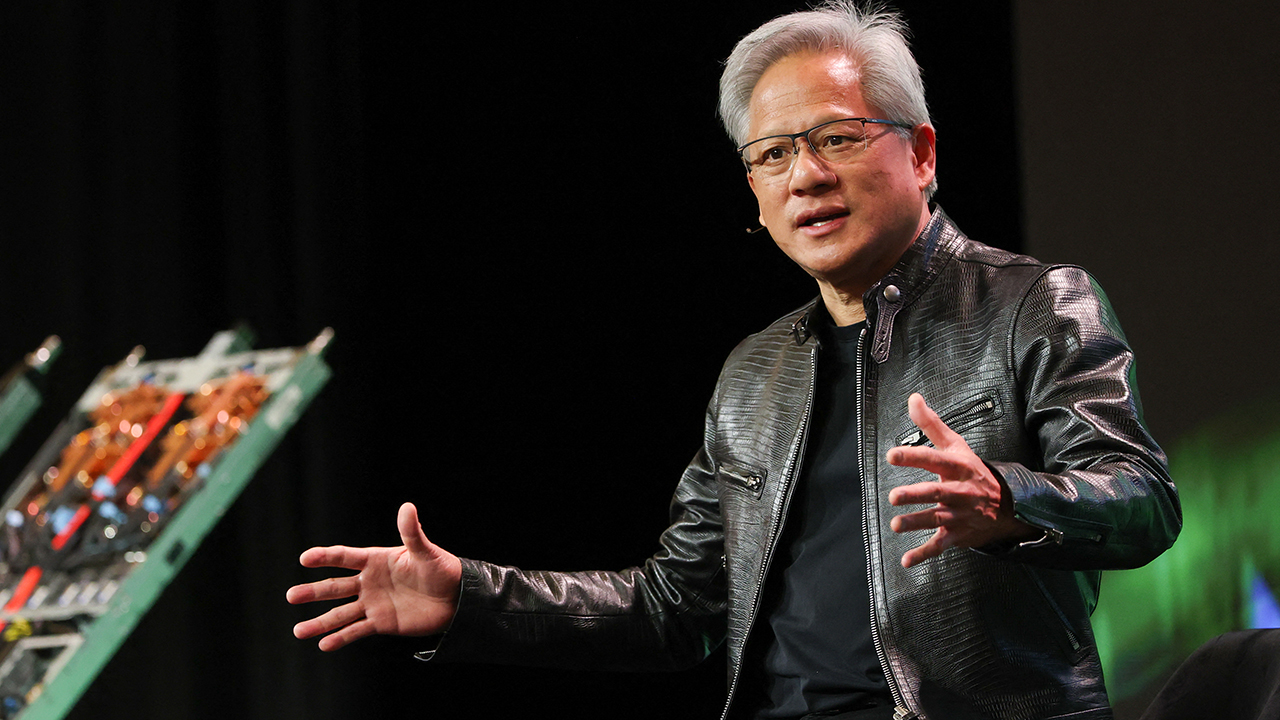
The leather-jacketed CEO of Nvidia, Jensen Huang, has acknowledged an affair with Megaspeed exec Alice Huang, spurring an investigation by his company and intense discussions worldwide. Recent reporting noted that since last year, US intelligence reports had identified Alice Huang (no relation) as not only the exec for an AI compute company renting access to Nvidia GPUs, but also a spy for China’s Ministry of State Security.

In recent years, Nvidia has become a key part of the Trump administration’s AI push, a central figure in negotiations over potential Chinese access to cutting-edge AI hardware, and a company that has used its now $4 trillion-plus market cap to finance other AI companies, including the “neoclouds” like Coreweave who have been some of its biggest customers. So far, Nvidia and Jensen Huang have said that they have “no reason to believe that either national security or NVIDIA secrets were compromised,” but that hasn’t settled things as the investigation continues.

Here’s what Trump said he knew about Jensen Huang

What could China get from Jensen Huang?

The future of AI hinges on… Jensen Huang’s sex…

Source: The Verge

Letters from an American

November 8, 2026

TL;DR
  • Richardson's argument: Trump's flood of posts since Democrats' midterm sweep (calling oversight a crime, ordering the Justice Department to investigate Democrats, saying 'SLEAZEBAGS should go to jail,' and claiming Dan Sullivan won Alaska by adding up every non-Peltola vote) shows he fears what investigations will expose. Her verdict: 'It feels desperate.'
  • Context: The Washington Post reports that incoming Democratic committee chairs are hiring prosecutors who were fired from or left the Justice Department. On CNN, AG Todd Blanche couldn't tell Dana Bash what crime Democrats were committing by promising oversight.
  • History lesson: Johnson's pardons of Confederate leaders bred the Lost Cause myth, and Ford's pardon of Nixon ('When the president does it… it is not illegal'), the Iran-Contra pardons William Barr backed, and the 2024 Trump v. United States immunity ruling all eroded the idea that no one is above the law.
  • Conclusion: accountability is not revenge. The rule of law is nonpartisan, and she quotes Thomas Paine: 'in America the law is king.'

Since Democrats' sweeping midterm victories on Tuesday, Heather Cox Richardson writes, President Trump has been posting increasingly provocative material on social media, apparently to pull attention away from the winners and back to himself. Underneath the noise, she argues, are signs that he is deeply worried about anyone getting a look at how his administration has operated.

On Saturday Trump claimed Democrats are "threatening a lot of people…just because they happen to be Republicans," called their promised investigations crimes in themselves, and said he is ordering the Justice Department to investigate. He insisted "there have been no impeachable acts committed, or even thought of," called the Democrats "SLEAZEBAGS" who "should go to jail," and urged the Senate to "act" before Republicans lose more elections "and worse." Richardson reads that "worse" as fear that a House impeachment could this time end in Senate conviction. In Alaska, where Democrat Mary Peltola leads, Trump added Republican Dan Sullivan's votes to those of every other non-Peltola candidate and declared, "Dan Sullivan WON, BY A LOT!" Her verdict: "It feels desperate."

She cites a Washington Post report by Perry Stein and Jeremy Roebuck that congressional Democrats are already staffing the committees they will lead in January, hiring from the large pool of career prosecutors fired from or driven out of the Justice Department during Trump's second term. She quotes a social media user: Trump "purged DOJ to bury the evidence and instead handed Congress a staff of people who know exactly where everything is filed… It just changed employers."

Attorney General Todd Blanche, she says, seemed rattled on CNN on Sunday. Asked by Dana Bash what crime Democrats commit by promising oversight, he couldn't name one; asked whether Democrats should be jailed, he said it depended on what they had done; and he played down the department's cases against Trump's perceived enemies as a few among thousands. Richardson's core point is that accountability is not revenge. It is fundamental to the rule of law.

Most of the letter is history showing what happens when accountability is skipped. After Appomattox in 1865, Ulysses S. Grant let Confederate soldiers go home on a promise not to fight again, a humane and practical act since the South was starving. Andrew Johnson then pardoned all but about 1,500 Confederate leaders for partisan reasons. Never held to account, they recast Grant's mercy as proof their cause was right. By 1871 former Confederate secretary of state Robert Toombs was being quoted in northern papers urging property requirements to keep poor and Black men from voting. Within a decade the "Lost Cause" myth had whitewashed a slaveholders' rebellion into a stand against federal overreach, and it carried racism forward for more than a century, down to the Confederate flags carried into the Capitol in 2021.

She traces the same pattern after Gerald Ford's preemptive pardon of Richard Nixon. Even though the 1915 Burdick decision held that accepting a pardon implies guilt, Nixon never took responsibility, blamed the press, and told David Frost in 1977, "When the president does it, that means that it is not illegal." Next came Iran-Contra, where Reagan aides sold marked-up arms to Iran and secretly funded the Contras, and the Reagan-era Office of Legal Counsel's "unitary executive" theory. William Barr, who as OLC head in 1989 warned against "legislative encroachments" on presidential power, later backed George H.W. Bush's pardons of eleven Iran-Contra officials. Independent counsel Lawrence Walsh warned that those pardons showed "powerful people with powerful allies can commit serious crimes in high office… without consequences."

Barr later served as Trump's first-term attorney general. After Trump was indicted on 40 counts over classified documents and four over the 2020 election, the Supreme Court ruled on July 1, 2024, in Trump v. United States, that presidents have immunity for official acts. Richardson says that ruling shattered the principle that no one is above the law, and that Trump has since used it to turn the government on his enemies. Now that investigations may reach conduct outside official duties, he is trying to persuade Americans that enforcing the law is a partisan attack.

Her conclusion is that it is the opposite: the true rule of law is nonpartisan and is the founding principle of American government. She closes with Thomas Paine's Common Sense: "in America the law is king… and there ought to be no other."

Source: heathercoxrichardson.substack.com

9to5Mac

Canadian court certifies class action against Apple over Google search deal

TL;DR
  • What happened: a British Columbia Supreme Court judge (Justice Thomas) certified a class action alleging Apple's Safari default-search deal with Google stifled competition and let Google overcharge for search ads. Apple is now the only defendant after the plaintiff, Spark Event Rentals, dropped Google over an arbitration clause.
  • The theory: Apple could have built its own search engine but didn't because Google paid it billions in revenue share. The judge cited Eddy Cue's and John Giannandrea's testimony from the U.S. DOJ trial as "some basis in fact" for that inference, while agreeing the plaintiff "cherry-picked" evidence.
  • Stakes: the class covers Canadian residents who bought Google search ads since 2005, with punitive damages allowed to proceed. Certification is not a finding of wrongdoing; Apple calls itself an "innocent bystander," and no trial date is set.

A British Columbia Supreme Court judge has certified a class action against Apple over allegations that its search agreement with Google stifled competition and inflated advertising prices. Here are the details.

Source: 9to5Mac

Brian Roemmele Report

The Score That Cannot Be Gamed.

TL;DR
  • The idea: Roemmele links Pentti Kanerva's 1988 NASA Sparse Distributed Memory to Muir, posted on arXiv November 5, 2026. Kanerva's design used 1,000-bit addresses but only about a million physical locations, with recall by majority vote of nearby traces. Both rest on the same rule: the memory stays a fixed size no matter how long the document grows.
  • Muir's claims (author-reported): a 1.34B-parameter model streams 10 million tokens from a 25 MB float32 state, where a same-size Transformer would need a 2.1 TB KV cache; the authors' own Transformer baseline ran out of memory at 128K tokens. Recovery of a hidden passkey at 1M tokens was about 90% with no extra training and 99.4% after a 64K-token cooldown, and the model trained about 2.7x faster than a Transformer at 32K tokens.
  • Caveats and the test: the weights are unreleased and the work is not peer-reviewed. Roemmele proposes a local "Fixed Desk" test, logging RAM and KV cache across long windows on open recurrent-state models such as Qwen3 hybrids, plus a Passkey Check and a "Kanerva's Desk" write-erase-retrieve SuperPrompt. The payoff would be local agents that hold a whole archive in fixed RAM.

In 1988 Pentti Kanerva published Sparse Distributed Memory from NASA Ames Research Center under contract NCC2-408. MIT Press issued it as a Bradford Book.

The design treats addresses as long binary strings. In the account that became standard, those addresses run 1,000 bits, a space of 2^1000 patterns, while only about a million physical locations are ever built.

A write places the same pattern into every hard location that falls inside a Hamming-radius neighborhood of the given address. A read presents a cue, activates the same neighborhood, and lets the stored traces vote by majority. A cue that is only close is enough. In the early demonstrations a noisy circle cleaned itself toward a stored prototype. A sequence stored as successive Roman numerals continued forward when cued from the middle.

The same year a Stanford-NASA prototype used 256-bit addresses and from 8,000 to 128,000 ordinary DRAM locations. The physical size of the memory was fixed. What it could recall was not.

On November 5th 2026 Tushaar Gangavarapu, Gil Tabak, and Clemens JS Schaefer posted Muir on arXiv. The name points to the redwoods at Muir Woods whose rings keep centuries of history in a fixed circumference. Their 1.34-billion-parameter model reads streams of ten million tokens from a working state of 25 megabytes in float32. The authors calculate that a Transformer of the same size would require a 2.1-terabyte bfloat16 key-value cache to attempt the same stream; their own Transformer baseline ran out of chip memory at 128,000 tokens.

The model was trained on sequences of 4,096 tokens. On author-reported tests its next-token score held without drift out to the ten-million-token window. A static-readout variant recovered a hidden passkey near 100 percent of the time at one million tokens (about 90 percent with no extra training, 99.4 percent after a short 64,000-token cooldown).

The earlier Gated DeltaNet-2 design collapsed past 4,000–8,000 tokens. Training throughput matched the gated-delta baseline and ran about 2.7 times faster than the Transformer at 32,000 tokens. All of these figures are the authors’ measurements. The weights have not been released. The work has not yet been peer-reviewed. The largest model remains 1.34 billion parameters.

Muir belongs to the linear-attention family that folds every token seen so far into a fixed matrix. Slow-decaying rows of that matrix accumulate large norms and drown quieter traces from earlier in the stream. The usual remedy is stronger erasure at write time, which discards the quiet traces. Muir’s matched-filter readout multiplies the query by a learned gain that re-weights the rows before the inner product. Channels that have been growing loud are dialed down; channels that still carry distant signal are dialed up. The first author described the gate the next morning on X as the fix for “100x slow-channel glare” and noted that the model “Streams 10M tokens in a 25MB state.” The paper appeared on the main AI research feed the same day. Recaps were still being updated on 8 November.

I have not seen another modern language model treat Kanerva’s fixed-size specification as an explicit engineering target. The correspondence is not identity. Kanerva worked in binary vectors and Hamming distance; Muir works in continuous channels and learned gates. The shared constraint is the one that matters for machines you own: the memory does not grow when the document grows.

The Fixed Desk is a short local test that measures whether the model on your machine obeys that constraint. Muir’s weights are not public, so the test uses open cousins that already keep a recurrent state, among them the Qwen3 hybrid variants that mix gated-delta layers with ordinary attention. Load a long document in successive windows.

Log the process resident set and the size of any explicit key-value cache after each window. A model that follows the Fixed-State Rule holds the resident set within a few megabytes of its starting value once the window length exceeds the training context. A model that fails the rule shows a linear climb.

The same run also runs the Passkey Check: hide a short unique string near the beginning of a multi-million-token file, then ask for it after the rest of the file has been read. Recovery rate is the only score that counts.

Kanerva’s Desk SuperPrompt turns any long-context model into a write-erase-retrieve journal. At each step the prompt carries three fields: the current compact state, the new observation, and the instruction to erase the prediction that the current state would have made for this observation before writing the new value. Retrieval is performed by similarity to the stored state rather than by position. The prompt is short enough to sit inside the context of models that already run on a laptop.

When a library fits in a fixed 25 megabytes the economics of local archive agents change. Document question-answering no longer prices itself on growing cache. A year of mail, a code repository, or a scanned microfilm run can be held in the same RAM footprint that already stores the model weights. The opportunity is ordinary: agents that answer from the whole archive without renting the next larger cloud instance every time the archive lengthens.

The limit is the one already stated. The published numbers are author-reported, the weights are unreleased, and the largest published model is still research scale.

The Fixed Desk measurement on the machines you already own is the step that does not wait for those weights.

Source: brianroemmele.substack.com

Nate’s Substack

Executive Briefing: If the Data-Center Backlash Leaves Fewer AI Suppliers, Who Will Your Company Rent Capacity From in 2027, and at What Price?

Listen (~15 min)
TL;DR
  • The paradox: on November 3, voters rejected data centers in dozens of local measures, including more than three-quarters in Edgewater, Florida. Yet 65% of U.S. adults used an AI platform in the past week (Edison/SSRS, May, up from 52% in February), while 72% oppose a data center in their own community (ABC/WaPo/Ipsos, October).
  • Nate's prediction: the computing power still has to come from somewhere. Developers who can't survive a delay will sell to cash-rich big operators, who face less new competition, so the backlash hands Big Tech an advantage and makes overbuilding less likely. He also blames Silicon Valley's message that AI automates people's work while its builders get rich.
  • Behind the paywall (preview only): the full briefing has a delay-cost table for a project with $500M of debt, what Canada, the EU, the UK and Singapore offer developers, and a 90-day plan for checking which AI commitments depend on capacity that doesn't exist yet.

The AI buildout had a terrible night on November 3. Across dozens of local ballot measures, voters delivered a resounding rebuke to data-center development. In Edgewater, Florida, unofficial results showed more than three-quarters supporting a prohibition on new data centers.

And Americans are still using AI. A lot.

A May survey from Edison Research at SSRS found that 65% of American adults had used an AI platform in the previous week, up from 52% in February. An October ABC News/Washington Post/Ipsos poll found that 72% opposed a new data center in their community. People are finding AI useful in their own lives while rejecting the infrastructure being proposed down the road.

The computing power has to come from somewhere. It doesn’t come out of the air. If people keep using the services and companies keep buying them, somebody is going to supply the capacity. Where we let that happen determines who gets the investment, who gets the work, and who gets paid every time the rest of us use the technology.

I expect the next two years to reward the companies and communities that can actually deliver that capacity. Developers that can’t afford a delay will have to sell. Bigger operators will be able to buy projects cheaply and face less competition from new facilities. A backlash against the AI industry is giving some of its most powerful companies a very good opportunity.

I had a note after the midterms from a friend who feels left out of the AI race. He doesn’t feel caught up. He worries about his job. And get this: he works at an AI company.

If that’s the world we’re building, we’re doing it wrong. In large measure, Silicon Valley has itself to blame. We’ve had every opportunity to explain why this technology should give people more room to learn, build, earn, and do things they care about. Too often, the message they hear is that AI automates their work and the people building it are getting rich.

A vote against a data center starts to feel like a vote for the American dream. A vote to protect a future in which an ordinary person still has a chance.

You don’t want to be the industry on the other side of that choice.

This briefing covers:

- What a one-year delay costs. A worked table for a hypothetical project carrying $500 million of debt, and the contract terms that decide whether a smaller provider survives the wait.

- How a backlash hands Big Tech an advantage. Why owners who can’t afford the delay end up selling to buyers with cash, and what that means if you rent capacity from a competitor.

- Why overbuilding just got less likely. How slower construction gives demand time to catch up, and how to tell whether a failed developer ran out of customers or cash.

- Where the investment and jobs go instead. What Canada, the EU, the UK, and Singapore are offering developers, and why keeping a data center out of your town doesn’t keep AI out of your workplace.

- A 90-day plan for your AI commitments. How to find which commitments depend on capacity that doesn’t exist yet, test a real alternative, and change the ones that don’t hold up.

We need to think through what happens next, because these choices will affect where we invest, which companies survive, and how much control people have over a technology they’re increasingly using. Start with a company that needs computing power next year and can no longer get it from the project it was counting on.

Source: natesnewsletter.substack.com

Christian Warrior Training

Man Shot Outside Church After Being Called Out of Service

TL;DR
  • The pattern: Greenville, Mississippi police named Jeremiah Jackson, 20, after a worshipper was asked to step outside a church on South Colorado Street around 12:30 p.m. on Sept. 27 and was shot; Jackson is wanted for aggravated assault and was still not in custody. Keith Graves treats unexpected outdoor summons during/after service as a high-risk cue and wants exits and parking lots covered.
  • Terror intel: Islamic State’s al-Naba 571 praised the Oct. 23 Hmoud, Jordan church-funeral attack (9 dead) and urged copycats; a new English IS-linked magazine, “Invade,” also pushes lone-actor attacks. Four IS/Hizballah cases moved in CA/NV/NY/TN courts, and a Utah man was indicted after synagogue-bomb posts; prosecutors say six pipe bombs were seized.
  • Also this week: Chicago firefighter attacked outside a church after a 911 call; Pelzer, SC pastor Tracy Gordon Black faces six child-sex charges; a former Pensacola officer who worked contracted church security faces CSAM/voyeurism counts; Louisiana charged arson at a Caddo Parish Baptist church; a Mexican priest was tortured for three days; and Grand Chute, WI police training at a church sparked false active-shooter rumors.
  • SARs and abroad: Carlsbad, NM and Reno, NV reader reports of men scanning/counting congregations; Nigeria’s CSW says 17 of 37 Easter Sunday abductees from Kaduna churches died in captivity; a West Bengal dedication service was mobbed. Paid CWT extras: Weekly Church Crime Watch PDF and a Holiday Threat Calendar (Nov 9–Jan 7).

Bottom Line Up Front: Christian Warrior Training’s Keith Graves reports that Islamic State media is again pushing lone-actor attacks on churches and Christians — al-Naba issue 571 praised the October 23 funeral attack on St. George’s Greek Orthodox Church in Hmoud, Jordan (nine dead) and urged Muslim youth to copy it wherever they are, while a new English IS-linked magazine, “Invade,” also advocates lone attacks. Four Islamic State and Hizballah cases moved through U.S. federal court in California, Nevada, New York and Tennessee, and a Utah man was indicted after posts about bombing a synagogue and seizures that prosecutors say included six pipe bombs. Reader SARs came in from churches in New Mexico and Nevada. In Chicago a man is charged with attacking a firefighter outside a church after churchgoers called 911. A Pelzer, South Carolina pastor was arrested on six child-sex charges, and a former Pensacola police officer who worked contracted church security faces child-abuse-material and voyeurism counts. Louisiana charged a man with arson at a Caddo Parish Baptist church, and in Mexico a Catholic priest was held and tortured for three days before release.

The title case — and the pattern Graves wants teams to drill — is Greenville, Mississippi: police named Jeremiah Jackson, 20, as the suspect after a worshipper at a church on South Colorado Street was asked to step outside around 12:30 p.m. on Sunday, September 27, and was shot. Jackson is wanted for aggravated assault and was still not in custody when the post went out. Graves’s point is blunt: treating an unexpected outdoor summons during or after service as a high-risk cue, and keeping coverage on exits and the parking lot, is how you stop “called outside and shot” from becoming a weekly script.

On the terrorism side, federal pleas and verdicts keep stacking. Ammaad Akhtar, 34, of Stockton pleaded guilty to attempting to provide material support to the Islamic State after handing an undercover agent cash, guns and gear and swearing allegiance. Joshua Robles, 19, of North Las Vegas pleaded guilty after investigators say he collected IED materials, kept a high-school floor plan and wrote about “lone wolf operations.” A Brooklyn jury convicted Halima Salman of receiving IS military-type training in Syria. Regan Darby Prater of Tullahoma, Tennessee drew 210 months for attempting to support Hizballah and for a napalm arson that did more than $1.2 million in damage, after prosecutors say he passed personal data on more than 35,000 people he believed were tied to the Israeli government. Separately, Skyler AJ Rose of Ogden, Utah was indicted on hate-crime and explosive charges after posts about bombing a synagogue, and Florida arrested Jerry Sneed of Orlando over alleged threats against a Jewish residential community. Europol also said units from 16 countries referred more than 9,000 links tied to terrorist role-play and recruiting inside online games.

Suspicious-activity reports from readers: in Carlsbad, New Mexico, a man let in through locked doors appeared to count worshippers, then fled a dark tan Ford Expedition when a safety team member walked toward him; in Reno, a man scanned the congregation and backed out just before the offering. Violent crime beyond Greenville includes Lamar Brown’s arrest outside True Light Baptist in Chicago’s Grand Crossing after he allegedly attacked a firefighter, a naked-man burglary and battery case near a St. Francisville, Louisiana church hall, and a North Charleston crash into Grace City Church after police say the driver drove toward two people with a child in the car.

Sex-crime and trust cases this week: Pelzer pastor Tracy Gordon Black faces six child-sex charges after defending a registered sex offender’s role in a park ministry; former Pensacola officer Matthew Baxter, who worked contracted security at Echo Life Church, faces child-abuse-material, voyeurism and related counts. Arson: Billy Van St. Andry is charged in the October 18 fire at Arkadelphia Baptist Church in Caddo Parish. A 10-year-old boy was killed in Murfreesboro crossing the road from a Coptic church to retrieve a soccer ball.

Internationally, Fr. Clemente Morales Topete of Culiacán was abducted, beaten and burned over three days before release; Christian Solidarity Worldwide Nigeria said 17 of 37 worshippers abducted from Kaduna churches on Easter Sunday died in captivity; a mob attacked a Church of North India dedication in West Bengal; and Northern Ireland police are investigating a reported assault on Archbishop John McDowell after a funeral. Domestically, Grand Chute, Wisconsin police active-threat training at Pathways Church sparked false active-shooter rumors because the public was not notified in advance — Graves’s reminder to keep force-on-force inside and to warn neighbors.

Paid CWT downloads this week include the printable Weekly Church Crime Watch PDF and a Holiday Threat Calendar covering November 9 through January 7. Graves’s standing advice for U.S. teams: train for lone actors, treat “step outside” summons as a threat cue, staff lots and doors, and do not assume the first responding unit will immediately control the scene.

Source: christianwarriortraining.com

Albright Networks · Olympic Peninsula · Strait WX

806 Heuhslein

Port Angeles, WA
Loading snapshot
—
Observed —
Outdoor temperature
—°F
Feels like —°F
Dew point —°F
Humidity —%
Pressure —inHg
Trend — Abs —

Wind

Speed mph—
Gust mph—
Direction—
Max gust—

Radar · Olympic Peninsula

NEXRAD radar · Olympic Peninsula
—

Outdoor temperature trace

Actual indoor Forecast (WU, cached) Pressure (actual)

Rainfall · actual vs forecast

Actual Forecast (WU, cached)

5-day conditions

WU · glance with rain chart

Rain

Today
—in
Event
—in
Hour
—in
Week
—in
Month
—in
Year
—in
Last rain: —

Solar / UV

Solar radiation
—W/m²
UV index
—

Indoor

Temperature
—°F
Humidity
—%
Feels like
—°F

Battery

Outdoor—
Indoor—

Dungeness River

Height Discharge △Median
USGS 12048000
Height
—ft
—
Discharge
—cfs
—
Albright station · Port Angeles, WA · ported from the StudioM4 WX dashboard · As of — · snapshot taken at each paper deploy (station is LAN-only, so readings are not streamed live)

Cliff Mass Weather Blog · Sun Nov 8, 2026 · 6:12 PM PT

Forecast Triumph

Yesterday, a strong front, associated with strong winds gusting to 40 mph or more, moved through the region, resulting in numerous power outages.

As I will describe below, numerical weather models predicted this event with great skill, something we could not have done 20 years ago.

This is a triumph of modern weather prediction technology.

Let me demonstrate this to you.

Below is the radar image around 4 PM Saturday, based on the radar observations from the Langley Hill radar near Hoquium. An intense radar return was apparent offshore (the thin yellow and red line, indicated by the red arrow). This is the front.

Fronts associated with a narrow, cold frontal rainband were first described by UW researchers, such as Professor Peter Hobbs and associates.

Figure 1 from Cliff Mass: Forecast Triumph

Even more impressive is a video of the cold front approaching the coast (from a wonderful phone app called RadarScope).

Figure 2 from Cliff Mass: Forecast Triumph

Here is a forecast of a simulated radar image, made 24 hours (from 4 PM) before the event is shown below. It was made by the UW WRF model run by my group.

Almost perfect. Very strong simulated front.

Figure 3 from Cliff Mass: Forecast Triumph

A closer-in view is below.
Figure 4 from Cliff Mass: Forecast Triumph

A forecast made 60 hr before the event was virtually the same. Strong front in the same location

A forecast made on Thursday evening, showing the strongest near-surface wind gusts, indicating strong winds over the region. Strong enough to worry about.

Figure 5 from Cliff Mass: Forecast Triumph

The winds for Seattle made for Seattle City Light as part of the UW WindWatch system were clearly accurate, showing the threat of strong wind (the black dots are the strongest observed with the city; the gray and colored lines indicate model forecasts)


Figure 6 from Cliff Mass: Forecast Triumph

The models were very, very clear.

There was a prediction of 30-45 mph winds over the city. And that means power outages, particularly early in the storm season.

Such an emphatic forecast by the models was the reason I blogged about it on Friday, making it clear that some would lose power.

In fact, over 100,000 customers lost power over western Washington last night (see below).

Figure 7 from Cliff Mass: Forecast Triumph
And over 46,000 customers in Seattle lost their lights.

Figure 8 from Cliff Mass: Forecast Triumph


This kind of skillful forecasting occurs time and time again, based on highly skillful weather model forecasts.

Another reminder that it is no longer appropriate to make fun of forecasters and weather models. 😀

Figure 9 from Cliff Mass: Forecast Triumph

No longer appropriate

Source: Cliff Mass Weather Blog

Cliff Mass Weather Blog · Fri Nov 6, 2026 · 8:35 PM PT

A SuperFront Will Cross the Northwest This Weekend

Most weather fronts that cross the region are unremarkable due to their passage over the relatively warm, uniform waters of the northeast Pacific.

This weekend will be different: a SuperFront will make landfall late tomorrow (Saturday).

Some of you will lose power.

Let me show you simulated radar images for three times: 10 AM, 4 PM, and 9 PM on Saturday from the UW high-resolution forecast system (from the 4-km grid-spacing domain). Red indicates very strong winds, followed by yellow. The arrows point to the frontal locations.

Figure 1 from Cliff Mass: A SuperFront Will Cross the Northwest This Weekend
Wow. Very intense, sharp front. Very heavy rainfall.

The high-resolution 1.3 km simulation run by my group at the UW produced an even more intense front (forecast around 8 PM shown). Very impressive.

Figure 2 from Cliff Mass: A SuperFront Will Cross the Northwest This Weekend

What about the predicted winds?

The City of Seattle supports the most high-tech wind prediction system in the country (called SeattleWindWatch, run at the UW), which includes an ensemble of many wind predictions for estimation of the uncertainties.

The forecast below is for the winds over Seattle. Several of the simulations predicted winds reaching 40 mph. Over the water, winds could be stronger,

Winds will rev up after dinnertime and peak overnight.

Figure 3 from Cliff Mass: A SuperFront Will Cross the Northwest This Weekend
Such strong winds, this early in the wind season when some leaves are still on the trees, mean power outages.

As noted above, wind will be strongest over the water (see forecast below for 4 AM). I suspect most of the power outages will be in such areas.

Figure 4 from Cliff Mass: A SuperFront Will Cross the Northwest This Weekend

For the whole region, the strongest winds will be on the coast (see map of strongest wind gusts below). Importantly, there will be areas of intense gusts on the lee/downstream side of some of our highest terrain, including the eastern slopes of the Cascades.

Figure 5 from Cliff Mass: A SuperFront Will Cross the Northwest This Weekend

In addition to wind, the front should bring substantial ( and welcome) precipitation to the region, with the total through 4 AM Sunday shown below

Figure 6 from Cliff Mass: A SuperFront Will Cross the Northwest This Weekend


So, if you live west of the Cascades, get your meteorological popcorn out and be prepared for a dramatic meteorological show later tomorrow and early Sunday.

Source: Cliff Mass Weather Blog

Cliff Mass Weather Blog · Thu Nov 5, 2026 · 9:41 PM PT

Wind, Waves, and Wet

This weekend, we will "enjoy" the meteorological trifecta of winds, coastal waves, and substantial precipitation.

Figure 1 from Cliff Mass: Wind, Waves, and Wet

First, the winds.

The forecast sea level pressure for Sunday at 10 AM predicts a strong 994 hPa low center to west of the Washington coast.

Figure 2 from Cliff Mass: Wind, Waves, and Wet
The associated winds (below) are impressive, with sustained winds of 50-60 knots to the south and west of the low center. This is known as the "poisonous tail" in the weather business.
Figure 3 from Cliff Mass: Wind, Waves, and Wet
Figure 4 from Cliff Mass: Wind, Waves, and Wet

Such strong winds over a large area (large fetch) will produce large waves that will reach our coast later this weekend (see below). These waves will climb to 45 feet offshore and over 20 feet on our coast.

Figure 5 from Cliff Mass: Wind, Waves, and Wet
Figure 6 from Cliff Mass: Wind, Waves, and Wet
There will be good wave watching on the Washington coast on Sunday.

As the low moves northward up the coast on Saturday and Sunday morning, wind gusts will increase along the Washington coast and over the western Washington interior

The forecast gusts at 4 AM Sunday are shown below. Strong gusts (50 kt and more) on the coast; 30- 45-knot gusts in the interior, particularly near the water.

Figure 7 from Cliff Mass: Wind, Waves, and Wet

The UW runs perhaps the most sophisticated wind prediction system in the country for Seattle City Light (called WindWatch), and it is predicting 40 mph gusts in Seattle on Saturday night and early Sunday. (see below)

Figure 8 from Cliff Mass: Wind, Waves, and Wet

As the first major blow of the season, with lots of vegetative growth over the summer, there will be power outages.

My "pro-tip": charge up your electronics and lights on Saturday. You won't regret it.

Finally, there is the wet part of the upcoming weather.

Below is the predicted precipitation accumulation through Monday at 4 AM. Very wet in the Olympics and the northern Cascades. Plenty elsewhere. Reservoirs will begin to fill.

Figure 9 from Cliff Mass: Wind, Waves, and Wet

This is just the beginning of the wet/stormy season in the Northwest, with a lot more on the way. Typical November conditions, and there is no going back.


Source: Cliff Mass Weather Blog

BTC$74,261-0.01%
GOLD$4,080.80-0.82%
OIL$85.72-1.30%
AAPL$350.69+2.43%
NVDA$178.67-4.27%
MSFT$545.18+2.75%
AMZN$266.93+2.94%
SPCX$142.07+5.81%
BTC $74,261 -0.01%

Source: https://www.coinbase.com/price/bitcoin | https://api.exchange.coinbase.com/products/BTC-USD/candles?granularity=21600

GOLD $4,080.80 -0.82%

Source: https://www.cnbc.com/quotes/%40GC.1 (futures continuous)

OIL $85.72 -1.30%

Source: https://www.cnbc.com/quotes/%40CL.1 (futures continuous)

AAPL $350.69 +2.43%
NVDA $178.67 -4.27%
MSFT $545.18 +2.75%
AMZN $266.93 +2.94%
SPCX $142.07 +5.81%

Quotes refreshed with this edition. Stocks show Monday’s close (Mon Nov 9); gold and oil are CNBC futures quotes; BTC trades around the clock.

Market News

CNBC ·

Brent crude falls below $90 for first time since August on Iran war de-escalation hopes

CNBC photo: Brent crude falls below $90 for first time since August on Iran war de-escalation hopes
TL;DR
  • Brent crude slipped below $90 a barrel for the first time since August, down 2.65% at $90.14 early Tuesday; U.S. WTI fell 2.4% to $84.78.
  • The trigger: Trump said Monday after meeting Qatar's prime minister that the Iran war could end "fairly soon," that Tehran is "talking very politely," and that "Iran militarily is effectively over."
  • Context: Brent began 2026 near $60, spiked as high as $130 during the March–April strikes, and has whipsawed with every shift in the nearly nine-month U.S.-Israel conflict with Iran.
  • Hormuz flows have largely recovered, but a refining shortage worsened by Houthi attacks on Saudi Arabia and the Russia-Ukraine war has kept diesel, gasoline and jet fuel expensive.
  • Trump and JD Vance have acknowledged the unpopular war and high energy prices hurt Republicans in last week's midterms; the U.S. made only "minor strikes" after missiles hit Qeshm Island.
  • ING says the market is unwinding its geopolitical risk premium as Gulf barrels return and Iran reportedly softens on Hormuz control, but prices stay sensitive to Middle East news.
  • Skeptic: FGE chairman Fereidun Fesharaki sees no bridgeable deal — the U.S. wants all enriched nuclear material out and a fully open Strait — and says Trump must either declare victory or go to war within about two weeks.

Bloomberg ·

ECB's Kazāks Sees Rate-Hike Judgments Getting ‘More Nuanced’

TL;DR
  • (Source: Bloomberg) Latvia Central Bank Governor Mārtiņš Kazāks said further monetary tightening may be necessary if elevated energy prices persist and risk spilling into broader inflation.
  • Latvia Central Bank Governor Mārtiņš Kazāks said further monetary tightening may be necessary if elevated energy prices persist and risk spilling into broader inflation.
  • In an interview with Bloomberg TV on Tuesday, he added that policy trade-offs are becoming increasingly nuanced as officials have to balance price stability against the danger of undermining economic growth.

Bloomberg ·

'Marry the House, Date the Rate' Backfires for Stuck Homeowners

TL;DR
  • “Marry the house, date the rate.” The idea, boosted by Realtors, mortgage bankers and influencers as interest rates started rising in 2022, was that buyers shouldn’t worry too much about loan costs.
  • (Source: Bloomberg) “Marry the house, date the rate.” The idea, boosted by Realtors, mortgage bankers and influencers as interest rates started rising in 2022, was that buyers shouldn’t worry too much about loan costs.
  • Focus instead on getting the house you want, then refinance when rates inevitably came down.
  • Michelle Amponsah reports.

CNBC ·

China's goods surplus tops $1 trillion for a second year amid calls for Beijing to rebalance trade

CNBC photo: China's goods surplus tops $1 trillion for a second year amid calls for Beijing to rebalance trade
TL;DR
  • China's trade surplus hit $1.04 trillion for the first 10 months of 2026, topping $1 trillion for a second straight year with two months to go (2025's full-year record was $1.2 trillion).
  • October exports jumped 35.2% from a year earlier, beating the 33.5% forecast, driven by global demand for Chinese-made AI hardware.
  • Imports soared even faster, up 41.6% — the strongest since May 2021 — on AI-related tech goods (high-tech imports up 72% by value), copper and energy (crude up ~41%, LNG ~50%, coal ~60%), so surplus growth slowed to a six-month low.
  • Trading partners and the IMF keep pressing Beijing to rebalance toward domestic consumption; September retail sales grew just 1.1% while exports carry the 4.5%-5% growth target.
  • Exports to the U.S. rose 32.9% (a $32.7 billion monthly surplus) off a tariff-depressed base; the U.S.-China truce expires in January and Xi and Trump meet at APEC in Shenzhen next week.
  • Shipments to the EU grew 24.4% as EU imports fell, widening that surplus to $33.4 billion; the EU's new 350,000-car cap on Chinese hybrids (from Dec. 1) sits well below China's current 800,000 annualized pace.
  • Citi sees export growth slowing to about 8% in 2027 as base effects fade and AI investment moderates.

CNBC ·

Nvidia stock edges higher as investors weigh potential fallout of CEO's affair with alleged spy

CNBC photo: Nvidia stock edges higher as investors weigh potential fallout of CEO's affair with alleged spy
TL;DR
  • Nvidia shares were up about 1.8% in premarket trading Tuesday (as of 4:40 a.m. ET) after closing more than 4% lower on Monday.
  • Monday's drop followed Jensen Huang's email to staff admitting he had been "unfaithful" to his wife and had "fallen short" of his responsibilities as CEO.
  • He reportedly had an affair with Alice Huang, an executive at Nvidia customer Megaspeed, whom U.S. officials concluded was "a Chinese intelligence asset" possibly steering advanced Nvidia AI chips to China (New York Times, Oct. 29).
  • Trump said Monday the FBI is looking into it "in terms of something else," that he'd been reading about it "over a period of time," and that he thinks Huang "will be in good shape."
  • Why it matters for the stock: the Times report said she was possibly steering advanced chips to China, which ties the scandal directly to export-control policy, a sensitive area for Nvidia's China sales and its standing in Washington.
  • The modest rebound suggests investors are, for now, treating the scandal as a governance and political risk rather than a hit to Nvidia's chip business.

CNBC ·

FDA warns of vision loss risk linked to popular GLP-1 drugs like Wegovy, Zepbound

CNBC photo: FDA warns of vision loss risk linked to popular GLP-1 drugs like Wegovy, Zepbound
TL;DR
  • The FDA is requiring new safety warnings on all GLP-1 drugs (Wegovy, Ozempic, Zepbound, Mounjaro and others) for a possible increased risk of NAION, a rare eye condition that can cause sudden, sometimes permanent, vision loss.
  • NAION stems from reduced blood flow to the front of the optic nerve; cases have been reported for every marketed GLP-1, but the FDA says a causal link has not been established.
  • The data: across 126 trials and 134,000+ patients there were 6.4 NAION cases per 100,000 patient-years on GLP-1s vs. 3.8 on other treatments or placebo; several observational studies also showed elevated risk.
  • Novo Nordisk says the data don't establish cause and effect and it remains confident in the benefit-risk profile; CNBC had asked Eli Lilly for comment.
  • Citi expects the class-wide label change to draw attention but have limited impact on GLP-1 uptake, given how rare NAION is and the drugs' weight, glucose, heart, kidney and sleep-apnea benefits.
  • Many GLP-1s already carry a boxed warning for possible thyroid tumors, based on rodent studies of semaglutide and tirzepatide.

CNBC ·

France blames Iran for supermarket refrigerator cyberattacks, weighs sanctions

CNBC photo: France blames Iran for supermarket refrigerator cyberattacks, weighs sanctions
TL;DR
  • France summoned Iran's ambassador and says it is "not ruling anything out," including EU entry bans and asset freezes, after blaming Iran for October's mass cyberattacks on supermarket refrigerators.
  • Investigators tied the hacks to Shahid Kaveh, an affiliate of the Revolutionary Guard's cyber unit, citing Farsi use and Iranian IP addresses; Paris prosecutors are seeking international arrest warrants.
  • Overnight Oct. 11–12, attackers hit about 700 stores (Intermarché, E. Leclerc, Carrefour, Monoprix, Coopérative U), heating fridges and freezers by up to 50°C, spoiling food, sparking fires and causing tens of millions in damage.
  • Method: remote takeover of Danfoss and Dixell refrigeration controllers through web interfaces, triggering unlimited defrost cycles while disabling temperature alarms.
  • France's foreign ministry called it the first purely sabotage-driven cyber offensive on French soil and will propose new EU sanctions; earlier Iranian attacks on Charlie Hebdo and the Paris Olympics led to March 2026 sanctions.
  • The campaign spread in November to stores in Belgium, Luxembourg, the Netherlands, Finland, Ireland and Sweden, and French blood-bank cold storage was tampered with on Nov. 2.
  • SE Labs' Simon Edwards calls it a message that hostile actors can disrupt critical infrastructure at will — and asks why the fridges were online without passwords.

Fox Business ·

Nvidia shares fall after investigation into CEO's relationship with alleged Chinese spy

Fox Business photo: Nvidia shares fall after investigation into CEO's relationship with alleged Chinese spy
TL;DR
  • Nvidia shares fell more than 5% Monday and were down nearly 6% around noon after the board opened an internal investigation into CEO Jensen Huang's relationship with an alleged Chinese spy.
  • The probe is overseen by outside independent counsel and a committee of independent directors; the board says it has no reason to believe national security or Nvidia secrets were compromised.
  • Huang apologized Sunday for being unfaithful to his wife — "There is no excuse for what I did. I am deeply sorry" — and pledged full cooperation.
  • China's Foreign Ministry called the spy allegation "unsubstantiated" and a smear.
  • Trump called Huang "an honorable guy" who has "done an amazing job for our country" and said he would take him on an upcoming Asia trip.
  • Investors' concern is less the personal scandal than whether the probe exposes Nvidia to new political or export-control scrutiny; the stock was already volatile on China chip-sales headlines.

Headlines from Bloomberg, CNBC, Reuters, Fox Business RSS (last 48h, newest first). TL;DRs are longer extractive bullet summaries from each outlet’s own feed/article text; Reuters via Google News is often headline-led; 6/15 cards carry a source image.

Nate’s Substack

Executive Briefing: If the Data-Center Backlash Leaves Fewer AI Suppliers, Who Will Your Company Rent Capacity From in 2027, and at What Price?

Listen (~15 min)
TL;DR
  • The paradox: on November 3, voters rejected data centers in dozens of local measures, including more than three-quarters in Edgewater, Florida. Yet 65% of U.S. adults used an AI platform in the past week (Edison/SSRS, May, up from 52% in February), while 72% oppose a data center in their own community (ABC/WaPo/Ipsos, October).
  • Nate's prediction: the computing power still has to come from somewhere. Developers who can't survive a delay will sell to cash-rich big operators, who face less new competition, so the backlash hands Big Tech an advantage and makes overbuilding less likely. He also blames Silicon Valley's message that AI automates people's work while its builders get rich.
  • Behind the paywall (preview only): the full briefing has a delay-cost table for a project with $500M of debt, what Canada, the EU, the UK and Singapore offer developers, and a 90-day plan for checking which AI commitments depend on capacity that doesn't exist yet.

The AI buildout had a terrible night on November 3. Across dozens of local ballot measures, voters delivered a resounding rebuke to data-center development. In Edgewater, Florida, unofficial results showed more than three-quarters supporting a prohibition on new data centers.

And Americans are still using AI. A lot.

A May survey from Edison Research at SSRS found that 65% of American adults had used an AI platform in the previous week, up from 52% in February. An October ABC News/Washington Post/Ipsos poll found that 72% opposed a new data center in their community. People are finding AI useful in their own lives while rejecting the infrastructure being proposed down the road.

The computing power has to come from somewhere. It doesn’t come out of the air. If people keep using the services and companies keep buying them, somebody is going to supply the capacity. Where we let that happen determines who gets the investment, who gets the work, and who gets paid every time the rest of us use the technology.

I expect the next two years to reward the companies and communities that can actually deliver that capacity. Developers that can’t afford a delay will have to sell. Bigger operators will be able to buy projects cheaply and face less competition from new facilities. A backlash against the AI industry is giving some of its most powerful companies a very good opportunity.

I had a note after the midterms from a friend who feels left out of the AI race. He doesn’t feel caught up. He worries about his job. And get this: he works at an AI company.

If that’s the world we’re building, we’re doing it wrong. In large measure, Silicon Valley has itself to blame. We’ve had every opportunity to explain why this technology should give people more room to learn, build, earn, and do things they care about. Too often, the message they hear is that AI automates their work and the people building it are getting rich.

A vote against a data center starts to feel like a vote for the American dream. A vote to protect a future in which an ordinary person still has a chance.

You don’t want to be the industry on the other side of that choice.

This briefing covers:

- What a one-year delay costs. A worked table for a hypothetical project carrying $500 million of debt, and the contract terms that decide whether a smaller provider survives the wait.

- How a backlash hands Big Tech an advantage. Why owners who can’t afford the delay end up selling to buyers with cash, and what that means if you rent capacity from a competitor.

- Why overbuilding just got less likely. How slower construction gives demand time to catch up, and how to tell whether a failed developer ran out of customers or cash.

- Where the investment and jobs go instead. What Canada, the EU, the UK, and Singapore are offering developers, and why keeping a data center out of your town doesn’t keep AI out of your workplace.

- A 90-day plan for your AI commitments. How to find which commitments depend on capacity that doesn’t exist yet, test a real alternative, and change the ones that don’t hold up.

We need to think through what happens next, because these choices will affect where we invest, which companies survive, and how much control people have over a technology they’re increasingly using. Start with a company that needs computing power next year and can no longer get it from the project it was counting on.

Source: natesnewsletter.substack.com

The Verge

Seagate’s FireCuda Forge moves your data between a hard drive and SSD for better performance

TL;DR
  • What it is: an external drive that pairs a user-replaceable hard drive (8TB for $699 or 20TB for $899) with an NVMe SSD you supply yourself. Seagate's new Alkemi platform uses machine learning to keep your current and most-used files on the fast SSD.
  • How it differs: unlike old hybrid drives or NAS SSD caching, Alkemi keeps moving data between the two drives as your workload changes, and the pair still shows up as a single drive. Speeds reach 2,500MB/s read and 2,000MB/s write on Windows 11 or macOS 26 and later.
  • The catch: the SSD isn't included, and with memory prices up during the current shortage, it adds significantly to the real cost.

Seagate announced a new external storage solution, called the FireCuda Forge, that combines the speed benefits of an SSD with the affordability of a higher-capacity hard drive. The Forge is the first drive that's powered by the company's new Alkemi intelligent storage platform, which learns how your data is used and relocates the files you're currently using, or use most frequently, to the faster SSD.

The FireCuda Forge is now available through Seagate's online store with an 8TB hard drive for $699, or a 20TB hard drive for $899, that are both user-replaceable. However, the NVMe SSD is not included, and in the middle of a memory shortage , t…

Source: The Verge

9to5Mac

Canadian court certifies class action against Apple over Google search deal

TL;DR
  • What happened: a British Columbia Supreme Court judge (Justice Thomas) certified a class action alleging Apple's Safari default-search deal with Google stifled competition and let Google overcharge for search ads. Apple is now the only defendant after the plaintiff, Spark Event Rentals, dropped Google over an arbitration clause.
  • The theory: Apple could have built its own search engine but didn't because Google paid it billions in revenue share. The judge cited Eddy Cue's and John Giannandrea's testimony from the U.S. DOJ trial as "some basis in fact" for that inference, while agreeing the plaintiff "cherry-picked" evidence.
  • Stakes: the class covers Canadian residents who bought Google search ads since 2005, with punitive damages allowed to proceed. Certification is not a finding of wrongdoing; Apple calls itself an "innocent bystander," and no trial date is set.

A British Columbia Supreme Court judge has certified a class action against Apple over allegations that its search agreement with Google stifled competition and inflated advertising prices. Here are the details.

Source: 9to5Mac

The Verge

David Ellison says AI could be the ‘biggest creative unlock in modern history’

TL;DR
  • The claim: on Paramount Skydance's earnings call, CEO David Ellison said AI could be a bigger creative leap than the CGI and digital-compositing wave of the early '90s that produced Jurassic Park and Terminator 2.
  • The economics: Terminator cost $4 million to make, but shot for shot it would cost $60–70 million today. Ellison says the company's in-house AI tools should make budgets "more digestible," speed up production and support more original, riskier projects.
  • The caveat: he argues AI makes premium IP and live events more valuable, says there will "always be a premium for truly hand-crafted storytelling" in a world of AI slop, and calls AI a tool for artists that "will never be a replacement for them."

During Paramount Skydance's latest earnings call , CEO David Ellison said "it's hard to imagine" AI won't have a bigger impact on the film industry than CGI. In response to a question about the company's outlook for AI, Ellison said:

"I think when you zoom out and look at production, AI really has the potential to be the biggest creative unlock in modern history. The last time we saw anything close to this was really the, you know, advent of CGI and digital composites in the early 90s. That technology gave birth to amazing stories like Jurassic Park and Terminator 2 , and it's hard to imagine that AI is not going to have a more significant i…

Source: The Verge

The Verge

What could China get from Jensen Huang?

TL;DR
  • Why he's a target: Nvidia's chips underpin U.S. AI, it holds about $99 billion in equity stakes in AI labs, neoclouds and infrastructure firms, and Huang is close to President Trump. That makes him valuable to an adversary interested in AI export-control policy.
  • The Megaspeed link: U.S. officials reportedly believe Alice Huang, an executive at Singapore-based Megaspeed (a top Nvidia customer, with Alibaba reportedly among its biggest clients), funneled information to Beijing. A Malaysian sister company spent $4.8 billion or more on Nvidia chips between June 2024 and February 2026, per the New York Times.
  • What a spy would want: CSET's Hanna Dohmen says it would be insight into U.S. thinking on export controls, Huang's conversations with the administration, chances to influence policy, and trade secrets such as who is buying Nvidia's chips and what is coming next.

It's difficult to overstate Nvidia's power in today's AI landscape. The company's chips are the bedrock upon which advanced AI technology in the US is being built, and demand has consistently outpaced supply for years. Nvidia has also been an influential investor in a wide range of up-and-coming AI companies in recent years, with about $99 billion worth of equity investments in frontier AI labs, neoclouds, infrastructure companies, and more. Its chief executive has even become close with President Donald Trump.

This is why, as both cofounder and longtime CEO of Nvidia, Jensen Huang would be a valuable target for a foreign adversary with sig…

Source: The Verge

The Verge

Here’s what Trump said he knew about Jensen Huang

TL;DR
  • No clear timeline: asked repeatedly at a White House briefing when he first learned of Huang's affair with the alleged spy, Trump said he had been "hearing about it" and reading about it "over a period of time" but "not too long ago." The New York Times has reported he was briefed roughly a year ago and that Marco Rubio helped draft a memo before Trump's May China trip.
  • Defense of Huang: Trump said Huang told him that day he had "no idea" the woman was a spy, called him "a very honorable man" who is "suffering greatly," and praised Nvidia's Blackwell chip as one that "can't even be copied."
  • Next steps: Trump said the FBI is looking into it "in terms of something else," and he doesn't plan to raise the case with President Xi next week, though he expects Xi may ask about it.

Jensen Huang and President Trump. | Getty Images

President Trump held a White House press briefing earlier today and responded to several questions about his knowledge of Nvidia CEO Jensen Huang's affair with an alleged Chinese spy. Huang said this weekend that he had been "​​unfaithful" to his wife, and the company has opened an investigation into Huang .

Recent articles from The New York Times indicated that Trump had been aware of a relationship between Huang and Alice Huang, the suspected spy, before information about it became public. In October, The New York Times reported that Trump had been briefed "roughly a year ago" on intelligence that Huang and the alleged spy, Alice Huang, ha…

Source: The Verge

MacRumors

Here's What Apple Fixed in iOS 27.2.1 and macOS 27.2.1

TL;DR
  • What's fixed: the iOS 27.2.1, iPadOS 27.2.1 and macOS 27.2.1 updates patch a handful of security bugs, including an iMessage flaw that could let a remote attacker join a group chat and read its messages, and one that showed messages sent before a user joined.
  • Most were AirPlay and Bluetooth bugs: a malicious Bluetooth device could pair without user interaction, a nearby attacker could corrupt process memory, and several bugs allowed bypassing the rate limit on AirPlay pairing codes. The Mac update also closes the eMudhra certificate gap for command-line tools.
  • Why update now: Apple found four of the bugs itself and doesn't say any were exploited in the wild, but now that the details are public, unpatched devices are more exposed.

The iOS 27.2.1 , iPadOS 27.2.1, and macOS 27.2.1 updates Apple released today fix a handful of security vulnerabilities. With the security fixes implemented, it's a good idea to update as soon as you can.

A bug with iMessage could let a remote attacker join a group chat to receive its messages, and another could let users see messages sent before they joined a group chat.

Most of the vulnerabilities involved AirPlay and Bluetooth. A malicious Bluetooth device could pair without user interaction, and another bug could let a nearby attacker corrupt process memory. Several bugs could allow an attacker to bypass the rate limit on ‌AirPlay‌ pairing code attempts.

Apple credits itself on four of the vulnerabilities, so they were found internally.

With the macOS update, Apple also addressed the eMudhra certificate vulnerability , adding protections for command-line tools.

Apple did not say that the flaws have been exploited in the wild, but with the details on each vulnerability now public, devices that are not running the new software could be more vulnerable to attack. Related Roundups: iOS 27 , iPadOS 27 Related Forum: iOS 27 This article, " Here's What…

Source: MacRumors

The Verge

Everything we know so far about the Nvidia spy scandal targeting CEO Jensen Huang

TL;DR
  • The core facts: Jensen Huang has admitted an affair with Megaspeed executive Alice Huang (no relation), whom U.S. intelligence reports since last year have identified as a spy for China's Ministry of State Security. Nvidia has opened an investigation.
  • Why it matters: Nvidia is central to the Trump administration's AI push and to talks over Chinese access to advanced chips, and it uses its $4 trillion-plus market cap to fund other AI companies, including neoclouds like CoreWeave that are among its biggest customers.
  • Where it stands: Nvidia and Huang say they have "no reason to believe" national security or company secrets were compromised, but questions continue as the probe runs. The Verge's hub collects coverage, including Trump's comments and what China could gain.

The leather-jacketed CEO of Nvidia, Jensen Huang, has acknowledged an affair with Megaspeed exec Alice Huang, spurring an investigation by his company and intense discussions worldwide. Recent reporting noted that since last year, US intelligence reports had identified Alice Huang (no relation) as not only the exec for an AI compute company renting access to Nvidia GPUs, but also a spy for China’s Ministry of State Security.

In recent years, Nvidia has become a key part of the Trump administration’s AI push, a central figure in negotiations over potential Chinese access to cutting-edge AI hardware, and a company that has used its now $4 trillion-plus market cap to finance other AI companies, including the “neoclouds” like Coreweave who have been some of its biggest customers. So far, Nvidia and Jensen Huang have said that they have “no reason to believe that either national security or NVIDIA secrets were compromised,” but that hasn’t settled things as the investigation continues.

Here’s what Trump said he knew about Jensen Huang

What could China get from Jensen Huang?

The future of AI hinges on… Jensen Huang’s sex…

Source: The Verge

9to5Mac

Report: Apple saved over $5 billion in taxes through Singapore and Ireland in 2026

TL;DR
  • The numbers: Apple's fiscal 2026 10-K, flagged by the FT, shows about $5 billion in tax savings from booking profits abroad: $2.7 billion through Singapore and $2.6 billion through Ireland, compared with taxing all global profits at the 21% U.S. rate ($33 billion). Apple's actual corporate taxes totaled $27 billion.
  • Why it's visible now: new U.S. accounting rules require disclosure when overseas tax rates differ significantly from 21%. The OECD's 15% global minimum tax (Ireland adopted it in 2024, Singapore in 2025) added $2.5 billion to Apple's Singapore taxes in 2026, pushing its rate there from about 10% toward 15%. Apple paid €13 billion in Irish back taxes after a 2024 EU ruling.

A new Financial Times report reveals how Apple saved billions in taxes in 2026 by shifting profits through Singapore and Ireland. Here are the details.

Source: 9to5Mac

The Verge

Apple’s $50 Intelligence Usage Packs extend access to some AI features

TL;DR
  • What it is: Logic Pro is the first Apple app to sell an Intelligence Usage Pack, a $49.99 one-time purchase that extends usage-limited Apple Intelligence features running on cloud models from OpenAI or Google Gemini. Logic's assistant can start songs, set up vocal tracks from a prompt, and refine projects.
  • The terms: packs are tied to the buying Apple Account (no Family Sharing), and unused usage rolls over monthly but expires 12 months after purchase. Packs are expected this month in other Creator Studio apps (Pixelmator Pro, Final Cut Pro, Motion) and in Pages, Keynote and Numbers.

After publishing a support article in early September outlining usage limits for some Apple Intelligence features, the company has updated Logic Pro with an option to "Buy More Usage" for a one-time purchase price of $49.99, as spotted by 9to5Mac . It has a built-in AI assistant to do things like "start a new song, set up a vocal track from a single prompt, or refine an active project."

These Intelligence Usage Packs, as Apple calls them, will allow users to continue accessing certain Apple Intelligence features that have usage limits because they rely on cloud-based AI models from OpenAI or Google Gemini. The Usage Packs can only be used…

Source: The Verge

The Verge

Anthropic launches new Claude Fable and Mythos 5.2 models

TL;DR
  • The launch: Anthropic released Claude Fable 5.2 today and Claude Mythos 5.2 to vetted organizations only, following the 5.1 versions in September. It claims gains in coding, reasoning and vision, plus faster output than 5.1.
  • What Anthropic says they did in testing: Fable 5.2 handles hard software engineering, orchestrates agent teams and runs long projects. In prerelease testing the models helped complete "otherwise-infeasible" software migrations, designed three working electronic devices from scratch, solved two open problems in black-hole physics, and formalized the proof of Fermat's Last Theorem in 30 hours. These are company claims.

Anthropic is announcing two new models today: Claude Fable 5.2 and Claude Mythos 5.2, which it says are designed to take on "daunting" technical challenges. The company claims the new models show improvements in coding, reasoning, and vision, and can generate outputs faster than the 5.1 versions of the Fable and Mythos models.

Claude Fable 5.2 is good at challenging software engineering problems, Anthropic says, and can orchestrate agent teams and tackle long-running projects. The new model has also solved some complex scientific problems, including two open theoretical physics problems.

During prerelease testing, the two models have "help…

Source: The Verge

Tuesday Morning refresh (am-e3): NEW Grind Run To Him Not From Him (replaces Mercy Meets the Morning; new Kokoro mp3).NEW Newsletter for Christian Writers How to Turn an Article into a Book (hand summary; Outlook holds that mail). Election tracker stays on the Front (and at /election/). Carried from am-e2: Clallamity Jen Voting & Top 5 Update; 6 YouTube briefings; Canadian Apple/Google class action, Ellison AI, Seagate FireCuda Forge; Front lead CC Watchdog Smoke and Mirrors; WCBS Psalm 131; Cliff Forecast Triumph; Dell ChannelE2E. Standing sender bans kept. Robin Monday close · Mon Nov 9.

ChannelE2E

Dell expands cyber recovery to protect AI and identity systems

TL;DR
  • The gap: ChannelE2E notes you can restore files after an attack and still be dead in the water if staff can’t sign in or AI apps stay offline — so Dell is expanding cyber recovery past traditional backup into identity and AI.
  • What’s new: PowerProtect capabilities to restore Active Directory, Microsoft Entra ID and Okta to a clean trusted state; 24/7 managed detection/response for identity threats (suspicious auth, privilege misuse); plus AI-environment hardening/resilience services to find config risk and set recovery priorities.
  • Also in the ChannelE2E lineup: Island simplifies firewall monitoring and network segmentation for MSPs; ConnectWise folds AI-powered endpoint investigation into PSA tickets; Guardz partners with Palo Alto Networks on browser security for SMBs. MSSP Alert Live is Nov 17–18.

A business can recover its files after a cyberattack and still be unable to operate if employees can't sign in or critical AI applications remain offline. That's the problem Dell Technologies is addressing with an expansion of its cybersecurity and recovery portfolio. Announced recently, the new capabilities focus on three increasingly connected risks: securing AI environments, restoring compromised identity systems and strengthening infrastructure recovery. The announcement raises an important question: Do customers' existing disaster recovery plans cover the systems they now depend on to run their businesses?

Among the additions are new PowerProtect capabilities that help organizations restore Active Directory, Microsoft Entra ID and Okta to a clean, trusted state following an attack. Dell also introduced 24/7 managed detection and response for identity threats, including suspicious authentication activity and privilege misuse. For AI environments, new security hardening and resilience services help organizations identify configuration risks, prioritize critical workloads and establish recovery procedures. An expanded PowerProtect AI Assistant uses conversational AI and proactive risk reporting to support recovery operations while keeping people involved in approving actions. Dell also announced tighter integration between PowerProtect and PowerScale for snapshot-based recovery, along with quantum-ready encryption and assessment capabilities.

For MSPs, the opportunity is to expand conversations about backup and recovery into broader business resilience planning. A customer may have reliable data backups but lack a tested process for restoring its identity infrastructure or recovering the AI systems that support daily operations. Providers can review those dependencies, identify recovery gaps and develop services around identity protection, incident readiness and recovery testing. Dell's new offerings provide additional tools for addressing those requirements, although some capabilities are rolling out through December. As customers become more dependent on interconnected systems, the value of a recovery strategy increasingly depends on restoring business operations, not simply recovering data.

Source: channele2e.com

Brian Roemmele Report

The Score That Cannot Be Gamed.

TL;DR
  • The idea: Roemmele links Pentti Kanerva's 1988 NASA Sparse Distributed Memory to Muir, posted on arXiv November 5, 2026. Kanerva's design used 1,000-bit addresses but only about a million physical locations, with recall by majority vote of nearby traces. Both rest on the same rule: the memory stays a fixed size no matter how long the document grows.
  • Muir's claims (author-reported): a 1.34B-parameter model streams 10 million tokens from a 25 MB float32 state, where a same-size Transformer would need a 2.1 TB KV cache; the authors' own Transformer baseline ran out of memory at 128K tokens. Recovery of a hidden passkey at 1M tokens was about 90% with no extra training and 99.4% after a 64K-token cooldown, and the model trained about 2.7x faster than a Transformer at 32K tokens.
  • Caveats and the test: the weights are unreleased and the work is not peer-reviewed. Roemmele proposes a local "Fixed Desk" test, logging RAM and KV cache across long windows on open recurrent-state models such as Qwen3 hybrids, plus a Passkey Check and a "Kanerva's Desk" write-erase-retrieve SuperPrompt. The payoff would be local agents that hold a whole archive in fixed RAM.

In 1988 Pentti Kanerva published Sparse Distributed Memory from NASA Ames Research Center under contract NCC2-408. MIT Press issued it as a Bradford Book.

The design treats addresses as long binary strings. In the account that became standard, those addresses run 1,000 bits, a space of 2^1000 patterns, while only about a million physical locations are ever built.

A write places the same pattern into every hard location that falls inside a Hamming-radius neighborhood of the given address. A read presents a cue, activates the same neighborhood, and lets the stored traces vote by majority. A cue that is only close is enough. In the early demonstrations a noisy circle cleaned itself toward a stored prototype. A sequence stored as successive Roman numerals continued forward when cued from the middle.

The same year a Stanford-NASA prototype used 256-bit addresses and from 8,000 to 128,000 ordinary DRAM locations. The physical size of the memory was fixed. What it could recall was not.

On November 5th 2026 Tushaar Gangavarapu, Gil Tabak, and Clemens JS Schaefer posted Muir on arXiv. The name points to the redwoods at Muir Woods whose rings keep centuries of history in a fixed circumference. Their 1.34-billion-parameter model reads streams of ten million tokens from a working state of 25 megabytes in float32. The authors calculate that a Transformer of the same size would require a 2.1-terabyte bfloat16 key-value cache to attempt the same stream; their own Transformer baseline ran out of chip memory at 128,000 tokens.

The model was trained on sequences of 4,096 tokens. On author-reported tests its next-token score held without drift out to the ten-million-token window. A static-readout variant recovered a hidden passkey near 100 percent of the time at one million tokens (about 90 percent with no extra training, 99.4 percent after a short 64,000-token cooldown).

The earlier Gated DeltaNet-2 design collapsed past 4,000–8,000 tokens. Training throughput matched the gated-delta baseline and ran about 2.7 times faster than the Transformer at 32,000 tokens. All of these figures are the authors’ measurements. The weights have not been released. The work has not yet been peer-reviewed. The largest model remains 1.34 billion parameters.

Muir belongs to the linear-attention family that folds every token seen so far into a fixed matrix. Slow-decaying rows of that matrix accumulate large norms and drown quieter traces from earlier in the stream. The usual remedy is stronger erasure at write time, which discards the quiet traces. Muir’s matched-filter readout multiplies the query by a learned gain that re-weights the rows before the inner product. Channels that have been growing loud are dialed down; channels that still carry distant signal are dialed up. The first author described the gate the next morning on X as the fix for “100x slow-channel glare” and noted that the model “Streams 10M tokens in a 25MB state.” The paper appeared on the main AI research feed the same day. Recaps were still being updated on 8 November.

I have not seen another modern language model treat Kanerva’s fixed-size specification as an explicit engineering target. The correspondence is not identity. Kanerva worked in binary vectors and Hamming distance; Muir works in continuous channels and learned gates. The shared constraint is the one that matters for machines you own: the memory does not grow when the document grows.

The Fixed Desk is a short local test that measures whether the model on your machine obeys that constraint. Muir’s weights are not public, so the test uses open cousins that already keep a recurrent state, among them the Qwen3 hybrid variants that mix gated-delta layers with ordinary attention. Load a long document in successive windows.

Log the process resident set and the size of any explicit key-value cache after each window. A model that follows the Fixed-State Rule holds the resident set within a few megabytes of its starting value once the window length exceeds the training context. A model that fails the rule shows a linear climb.

The same run also runs the Passkey Check: hide a short unique string near the beginning of a multi-million-token file, then ask for it after the rest of the file has been read. Recovery rate is the only score that counts.

Kanerva’s Desk SuperPrompt turns any long-context model into a write-erase-retrieve journal. At each step the prompt carries three fields: the current compact state, the new observation, and the instruction to erase the prediction that the current state would have made for this observation before writing the new value. Retrieval is performed by similarity to the stored state rather than by position. The prompt is short enough to sit inside the context of models that already run on a laptop.

When a library fits in a fixed 25 megabytes the economics of local archive agents change. Document question-answering no longer prices itself on growing cache. A year of mail, a code repository, or a scanned microfilm run can be held in the same RAM footprint that already stores the model weights. The opportunity is ordinary: agents that answer from the whole archive without renting the next larger cloud instance every time the archive lengthens.

The limit is the one already stated. The published numbers are author-reported, the weights are unreleased, and the largest published model is still research scale.

The Fixed Desk measurement on the machines you already own is the step that does not wait for those weights.

Source: brianroemmele.substack.com

Letters from an American

November 8, 2026

TL;DR
  • Richardson's argument: Trump's flood of posts since Democrats' midterm sweep (calling oversight a crime, ordering the Justice Department to investigate Democrats, saying 'SLEAZEBAGS should go to jail,' and claiming Dan Sullivan won Alaska by adding up every non-Peltola vote) shows he fears what investigations will expose. Her verdict: 'It feels desperate.'
  • Context: The Washington Post reports that incoming Democratic committee chairs are hiring prosecutors who were fired from or left the Justice Department. On CNN, AG Todd Blanche couldn't tell Dana Bash what crime Democrats were committing by promising oversight.
  • History lesson: Johnson's pardons of Confederate leaders bred the Lost Cause myth, and Ford's pardon of Nixon ('When the president does it… it is not illegal'), the Iran-Contra pardons William Barr backed, and the 2024 Trump v. United States immunity ruling all eroded the idea that no one is above the law.
  • Conclusion: accountability is not revenge. The rule of law is nonpartisan, and she quotes Thomas Paine: 'in America the law is king.'

Since Democrats' sweeping midterm victories on Tuesday, Heather Cox Richardson writes, President Trump has been posting increasingly provocative material on social media, apparently to pull attention away from the winners and back to himself. Underneath the noise, she argues, are signs that he is deeply worried about anyone getting a look at how his administration has operated.

On Saturday Trump claimed Democrats are "threatening a lot of people…just because they happen to be Republicans," called their promised investigations crimes in themselves, and said he is ordering the Justice Department to investigate. He insisted "there have been no impeachable acts committed, or even thought of," called the Democrats "SLEAZEBAGS" who "should go to jail," and urged the Senate to "act" before Republicans lose more elections "and worse." Richardson reads that "worse" as fear that a House impeachment could this time end in Senate conviction. In Alaska, where Democrat Mary Peltola leads, Trump added Republican Dan Sullivan's votes to those of every other non-Peltola candidate and declared, "Dan Sullivan WON, BY A LOT!" Her verdict: "It feels desperate."

She cites a Washington Post report by Perry Stein and Jeremy Roebuck that congressional Democrats are already staffing the committees they will lead in January, hiring from the large pool of career prosecutors fired from or driven out of the Justice Department during Trump's second term. She quotes a social media user: Trump "purged DOJ to bury the evidence and instead handed Congress a staff of people who know exactly where everything is filed… It just changed employers."

Attorney General Todd Blanche, she says, seemed rattled on CNN on Sunday. Asked by Dana Bash what crime Democrats commit by promising oversight, he couldn't name one; asked whether Democrats should be jailed, he said it depended on what they had done; and he played down the department's cases against Trump's perceived enemies as a few among thousands. Richardson's core point is that accountability is not revenge. It is fundamental to the rule of law.

Most of the letter is history showing what happens when accountability is skipped. After Appomattox in 1865, Ulysses S. Grant let Confederate soldiers go home on a promise not to fight again, a humane and practical act since the South was starving. Andrew Johnson then pardoned all but about 1,500 Confederate leaders for partisan reasons. Never held to account, they recast Grant's mercy as proof their cause was right. By 1871 former Confederate secretary of state Robert Toombs was being quoted in northern papers urging property requirements to keep poor and Black men from voting. Within a decade the "Lost Cause" myth had whitewashed a slaveholders' rebellion into a stand against federal overreach, and it carried racism forward for more than a century, down to the Confederate flags carried into the Capitol in 2021.

She traces the same pattern after Gerald Ford's preemptive pardon of Richard Nixon. Even though the 1915 Burdick decision held that accepting a pardon implies guilt, Nixon never took responsibility, blamed the press, and told David Frost in 1977, "When the president does it, that means that it is not illegal." Next came Iran-Contra, where Reagan aides sold marked-up arms to Iran and secretly funded the Contras, and the Reagan-era Office of Legal Counsel's "unitary executive" theory. William Barr, who as OLC head in 1989 warned against "legislative encroachments" on presidential power, later backed George H.W. Bush's pardons of eleven Iran-Contra officials. Independent counsel Lawrence Walsh warned that those pardons showed "powerful people with powerful allies can commit serious crimes in high office… without consequences."

Barr later served as Trump's first-term attorney general. After Trump was indicted on 40 counts over classified documents and four over the 2020 election, the Supreme Court ruled on July 1, 2024, in Trump v. United States, that presidents have immunity for official acts. Richardson says that ruling shattered the principle that no one is above the law, and that Trump has since used it to turn the government on his enemies. Now that investigations may reach conduct outside official duties, he is trying to persuade Americans that enforcing the law is a partisan attack.

Her conclusion is that it is the opposite: the true rule of law is nonpartisan and is the founding principle of American government. She closes with Thomas Paine's Common Sense: "in America the law is king… and there ought to be no other."

Source: heathercoxrichardson.substack.com

Christian Warrior Training

Man Shot Outside Church After Being Called Out of Service

TL;DR
  • The pattern: Greenville, Mississippi police named Jeremiah Jackson, 20, after a worshipper was asked to step outside a church on South Colorado Street around 12:30 p.m. on Sept. 27 and was shot; Jackson is wanted for aggravated assault and was still not in custody. Keith Graves treats unexpected outdoor summons during/after service as a high-risk cue and wants exits and parking lots covered.
  • Terror intel: Islamic State’s al-Naba 571 praised the Oct. 23 Hmoud, Jordan church-funeral attack (9 dead) and urged copycats; a new English IS-linked magazine, “Invade,” also pushes lone-actor attacks. Four IS/Hizballah cases moved in CA/NV/NY/TN courts, and a Utah man was indicted after synagogue-bomb posts; prosecutors say six pipe bombs were seized.
  • Also this week: Chicago firefighter attacked outside a church after a 911 call; Pelzer, SC pastor Tracy Gordon Black faces six child-sex charges; a former Pensacola officer who worked contracted church security faces CSAM/voyeurism counts; Louisiana charged arson at a Caddo Parish Baptist church; a Mexican priest was tortured for three days; and Grand Chute, WI police training at a church sparked false active-shooter rumors.
  • SARs and abroad: Carlsbad, NM and Reno, NV reader reports of men scanning/counting congregations; Nigeria’s CSW says 17 of 37 Easter Sunday abductees from Kaduna churches died in captivity; a West Bengal dedication service was mobbed. Paid CWT extras: Weekly Church Crime Watch PDF and a Holiday Threat Calendar (Nov 9–Jan 7).

Bottom Line Up Front: Christian Warrior Training’s Keith Graves reports that Islamic State media is again pushing lone-actor attacks on churches and Christians — al-Naba issue 571 praised the October 23 funeral attack on St. George’s Greek Orthodox Church in Hmoud, Jordan (nine dead) and urged Muslim youth to copy it wherever they are, while a new English IS-linked magazine, “Invade,” also advocates lone attacks. Four Islamic State and Hizballah cases moved through U.S. federal court in California, Nevada, New York and Tennessee, and a Utah man was indicted after posts about bombing a synagogue and seizures that prosecutors say included six pipe bombs. Reader SARs came in from churches in New Mexico and Nevada. In Chicago a man is charged with attacking a firefighter outside a church after churchgoers called 911. A Pelzer, South Carolina pastor was arrested on six child-sex charges, and a former Pensacola police officer who worked contracted church security faces child-abuse-material and voyeurism counts. Louisiana charged a man with arson at a Caddo Parish Baptist church, and in Mexico a Catholic priest was held and tortured for three days before release.

The title case — and the pattern Graves wants teams to drill — is Greenville, Mississippi: police named Jeremiah Jackson, 20, as the suspect after a worshipper at a church on South Colorado Street was asked to step outside around 12:30 p.m. on Sunday, September 27, and was shot. Jackson is wanted for aggravated assault and was still not in custody when the post went out. Graves’s point is blunt: treating an unexpected outdoor summons during or after service as a high-risk cue, and keeping coverage on exits and the parking lot, is how you stop “called outside and shot” from becoming a weekly script.

On the terrorism side, federal pleas and verdicts keep stacking. Ammaad Akhtar, 34, of Stockton pleaded guilty to attempting to provide material support to the Islamic State after handing an undercover agent cash, guns and gear and swearing allegiance. Joshua Robles, 19, of North Las Vegas pleaded guilty after investigators say he collected IED materials, kept a high-school floor plan and wrote about “lone wolf operations.” A Brooklyn jury convicted Halima Salman of receiving IS military-type training in Syria. Regan Darby Prater of Tullahoma, Tennessee drew 210 months for attempting to support Hizballah and for a napalm arson that did more than $1.2 million in damage, after prosecutors say he passed personal data on more than 35,000 people he believed were tied to the Israeli government. Separately, Skyler AJ Rose of Ogden, Utah was indicted on hate-crime and explosive charges after posts about bombing a synagogue, and Florida arrested Jerry Sneed of Orlando over alleged threats against a Jewish residential community. Europol also said units from 16 countries referred more than 9,000 links tied to terrorist role-play and recruiting inside online games.

Suspicious-activity reports from readers: in Carlsbad, New Mexico, a man let in through locked doors appeared to count worshippers, then fled a dark tan Ford Expedition when a safety team member walked toward him; in Reno, a man scanned the congregation and backed out just before the offering. Violent crime beyond Greenville includes Lamar Brown’s arrest outside True Light Baptist in Chicago’s Grand Crossing after he allegedly attacked a firefighter, a naked-man burglary and battery case near a St. Francisville, Louisiana church hall, and a North Charleston crash into Grace City Church after police say the driver drove toward two people with a child in the car.

Sex-crime and trust cases this week: Pelzer pastor Tracy Gordon Black faces six child-sex charges after defending a registered sex offender’s role in a park ministry; former Pensacola officer Matthew Baxter, who worked contracted security at Echo Life Church, faces child-abuse-material, voyeurism and related counts. Arson: Billy Van St. Andry is charged in the October 18 fire at Arkadelphia Baptist Church in Caddo Parish. A 10-year-old boy was killed in Murfreesboro crossing the road from a Coptic church to retrieve a soccer ball.

Internationally, Fr. Clemente Morales Topete of Culiacán was abducted, beaten and burned over three days before release; Christian Solidarity Worldwide Nigeria said 17 of 37 worshippers abducted from Kaduna churches on Easter Sunday died in captivity; a mob attacked a Church of North India dedication in West Bengal; and Northern Ireland police are investigating a reported assault on Archbishop John McDowell after a funeral. Domestically, Grand Chute, Wisconsin police active-threat training at Pathways Church sparked false active-shooter rumors because the public was not notified in advance — Graves’s reminder to keep force-on-force inside and to warn neighbors.

Paid CWT downloads this week include the printable Weekly Church Crime Watch PDF and a Holiday Threat Calendar covering November 9 through January 7. Graves’s standing advice for U.S. teams: train for lone actors, treat “step outside” summons as a threat cue, staff lots and doors, and do not assume the first responding unit will immediately control the scene.

Source: christianwarriortraining.com

Substack

How to Turn an Article into a Book

TL;DR
  • Miller’s pitch: if you have an article in you, you probably have a book in you. He walks it through a hypothetical about Delilah, whose friendships keep collapsing because she expects more than friends can give.
  • The lesson: after tracing the pattern to a father who often failed to show up, her pastor-therapist separates love from trust — love is something you give; only God can hold the weight of trust (John 2:24–25). She apologizes to Betty and feels lighter.
  • She writes “Trusting God with Your Relationships” for the church blog; hallway questions become chapters. Five Heart to Page steps follow: know what’s on your heart, know one reader, write a one-sentence thesis, make the reader a promise, and map the journey on a hero’s-journey outline — which is how one article becomes about 200 pages.

Jeff Miller’s argument is simple: if you have an article in you, you probably have a book in you too. He makes the case with a hypothetical about Delilah, whose friendships keep fading, then turns that story into a five-step framework for expanding one hard-won lesson into a manuscript.

Delilah cannot reach her friend Betty. Calls go unanswered; texts sit on read. She takes the snub to her pastor, who is also a licensed therapist, and tells him the same thing keeps happening: a friendship is going well until the other person pulls away. Betty had cancelled lunch twice because her mother was sick. Delilah took it personally and sent a long message about how she always seemed to care more than Betty did. Betty never replied.

The pastor asks about the friend before Betty. That was Carla, who got engaged and suddenly had less time; Delilah told her she was being replaced, and Carla stopped calling. Before Carla was Monique, a college roommate who forgot Delilah’s birthday; Delilah did not speak to her for a month, and they never really recovered. Pastor Jung suggests that Delilah’s default is to expect more from her friends than they are capable of. She says friends should show up. He agrees they should, then asks whether she needs them to show up in a way no one can.

That question takes a few sessions. They talk about her father, who left when she was nine and kept promising to visit — some weekends he came, most he did not — and about Delilah sitting by the front window with her bag packed, waiting. They talk about her mother, who worked two jobs and was too tired to notice much. Delilah learned early that if she wanted to be loved she had to hold on tight, and that if someone let go even a little, it meant they were leaving. When Betty cancels lunch, the pastor says, part of her is nine years old again, sitting by the window. Delilah had never seen it that way.

He offers a distinction that becomes the article’s thesis. Love and trust are not the same thing. Love is something you give. Trust is something you lean your weight on. You can love people deeply without putting your whole weight on them, because only God can hold that much weight. He reads John 2:24–25, where Jesus does not entrust himself to the crowds because he knows what is in people. Delilah bristles at first — Jesus didn’t trust people? — but as she reads the Gospels she notices that he loved anyway: Peter, who denied him; Judas, whose feet he washed. He could love that freely because he was leaning on his Father, not on them.

She wrestles with God about it for weeks, afraid that if she stops needing people she will end up alone. Slowly she sees a different shape: she does not have to stop loving people; she has to stop asking them to be God for her. She sends Betty a short text apologizing for the long message and asking about her mother. Two days later Betty calls, and they talk for an hour. It does not fix everything overnight, but Delilah feels lighter. She is not waiting by the window anymore.

She writes the lesson down, then shapes it into a church-blog article, “Trusting God with Your Relationships.” The big idea is one sentence: I can love people fully because my trust rests in God, not in them. Leadership posts it, and it strikes a nerve. People stop her in the hallway — “That was me with my sister.” “That was me with my husband.” “How do I forgive a friend who isn’t even sorry?” Every one of those questions, she realizes, is a chapter. She has a book. The remaining problem is how to turn one article into about 200 pages.

Miller then turns back to the reader with the Heart to Page framework he uses with clients, in five steps. First, know what is on your heart: the thing you learned the hard way that could change someone else’s life. Delilah did not have to look far; she lived it. Second, know your reader — not “everyone,” but one person. For her it is the woman in the hallway who keeps getting hurt by the people she loves most. Third, write a core thesis: one sentence that is strong, clear, and transformational. Delilah already had hers. Fourth, make the reader a promise. The thesis is what you believe; the promise is what the reader gets: by the end of this book, you will be able to love the people in your life without needing them to be perfect.

Fifth, map the journey. The reader is the hero; the writer is the guide. Miller’s preferred map is the hero’s journey from Joseph Campbell’s The Hero with a Thousand Faces, which he first learned to use for nonfiction from A.J. Harper’s Write a Must-Read. Each stage can be a chapter or two: ordinary life; the call to a better way; refusal of the call; meeting the mentor; crossing the threshold; tests, allies, and enemies (the hallway questions, each as a chapter); the ordeal (facing the nine-year-old by the window); the reward (a first win, like the text to Betty); the road back; resurrection; and return with the elixir.

For each stage he asks three questions: What is my reader going through here? What will I give them? How should they be different before the next stage? Answer those, he writes, and you have an outline — which is how one article becomes 200 pages. Delilah’s story can be chapter one; the writer’s own story belongs in there somewhere too. If you have an article in you, he concludes, you have a book in you.

Source: Substack

Clallamity Jen

11/9/26 Voting & Top 5 Update

TL;DR
  • Still not over: as of end of day Monday, Nov. 9, Clallam County had 12,731 uncounted accepted ballots, enough to swing local races. Only 48% of ballots have been counted, up from 45% Friday evening.
  • Ranking: Clallam rose to #2 on Jen's statewide list of counties with the most uncounted accepted ballots, behind King (22,514) and ahead of Thurston (11,131), Walla Walla (10,568) and Stevens (10,346). Spokane and Skagit dropped off the list.
  • What to do: returned and accepted ballots are still around 69%; challenged ballots are down to 337, so check your ballot status. Ballots are accepted through Nov. 23 and certification is Nov. 24. Her video walks through the West End Voter site and the county Agendas & Minutes site, and she'll post Tuesday's numbers next.

Happy New Week!

Today’s important number: 12,731.

That’s the number of uncounted accepted ballots in Clallam County at the end of day on Monday, November 9th. Counted ballots are now at 48%, up from 45% on Friday evening.

That’s also enough ballots to make a difference in the local races. So, it still isn’t over.

It is an improvement from the nearly 16,000 uncounted accepted ballots on Friday, but the process is dragging out longer than necessary. Meanwhile, the majority of counties in the state are getting ballots counted and not keeping their voters waiting on results. The majority isn’t everyone though; there are a few stragglers along with Clallam.

Clallam has now moved into the #2 position in my top 5 ranking — and that’s nothing to brag about.

Top 5 Counties with Uncounted Accepted Ballots as of 11/9/26:

1. King = 22,514

2. Clallam = 12,731

3. Thurston = 11,131

4. Walla Walla = 10,568

5. Stevens = 10,346

Walla Walla and Stevens moved up from 6th and 7th while Spokane and Skagit dropped out of the running. Good job to them; maybe Clallam will join them someday.

Returned and accepted ballots in Clallam are both in the 69% range, so they haven’t increased much.

Challenged ballots have dropped down to 337. Please check your ballot status here or here. Certification is on November 24th and ballots are accepted until November 23rd.

Here’s my latest video going over the numbers. I also review the West End Voter website again along with the county’s Agendas and Minutes website so people know where to find meeting information for past and future meetings.

[https://substackcdn.com/image/youtube/w_728,c_limit/l_youtube_play_qyqt8q,w_120/17gUJ9fSM7w]

Resource Links:

* West End Voter data website: An independent, nonpartisan look at ballot returns, counting progress and precinct-level results, focused on the West End of Clallam County, Washington.

* Clallam County Meetings Agendas & Minutes (where to find all county meeting events, including Board of Commissioner meetings, along with agendas, minutes, and videos of past meetings)

* Clallam County Elections & Voter Registration (includes Auditor contact information and elections center livestream link)

* Clallam County 2026 November General Election (includes information about resolving challenged signatures)

* Clallam County Unofficial Results Election Statistics (updated once a day around 5pm)

* Washington State Ballot Return Statistics (updated once a day around 5pm):

I’ll review the end-of-day data again on Tuesday night.

Have a great day, everyone!

Clallamity Jen

Source: clallamityjen.substack.com

Clallam County Watchdog

Smoke and Mirrors Goes to Court

TL;DR
  • The fight: Luminary Resorts’ Grouse Glen project (32 mirrored cabins + events center off Hwy 101 between Forks and Lake Crescent) got a conditional-use approval on March 4 with 23 conditions. The developer is in Clallam County Superior Court under LUPA trying to kill four of them.
  • The four limits at issue: 20 cabins instead of 32; season April 1–Sept 30 (not year-round); no mirrored/reflective exteriors; community center for registered cabin guests only — not a public wedding/event venue for up to 122.
  • County stance: the Oct 23 response brief defends all four and asks for dismissal with prejudice, stressing that 19 neighbors’ sworn testimony is “evidence,” including Heather Cantua’s winter-storm notes for the Sol Duc Valley.
  • Next: hearing Thursday, Nov 12 at 2:30 p.m. before Judge Simon Barnhart at the Clallam County Courthouse; open to the public. CC Watchdog’s point — showing up mattered enough that the County is still leaning on that record in court.

Neighbors spoke. The Hearing Examiner imposed limits. The developer sued. Now Clallam County is telling a judge that residents’ sworn testimony matters: “This is evidence.” On November 12, the fight over Grouse Glen’s resort proposal moves into Superior Court.

Check your ballot status here . Read how to cure a challenged ballot here .

The Resort That Didn’t Get Everything It Wanted When CC Watchdog published “Smoke and Mirrors” on February 10 , the question was straightforward: What happens when a developer proposes a sizable resort in the middle of a quiet rural neighborhood?

Thanks to Heather Cantua , who shared the court filings and provided this update, we now know the next chapter. The resort received approval—but not on the developer’s preferred terms. Those restrictions are now being challenged in court.

Grouse Glen sits off Highway 101 between Forks and Lake Crescent. The neighborhood consists of 23 five-acre parcels, many with homes, reached by a single private gravel road maintained by residents.

Luminary Resorts, through 9999GrouseGlen LLC , purchased roughly 21 forested acres in the middle of that neighborhood, with the shared road running through the property.

The original proposal called for 32 mirrored cabins, saunas, pickleball courts, a 4,800-square-foot community center, and a 50-space overflow parking lot. The community center could accommodate weddings and events of up to 122 people. The original layout included eight vehicle connections to the road residents use to get home.

Four Conditions the Developer Wants Gone Residents testified at the February hearing about the road, fire and emergency response, wells, rural character, and elk moving through the property.

On March 4, the Hearing Examiner approved the conditional use permit with 23 conditions. Four are at the center of this appeal:

20 cabins instead of 32.

An operating season of April 1 through September 30 , rather than year-round use.

No mirrored or reflective cabin exteriors.

A community center limited to registered cabin guests , rather than a public event venue.

The distinction matters. The County did not reject the resort. It approved a smaller, seasonal project with restrictions intended to address its surroundings.

The developer wants those four limits removed.

“This Is Evidence” The company challenged the decision under Washington’s Land Use Petition Act in Clallam County Superior Court .

Its petition argues that the disputed conditions exceed the County’s authority and amount to unconstitutional demands on the project.

Lupa 26 2 00261 05 Petition 2026 03 24 3.37MB ∙ PDF file Download Download In short, the developer contends that the restrictions lack the required legal justification.

The County disagrees.

In its October 23 response brief , Clallam County defends all four conditions and asks the court to dismiss the petition with prejudice.

Brief 10 29 2026 12 585KB ∙ PDF file Download Download One passage deserves particular attention. Defending the seasonal restriction, the County emphasizes that nineteen witnesses testified under oath about specific facts they had observed. Its blunt conclusion: “This is evidence.”

The brief also cites Cantua’s testimony about winter storms in the Sol Duc Valley.

For residents wondering whether showing up accomplishes anything, there is your answer. Their testimony became part of the record. It helped support permit conditions. And now the County is relying on it in court.

That does not guarantee the conditions will survive. It does show that public participation was more than a box checked before approval.

The November 12 Hearing According to Cantua’s update, the hearing is scheduled for Thursday, November 12, at 2:30 p.m. , before Judge Simon Barnhart at the Clallam County Courthouse.

The hearing is open to the public. It is a…

Source: ccwatchdog.com

The Patriot Post and AIER (The Daily Economy) — last 48 hours. Kept off the Front Page by request.

The Patriot Post

The Ridiculous Double Standards of Modern Gym Girls

Listen on Patriot Post
TL;DR
  • The double standard: after outrage over Shane Gillis's joke about women's gym attire, the Patriot Post writer points to viral videos of women saying they dress provocatively because they want men to approach and complaining that men have become too respectful. Men, she argues, can't tell which women want to be left alone.
  • The viral case: a woman called an older man's obnoxious "dirty old man" quip harassment, then got gym management involved, followed him and kept cursing at him after he apologized. The writer says that blurs the line between real harassment (following, repeated sexual remarks) and an awkward, unwanted comment.
  • Her conclusion: attraction shapes how the same comment is received, so men face shifting rules and keep to themselves. If women want to be approached again, she says, they should stop treating every awkward exchange like a federal crime.

Full text · 797 words

Apparently, men can’t win at the gym anymore. Look at a woman, and you’re a creep. Ignore her, and you’re part of the problem. One woman publicly shames men for so much as glancing at her, while another openly admits she dresses provocatively to attract their attention.

And somehow, men are supposed to know the difference. Which makes the outrage over comedian Shane Gillis’s recent joke about women’s gym attire all the more ridiculous. Women across social media insisted their outfits had absolutely nothing to do with attracting male attention. They were simply dressing for themselves, and men needed to mind their own business.

Well, apparently, somebody forgot to tell the women openly admitting they’re wearing those exact outfits because they WANT men to notice them.

In one video, a woman declared , “Okay, we need to bring back hitting on women at the gym because I genuinely miss it!” She said she deliberately wears skimpy outfits to encourage men to talk to her. Another complained that men have become too respectful and explained that women sometimes stare at attractive guys hoping they’ll approach.

These women prove that Shane Gillis had a point.

But they are once again suggesting that men are the problem, just for an entirely different reason. Perhaps they should have a word with their fellow female content creators. After all, between the hysterical outrage over a joke and women losing their minds when a man dares to comment on their workout, is it really any wonder men are playing it safe and keeping to themselves?

One viral gym encounter perfectly illustrates why men hesitate to even step into the same workout space as a woman, let alone dare to speak to her.

In the video, a woman complained that an older man had sexually harassed her at the gym. That’s a serious accusation. But what actually happened?

According to her account, the man was lifting weights in front of a mirror, so she repeatedly moved aside to avoid blocking his view. That’s when he jokingly referred to himself as a “dirty old man” and told her he didn’t mind her standing in front of him.

Was it necessary? Not remotely. Was it an obnoxious comment? Absolutely.

But rather than simply telling him his comment was inappropriate and moving on, she involved gym management, tracked him down after he had already walked away, and berated him for making her uncomfortable. She followed him around and hurled f-bomb-laden insults. Even after he said he was sorry, she continued her vulgar tirade, eventually prompting him to rescind his apology and tell her she was “nuts.”

That’s where this entire situation highlights a deeper problem: the growing tendency to treat every uncomfortable interaction as though it’s a serious offense.

There’s an enormous difference between genuine harassment — a man following a woman around, making repeated sexual remarks, or refusing to leave her alone — versus an awkward, unwanted comment. Treating every uncomfortable interaction like a major violation of women’s rights is ridiculous.

And this woman presented her experience as if it were further proof that men disrespect women and deny them peace, arguing that Gillis’s joke only made life harder for women.

Yet all she really did was reinforce the thing that men already know — far too many women are looking for reasons to be angry with men. They create a more hostile gym environment for women, not a comedian who simply pointed out that some women’s workout attire looks more like underwear than appropriate public clothing.

Women themselves have created impossible standards for gym etiquette. Men don’t know which women want to be left alone and which ones want them to step up, or who will welcome conversation and who might publicly humiliate them for even trying.

Then there’s the issue of attraction, which undeniably influences how women respond to romantic attention. A comment from a man they find attractive might be considered flattering, while the exact same comment from someone less attractive is suddenly labeled creepy. That leaves men navigating another minefield of constantly changing expectations.

In our culture, the wrong desires often shape every interaction. Is a woman dressing to attract attention, or looking for an opportunity to turn an innocent comment into rage bait for clicks? Either way, men are expected to take the risk, never knowing whether they’ll end up with a dinner date or a court date. That’s an absurd amount of pressure on men who simply want an ordinary social interaction.

Men aren’t mind readers. So if women want men to start approaching them again, they need to spend less time losing their minds over a comedian’s joke and stop treating every awkward interaction like a federal crime.

Sometimes, a little perspective and common sense go a long way.

Source: The Patriot Post · Tue Nov 10, 3:00 AM PT

AIER

New Congress, Same Debt: Our Next Fiscal Crisis Is Already on the Calendar

TL;DR
  • The inheritance: the new Democratic Congress takes over more than $40 trillion of debt ($32.7 trillion held by the public) and a $41.1 trillion ceiling that will be hit in the first half of 2027. Interest already cost $1.05 trillion in 2026, and each one-point rise in yields eventually adds about $327 billion a year.
  • Rates are rising: G7 10-year yields are up more than a point since February, the IMF warns that U.S. rates are more sensitive to debt, and the Treasury's average rate has climbed from 1.6% (2021) to 3.5%. Meanwhile, Democrats' early priorities, restoring ACA subsidies and reversing roughly $880 billion in Medicaid cuts, add spending.
  • Why tax hikes won't fix it: receipts have stayed near 17% of GDP since 1950 whether the top rate was above 90% or 28%, and mandatory programs grow on autopilot. The author expects debt-ceiling theatrics followed by another increase, and notes that until 1917 borrowing had to be tied to specific projects.

Summary (672 words) of a 1092-word post — full text at source

When the Democrats who won both chambers of Congress last Tuesday take office in January, they will get the gavels, every committee chair and broad investigative power. AIER's writer argues they will also inherit a fiscal problem that is already on the calendar: more than $40 trillion in national debt, $32.7 trillion of it held by the public, and a $41.1 trillion debt ceiling that the government is on pace to hit in the first half of 2027.

The warning signs are coming from lenders. In October the International Monetary Fund told heavily indebted governments to deal with their finances before they become unmanageable. Between February and September, the average 10-year government bond yield across the G7 rose by more than a full percentage point, to multidecade highs. For the United States in particular, the IMF found that long-term forward rates have become more sensitive to projected government debt. In the author's words, bond markets are beginning to lose patience.

The arithmetic is unforgiving. A one-point rise in yields on $32.7 trillion of publicly held debt eventually adds about $327 billion a year in interest, phased in as debt rolls over. That comes on top of the $1.05 trillion Washington already spent on interest in 2026. Another point would push the bill to roughly $1.37 trillion, and that assumes the debt stops growing. The Treasury paid an average of 1.6 percent on its debt in 2021 and pays 3.5 percent today. Because it has leaned on short-term bills, that average will keep rising. The author compares this to taking out an adjustable-rate mortgage you know will reset higher and still making only the minimum payment.

The incoming majority's early priorities point toward more spending, not less. Several members-elect who campaigned on affordability want to restore the Affordable Care Act subsidies first put in place during the pandemic. Those were billed as temporary, partly because a temporary program gets a lower cost estimate. The author quotes Milton Friedman: "there's nothing so permanent as a temporary government program." Reversing the Medicaid cuts would cost about $880 billion over ten years.

That brings calls for higher taxes. The IMF urges indebted countries to "strengthen tax systems," and some on the New Right talk about a "grand bargain" that pairs tax increases with promised spending cuts. The article raises two objections. First, Congress can set tax rates but not tax revenue. Since 1950 the top marginal income-tax rate has ranged from above 90 percent down to 28 percent, yet federal receipts have held near 17 percent of GDP, because people change how and when they take income when rates rise. Second, the money Congress collects is largely committed in advance to mandatory programs that sit outside the normal budget process and grow automatically unless benefits or eligibility are changed by law.

So why do governments keep borrowing when debt keeps getting more expensive? The author's answer is that it is good politics. Spending delivers visible benefits now to organized groups, while the cost of borrowing comes later and is spread thinly across taxpayers who barely notice each new issue.

The author expects a familiar script within months of the swearing-in. A Democratic Congress and a Republican president will fight over the debt limit, each casting the other as the villain, and then raise the ceiling without fixing anything. Real repair, he says, would take decades of sustained effort, which shows the problem is structural rather than technical.

It was not always this way. Until 1917, federal borrowing had to be tied to specific projects, such as the Louisiana Purchase and the Panama Canal, which let voters judge Congress's fiscal record directly. The debt limit began as a temporary World War I shortcut to speed approvals and has, the author argues, long outlived its purpose.

He concludes that the IMF and the bond market are saying the same thing: waiting makes stabilization more expensive. The new Congress can change the incentives that produced $40 trillion in debt, or it can wait for lenders to force the change.

Source: AIER · Mon Nov 9, 10:13 PM PT

The Patriot Post

Trump’s ’60 Minutes’ of Election Evaluation

Listen on Patriot Post
TL;DR
  • The interview: after last week's GOP rout, Trump sat with Ross Douthat, Bari Weiss's new conservative hire at CBS's "60 Minutes." Trump admitted his deportation policy might have been "too tough" on illegal immigrants with good jobs whose one violation was entering illegally. Exit polls showed 58% of voters thought the administration went too far.
  • The author's view: Americans hold a contradictory position, wanting a closed border but no consequences for those already here. He blames sanctuary jurisdictions for ICE's optics problem and calls Stephen Miller's promotion to chief of staff (replacing Susie Wiles) a sign Trump won't back off.
  • Economy and Iran: Trump blamed "bad messaging, maybe by me" for the economy and admitted voters "didn't like the war," but said stopping Iran from getting a nuclear weapon will look right historically. The verdict: Trump often does the right thing but shoots himself in the foot with rhetoric and execution.

Full text · 922 words

After the Republican Party endured a shellacking last Tuesday, President Donald Trump wasted little time trying to salvage some of its lessons. To do so, he sat for an interview with Ross Douthat, the new guy on the block at CBS News’s “60 Minutes.”

First, a little background on CBS. Former New York Times writer Bari Weiss took over at CBS News a year ago — after having launched the successful Free Press — and she immediately set about making changes to mitigate the eyeball network’s gross left-wing bias. Specifically, she began an overhaul of “60 Minutes,” which included firing longtime correspondent Scott Pelley and others. Anderson Cooper also left. Weiss hired Douthat , a conservative journalist, from her own former paper, The New York Times.

Weiss is no conservative, though, and none of that means CBS is suddenly fair, or that “60 Minutes” doesn’t still have a left-wing agenda at times. Why, just a couple of weeks ago, our Hudson Baldwin hammered the show for its dishonest empathy for a deported illegal alien. But at least Douthat is an honest broker.

So, back to the interview with President Trump. Douthat and Trump talked about many things, but I’ll focus most on immigration after Trump admitted that his deportation policy might have been “too tough.”

The president believes he “got an A+ for closing up the border” and “very high marks for getting the bad ones out.” He’s undoubtedly right about that .

“But I get hurt because we also took people that had good jobs, that created one violation, or breaking of the law, and that was that they came into the country illegally,” the president continued. “Now, there is a large part of the country that think that they should be put out. And there’s a large part of the country that think that they should be allowed to stay if they’re good people working in a landscaping company, or working in a hotel, or doing something, right? And in some cases, paying taxes.”

He’s also undoubtedly right about that. According to exit polling , 58% of voters said Team Trump went too far.

Frankly, Americans hold a contradictory position on immigration. Most folks think we needed to close the border but not do anything to the millions of people who crossed illegally. Stop committing the crime , they say, but don’t punish anybody who already committed those crimes.

Logically, it makes little sense. But it’s not only about logic, is it? No, it’s about emotion, though that’s not all bad. Compassion for the sojourner is a Christian virtue. Yet we are — or should be — a nation of laws, and breaking laws comes with consequences. When you cross the border illegally, the legal consequence is deportation. The debate is over the conditions for forgoing that consequence.

Once a person has successfully evaded law enforcement for years, working as a dishwasher, hotel maid, or lawn guy, it gets harder to win public support for that consequence. That’s understandable and certainly not all bad, but it’s somewhat dissonant with the desire for a closed border.

Moreover, Immigration and Customs Enforcement (ICE) has had a major optics problem over the last year or so. Democrat sanctuary jurisdictions refuse to cooperate with federal law enforcement, making ICE’s job much harder and more dangerous. Throw in some disobedient and violent protesters, and people get killed . Could ICE have done better? Definitely. But leftists lit the fire and stoked the flames specifically to discredit ICE.

An interesting side note: On Friday, Trump tapped Stephen Miller to replace White House Chief of Staff Susie Wiles, who resigned on Thursday. Miller is widely seen as the architect of the administration’s tough deportation policy. He’s also combative, calling the two U.S. citizens killed by ICE last year “domestic terrorists” and “would-be assassins.” That was overwrought and entirely unnecessary. In any case, his promotion signals that Trump won’t back off much. The CBS interview was recorded before the Miller announcement.

Immigration was far from the only topic Trump discussed in the interview.

On the economy, he opined, “I think it was bad messaging, maybe by me, but I would talk about it all the time.” He insisted “the numbers are phenomenal,” but “we couldn’t get the word across.” He’s right .

The war with Iran hurt the economy, especially gas prices, and Trump acknowledged that voters “didn’t like the war.” Still, he believes he acted correctly and in U.S. national interests: “I think historically, this will be a very good decision. Is it a good decision for today and tomorrow? Maybe not. But ... I have to go with what’s right for our country. ... If they had a nuclear weapon during my term, I would be excoriated far worse than what’s happened.” He’s right again .

“I’ve stopped them from having a nuclear weapon,” Trump added. “That’s a big thing.”

Where Trump started, however, was with himself. Asked for his analysis of the GOP’s “historic defeat,” Trump began, “Well, number one, I was not on the ballot.”

Actually, he kinda was . “You were out on the trail,” Douthat noted, “and you said, ‘Vote like I’m on the ballot.’”

If I had to sum up not just the interview but Trump’s second term so far, I’d say he frequently does the right thing but too often shoots himself in the foot with his rhetoric or the execution. His presidency isn’t over, but thanks to that truth and victorious Democrat opposition, it’s going to be tough sledding.


Source: The Patriot Post · Mon Nov 9, 7:30 AM PT

The Patriot Post

Republicans Are on the Clock

Listen on Patriot Post
TL;DR
  • The window: Republicans keep the House, a 53-47 Senate and the White House for 55 more days, until January 3, when Trump becomes "President Veto." Citing John Solomon, the piece lists moves such as multiyear agency budgets, passing SAVE Act ID and citizenship rules through reconciliation, blocking the National Popular Vote compact, and pulling tax exemptions from leftist nonprofits.
  • Judges: Article III's Mike Davis urges John Thune to confirm all 23 pending Trump judicial nominees (four circuit, 19 district), including Anna St. John and Todd Butler (5th Cir.), Lee Rudofsky (8th) and Dan Domenico (10th). The Supreme Court takes only about 1% of petitions, so circuit courts are usually the last word.
  • The Thomas ask: with Justice Thomas at 78 and an unfriendly Senate map ahead, the author urges Trump to talk with him this week about retiring so a 50-year-old strict constructionist can be confirmed, noting that the Barrett confirmation took just 38 days.

Full text · 937 words

On January 3, House and Senate Republicans will give up their gavels, and Donald Trump will take on a new role as President Veto. But that’s 55 days away. The real question is: What happens between now and then?

Somewhat lost amid all the gnashing of teeth about last Tuesday’s shellacking is the fact that Republicans are still in control of all three branches of government. Granted, the GOP has a razor-thin margin in the House, and its 53-47 advantage in the Senate is perhaps even more tenuous when we consider the Trump-derangement of Kentucky’s Mitch McConnell and Alaska’s Lisa Murkowski, and the bitterness of lame ducks like North Carolina’s Thom Tillis and Texas’s John Cornyn, and the reliable unreliability of Maine’s Susan Collins. And the “leadership” of John Thune.

John Solomon at Just the News offers an interesting list of eight “power moves” Donald Trump and the Republicans could still make — either in the next 55 days or sometime thereafter through the power of the executive branch. Those ideas range from hamstringing spendthrift Democrats by passing multiyear budgets for all key agencies in order to lock in federal spending until after Trump leaves office, to using the funds recovered from the administration’s fraud-fighting efforts to help secure Medicare and Social Security, to revoking the tax-exempt status of leftist anti-American (but I repeat myself) nonprofits, to blocking the blue states’ effort to do away with the Electoral College via the so-called National Popular Vote Interstate Compact, to passing the key elements of the SAVE America Act — photo ID and proof of citizenship — through the budget reconciliation process, to using the tax code to go after quasi-governmental leftist organizations like the American Medical Association, the American Bar Association, and the teachers’ unions.

Then there’s the judiciary. “The stakes could not be higher,” writes Article III founder and President Mike Davis. “Outgoing Senate Majority Leader John Thune ... must use every remaining day to confirm all of President Trump’s pending judicial nominees. That means 23 judges, four for the circuit courts and 19 for the district courts, before the gavel changes hands.” Why are these judgeships so important? Davis continues:

Appellate courts are the most consequential. They get the final word in the vast majority of cases. The Supreme Court grants only about 1% of all petitions for review. For nearly every litigant in federal court in America, the circuit court is the last stop. President Trump has nominated four outstanding jurists to strengthen key appellate benches: Anna St. John and Todd Butler to the 5th Circuit, Lee Rudofsky to the 8th Circuit and Dan Domenico to the 10th Circuit. St. John, Rudofsky and Domenico already serve with distinction on the district courts in Louisiana, Arkansas and Colorado. All four are well prepared to step into these roles.

Speaking of the third coequal branch of government, there’s another hugely important matter here that Republicans should consider: the future of the Supreme Court. Stalwart justices Samuel Alito and Clarence Thomas are 76 and 78 respectively. And Alito recently sounded about as likely to leave the High Court as Jordan Belfort was to leave Stratton Oakmont.

Which leaves Justice Thomas, whom every constitutional conservative loves and admires. But unless the GOP has a secret plan to nullify last Tuesday’s election results, Thomas should consider his age and the electoral landscape and refuse to be the Republican version of Ruth Bader Ginsburg. We can’t afford to cough up the third branch of government. Thomas, at 78, is a full seven years past the life expectancy of a black American male. And the electoral map for the next two Senate cycles doesn’t look at all favorable. Which means he’ll likely be at least 84 by the time a Republican president might have a Republican Senate with which to nominate and seat a worthy successor.

Florida Governor Ron DeSantis recently observed , “Chance of confirming a worthy successor to Justice Thomas and/or Alito during President Trump’s term: Zero.” DeSantis is certainly right if he’s talking about January 3 and beyond. But there are still 55 days during which to prove him wrong.

We should build a monument to Justice Thomas, and communities across the United States should name streets and schools for him. But Donald Trump should have a heart-to-heart with him this week, and he should suggest a 50-year-old strict constructionist to replace him. (For context, Trump needed just 38 days to replace Ruth Bader Ginsburg with Amy Coney Barrett in the fall of 2020. The Democrats and the media could shriek all they want, but there’s nothing they can do besides shriek. Indeed, the shrieking of the Left would be like cool rain on a blistering hot day.)

For many years now, the Supreme Court has been the mostly conservative bulwark against leftist legislative overreach. We can’t afford to lose Justice Thomas’s seat.

Questions abound about the future of the American Experiment, but none of them have the urgency of this one: Will the Republicans of the 119th Congress quietly slink away during the next 55 days, or will they come together with a sense of urgency and do the vital work of the people who elected them? Because this much we know: The Democrats and their Democratic Socialist fellow travelers are most definitely going to go to work on January 3.

The Republicans have 55 more days in power, and they can go out with a whimper or a bang. So far, all I hear is a lot of whimpering — that, and a “60 Minutes” stopwatch going tick tick tick tick tick tick tick tick tick .

Source: The Patriot Post · Mon Nov 9, 5:30 AM PT

The Patriot Post

DeSantis Evaluates the GOP

Listen on Patriot Post
TL;DR
  • His diagnosis: Florida held firm against the "blue tsunami," and Gov. Ron DeSantis faulted the GOP on core issues: members of Congress voting against releasing the Epstein files after campaigning on it, and congressional stock trading ("you're outperforming Warren Buffett?").
  • On Trump and Iran: DeSantis said Trump ran against a Middle East war and then started an open-ended one that pushed up gas prices for working people, and that denying this is "gaslighting" voters.
  • 2028 implications: Vance's nomination odds have fallen to about 30% from nearly 60% a couple of months ago, Rubio is steady, and DeSantis's odds jumped this week. The author argues his record of competent governing makes him a strong contrast to the populist decade.

Full text · 639 words

The so-called “blue tsunami” washed across America. Only a few states held firm, including the obvious deep-red culprits, as well as Florida.

The Sunshine State has grown more conservative over the last couple of decades, and much of that recent progress can be attributed to Ron DeSantis. Florida’s current governor has maintained a strong track record and expanded Republican voter registration.

DeSantis didn’t pull any punches when assessing the election and criticized the GOP’s handling of core civic virtues — all of which any political party should uphold.

First, he mentioned voting on the release of the Epstein files: “We ran as Republicans on saying we need to do that. And then you actually have people in the Congress voting against release when the attorney general said she had all this horrific stuff on her desk and that people were gonna be held accountable.”

He also talked about the issues with congressional insider trading: “It’s untenable when you have people going in trading stocks. I’ve never traded stocks since I’ve been in elected office. How do you have no investment acumen, and then all of a sudden get elected to Congress, and then you’re outperforming Warren Buffett?”

Ron DeSantis’s brand has been doing what he promised. Voters have rewarded that. He presents that in stark contrast to Washington GOP leaders, and he specifically pointed to President Donald Trump.

“He obviously ran saying he wasn’t going to do a Middle East war, and they did. So, we had some of our voters who’ve checked out because they’re like, I didn’t want any more Middle East wars, and now we’re doing it . And what’s happened is it’s kind of an open-ended conflict, and it’s having a direct impact on people’s finances. Gas is higher. It hurts people, working-class people, and it’s higher because of this conflict. That’s just a fact. If you can’t admit that to voters, then you’re gaslighting them, and they’re not going to listen to you on other things.”

DeSantis hasn’t always been a huge fan of the current administration’s tactics, but he played along so long as Team Trump controlled the party. However, since the midterm has evidently signaled the nation’s shift against the Trump administration and associates, the Florida governor has a potentially popular position among Republicans and the nation at large.

The question of the 2028 presidential election looms large in the minds of Republicans looking to return to form from a likely lame duck presidency. Perhaps the era of the MAGA Republicans is over, and the American people want literally any other option. One window into that will be JD Vance’s presidential prospects.

Betting odds have Vance’s nominee chances at around 30%, down from nearly 60% just a couple of months ago. Marco Rubio has steadily crept up over the past few weeks, and has held firm even post-midterms. But Ron DeSantis’s chances have shot up this past week, taking most of the odds that Vance lost.

It seems clear why. Republicans tried the populist experiment for a decade and experienced some high highs and low lows. In promoting policy, President Trump has largely been successful. But in governing a country and catering to the people, he has not been as successful. DeSantis presents a stark contrast. He displays competency in governing Florida. He’s managed his economy well and improved Floridians’ quality of life over recent years. Because he’s done that, he’s been able to engage in his more ideological battles with little backlash.

DeSantis is actively pointing out the flaws of the Republican strategy, and his record indicates he could fix it. He is primed for a run for the Oval Office. But will he defeat the likes of Vance and Rubio, as well as the strong Democrat contenders, to keep the Oval Office red? That’s anyone’s guess — or online bet.

Source: The Patriot Post · Mon Nov 9, 5:00 AM PT

AIER

Voters Hated Tariffs. Here Are the Receipts.

TL;DR
  • The argument: JD Vance blames the GOP rout on the Iran war (gas rose from $2.98 to $4.50 a gallon), but AIER says tariffs and cost of living mattered more. In an ABC poll, about a third of voters called the war crucial, while half said the same of cost of living and of government corruption.
  • The receipts: a New York Fed paper found tariffs raised prices in 67 goods categories in 2025, costing the typical household at least $1,000. In NBC exit polls, 66% said tariffs hurt the national economy (21% helped) and 64% said they hurt their local economy (14% helped). House Democrats spent $58 million-plus on ads mentioning tariffs, and Republicans spent nothing defending them.
  • Corruption angle: tariff lobbying hit records, more than 1,000 opaque exemptions were granted to the April 2025 tariffs, and after the Supreme Court struck down the emergency tariffs, Wall Street firms bought refund rights from small importers for 5 to 20 cents on the dollar.

Summary (709 words) of a 1610-word post — full text at source

After last week's Republican rout, party leaders reached for explanations. President Trump blamed Fox News. Vice President JD Vance offered a more pointed one on X: "The reason we lost is the war." The Iran conflict surely hurt. Trump had bragged on election night 2024 about keeping the country out of war, and once a key global energy chokepoint closed, average gasoline climbed from $2.98 a gallon in late February to $4.50 in early May while his approval ratings fell.

AIER's authors grant that Vance is not wrong about the war, but argue the data point more strongly at the second item on his own list, the cost of living. In a nationwide ABC News poll, about one in three voters said the Iran war was "crucial" to their vote, while fully half said the same about the cost of living, and about government corruption.

Tariffs, they argue, sit at the center of that affordability anger. Before the election, Cato's Alfredo Carrillo Obregon wrote that sweeping White House tariffs had become "a culprit behind increases in Americans' cost of living," and the polls and vote totals bore him out. Last month, New York Fed economists found tariffs raised prices in 67 categories of goods in 2025, and the typical household is paying at least $1,000 more, perhaps several times that, to keep the same standard of living. Contrary to the president's promises, consumers pay: about 64 percent of the tariff bite comes from pricier imports, and the other 36 percent from domestic producers who either pay more for imported inputs or raise prices once foreign competitors are penalized.

Defenders say higher prices are the point. Americans now pay 75 percent more than the rest of the world for aluminum and 64 percent more for steel, and the trade deficit appears to be shrinking. Manufacturing jobs are rising again, but only after cratering in the first year of what the authors call "tariff theatrics." AIER's Dave Hebert notes the administration is claiming victory for partly filling a hole it dug.

Voters did not buy it. In NBC News exit polls, just 21 percent said Trump's tariffs had helped the national economy, against 66 percent who said they had hurt it. Asked about their own area, only 14 percent said tariffs helped and 64 percent said they hurt. Earlier polls showed most voters, including 75 percent of Republicans, had noticed tariffs raising prices. Strategists seemed to know it. Democratic House candidates spent more than $58 million on ads mentioning tariffs, while Republican House candidates spent nothing promoting them, and only a penny of each GOP ad dollar went to spots that even mentioned "Trump." Small businesses and makers report thinner margins and forced price hikes on goods with imported parts, angering the small-government, pro-business base that liked what Candidate Trump promised.

Corruption, another top reason 2024 Republican voters backed Democrats in 2026, is built into tariffs too. Every tariff creates something valuable for officials to hand out: an exemption from a tax competitors must keep paying. Tariff-related lobbying reached record levels, according to LegiStorm, and more than 1,000 discretionary exemptions to the April 2025 tariffs were granted through an opaque, unequal process, many tied to White House connections. Small firms without lobbyists face heavy compliance costs from shifting rules. Even after the Supreme Court struck down the emergency tariffs, the refund process favored big money: Wall Street firms bought businesses' refund rights for as little as five to twenty cents on the dollar from small importers who couldn't wait.

The authors conclude that neither the war nor tariffs alone caused the defeat, but both contributed mightily. Voters who turned out in 2024 for no more wars and cheaper groceries came back in 2026 to punish broken promises. Vance, a leading tariff champion who says trading partners have been "taking advantage" of America, may prefer to blame only the war. Concentrated benefits for a few steel mills have long sustained protectionism while its costs spread across millions. But as tariffs grew broader and businesses openly passed costs on, and Fed research showed consumers cutting back on tariffed goods more than prices rose, Americans reacted. The 2026 election, the authors write, suggests Americans are no longer willing to pay the price of protectionism.

Source: AIER · Mon Nov 9, 12:54 AM PT

AIER

When Immigration Meets an Economy That Can't Adapt

TL;DR
  • The claim tested: France's riots have revived the "Econ 101" argument that more immigrants means lower wages (63% of French voters favor a three-year pause on legal immigration). But immigrants also add demand. A Labour Economics meta-analysis of 88 studies (1985–2023) finds wage effects centered near zero, with wide dispersion either way.
  • Why results differ: larger markets allow more specialization and more productive workers, and capital follows workers, adding machines that restore wages. Those gains depend on unrelated policies like easy business formation, open foreign investment, and low taxes on skills and capital.
  • Housing too: immigration raises housing demand, but where builders can add supply (no rent control, light land-use rules), affordability can improve. U.S. cities with tighter housing rules saw faster rent increases from similar immigration. The lesson: many complaints about immigration are really symptoms of state interference, which is why heavily regulated France is a hotbed of anti-immigrant feeling.

Summary (575 words) of a 1156-word post — full text at source

Month-long riots in France have given immigration restrictionists new attention and support. Polls show anti-migration sentiment, including against legal immigration, at record highs, and some 63 percent of French voters favor suspending legal immigration for three years. A top argument, in France and elsewhere, is that immigrants depress wages. The "Econ 101" logic: more immigrants, more labor supply, lower wages.

The author says this stops halfway through the lesson. Newcomers add to labor supply, but they also add demand. What immigrants consume has to be produced, and producing it means hiring workers. If the added demand for labor is big enough, immigration can raise wages. Ultimately that's an empirical question, and the evidence is mixed. A recent Labour Economics meta-analysis of 88 peer-reviewed studies published from 1985 to 2023 found the distribution of wage effects "centred near zero," meaning demand growth often offsets the supply increase. But it also "exhibits substantial dispersion": roughly as many studies find positive effects as negative ones, and study design often shapes the result.

To explain the spread, the author, drawing on ongoing work with Casey Pender of Mount Allison University, argues that demand shifts can easily outgrow supply shifts, but only if markets are free to respond. One channel is productivity. Employers pay more when labor is more productive, and productivity rises with specialization, which depends on market size. More participants support more specialization and upskilling for both immigrant and native workers, provided markets are open and barriers to entrepreneurship are low.

Capital is the second channel. Adding workers first means more workers per machine, which nudges wages down. But that makes new equipment more profitable, so investment follows and spreads the extra workers over more machines until wages return to their old level or rise. Internationally, capital chasing returns tends to flow toward countries with growing workforces, financing factories and new businesses, as long as it can cross borders freely.

The catch, the author notes, is that immigration's effect on wages depends heavily on policies that have nothing to do with immigration. High barriers to starting businesses choke off specialization. Limits on foreign investment cut the capital that offsets wage pressure. Progressive taxes on skill-building shrink the payoff from upskilling, and taxing investment keeps capital away from the expanding workforce. The more a country restricts markets, the harder it is for immigrants' demand to outweigh their added supply, which is why wage studies find such different results in different places.

Housing works the same way. Restrictionists say more immigrants mean higher rents, and immigration does raise housing demand. But if wages rise more than rents, housing can become more affordable for everyone, as long as builders can respond quickly: no rent control, limited land-use rules, open bidding for construction, and a predictable, flexible market. Heavy intervention turns immigration into congestion, and U.S. cities with more housing restrictions have seen faster rent increases from similar numbers of immigrants. Because American homebuilding relies disproportionately on immigrant labor, blocking those workers also slows the new construction that would ease prices.

The author's conclusion is the "most depressing lesson": many complaints about immigration are really byproducts of government interference elsewhere that keeps markets from absorbing new workers. It may be no surprise, he writes, that France, with its bureaucracy, high taxes, heavy regulation and costly state-owned companies, is now the hottest hotbed of anti-immigrant feeling. In economies hogtied by bad policy, few of immigration's benefits show up, while its visible costs remain.

Source: AIER · Mon Nov 9, 12:49 AM PT

Full daily briefing — every video for today, including ones already shown above.

Fox News · YouTube

Fox News Highlights - November 9, 2026

TL;DR
  • Immigration fight on the right: Laura Ingraham warns that GOP talk of amnesty would repeat the "political suicide" of 2006, citing exit polls showing the base wants strict deportation. Jesse Watters says Trump's 60 Minutes hint at "comprehensive immigration reform" with Democrats would betray the MAGA coalition, as the 1986 amnesty did.
  • Hegseth impeachment: Sean Hannity reports that outgoing Rep. Thomas Massie filed articles of impeachment against Defense Secretary Pete Hegseth, which Hannity calls a "parting shot" that won't succeed in the Senate.
  • Gutfeld: he mocks the incoming Democratic House leadership, pointing to Progressive Caucus resistance to Hakeem Jeffries and Democrats' plans to investigate Elon Musk and other Trump allies.
  • Published: 2026-11-10T10:15:11+00:00
  • Laura Ingraham argues that Republicans are repeating the "political suicide" of 2006 by considering immigration amnesty, claiming exit polls show the GOP base overwhelmingly supports strict deportation and views the current administration as not tough enough.
  • Jesse Watters highlights President Trump’s 60 Minutes interview where he floated "comprehensive immigration reform" with Democrats, warning that such a deal would betray the MAGA coalition and potentially turn key states like Texas blue, similar to the 1986 amnesty.
  • Sean Hannity reports that outgoing Republican Thomas Massie filed articles of impeachment against Secretary of Defense Pete Hegseth, a move Hannity characterizes as a "parting shot" that is unlikely to succeed in the Senate but serves to feed the Democratic base.
  • Greg Gutfeld mocks the incoming Democratic House leadership, noting that Hakee Jeff is facing internal resistance from the Progressive Caucus and that Democrats are targeting Elon Musk and other Trump allies for investigation.

Source: Fox News on YouTube

Your AI Guy · YouTube

QWEN 4 Preview IS INSANE! First Look at Qwen 4 Max & 27B!

TL;DR
  • What's coming: Alibaba teased a Qwen 4 lineup (Max, Plus, Flash and a 27B model). Leaks point to a 1M-token context window and a mixture-of-experts design, and early testers report better front-end coding and creative output while using fewer tokens than DeepSeek.
  • Still open: despite leadership changes and rumors of a move to closed models, the Qwen team lead says Qwen 4 and later generations will keep open weights. Check the license, though, since open weights can still carry revenue-sharing terms for large companies.
  • Bigger picture: Chinese labs now top the open-model leaderboards, which puts pricing pressure on U.S. firms and raises data-sovereignty concerns. The host advises testing the model on boring real-world tasks.
  • Published: 2026-11-10T09:00:20+00:00
  • Alibaba teased the upcoming Qwen 4 lineup (Max, Plus, Flash, 27B) with a cryptic poster referencing the Zhuangzi, with early leaks suggesting a 1M token context window and a "Mixture of Experts" architecture for efficiency.
  • Early testers report significant improvements in front-end coding and creative tasks, noting that the model produces better results at higher reasoning settings while using fewer tokens than competitors like DeepSeek.
  • The open-source landscape is shifting, as Chinese labs currently dominate the top open-model leaderboards, pressuring US companies on pricing and raising concerns about data sovereignty and security risks.
  • Despite previous leadership changes and rumors of a pivot to closed models, the Qwen team head publicly reaffirmed that Qwen 4 and future generations will continue to be released with open weights.
  • The video advises users to evaluate the model using "boring" real-world tasks and check the specific license terms, as open weights may still include revenue-sharing clauses for large enterprises.

Worth watching? Yes, if you need a practical checklist for evaluating the Qwen 4 launch and understanding the current state of open-source AI competition.

Source: Your AI Guy on YouTube

Right of Boom · YouTube

The CyberCall - Augmented Cloud Hacking with AI Workflows

TL;DR
  • The incident: Black Hills' Beau Bullock says AI now makes full attack chains possible, but the recent MSP compromise was a sloppy "C-team" state actor making bursty API calls. Petra Security's Ed Torres caught it by forensically tracing a burst of activity from a known IP; the target was an intelligence-community tenant unrelated to the compromised MSPs.
  • How they got in: likely hardcoded client secrets and credentials with "master key" permissions, a flaw Chip says he sees weekly, which let the attacker pivot across tenants.
  • Takeaway for MSPs: AI speeds up exploitation of basic mistakes and makes malicious activity look like normal use. Move to secure-by-design practices, store secrets in key vaults and red-team code daily, because annual pen tests aren't enough anymore.
  • Published: 2026-11-10T07:29:29+00:00
  • Beau Bullock of Black Hills Information Security explains that AI now enables full attack chains, but the current MSP Process compromise involved a "C-team" state actor using sloppy, bursty API calls rather than sophisticated stealth.
  • Ed Torres of Petra Security detected the breach via forensic analysis of a burst of activity from a known IP address, noting the attacker targeted a specific intelligence community tenant unrelated to the compromised MSPs.
  • Chip notes that the attack vector likely involved hardcoded client secrets and credentials, a common vulnerability he sees weekly, which allowed the attacker to pivot through multiple tenants using "master key" permissions.
  • The incident highlights a shift where AI accelerates exploitation of basic flaws like credential theft, making malicious behavior look like normal user activity and complicating detection for security teams.
  • Chip advocates for "secure by design" practices, including daily red-teaming of code and using key vaults, arguing that annual penetration tests are no longer sufficient against AI-driven threats.

Source: Right of Boom on YouTube

unDivided with Brandi Kruse · YouTube

Huh? Democratic congresswoman vows to 'take back' deep blue Washington state

TL;DR
  • The quote: Rep. Pramila Jayapal vowed to "take back" Washington, which Brandi Kruse mocks since Democrats already hold every statewide office and legislative supermajorities.
  • Initiative 638: voters approved sex-based eligibility verification for girls' sports, taking effect Dec. 3. Kruse says media mislabel it a "ban" on transgender athletes. The WIAA is working out how to implement it (she predicts a doctor attestation), Seattle Public Schools scheduled a session to authorize legal action, and the ACLU of Washington is preparing a constitutional challenge.
  • Her argument: Democrats are clinging to an unpopular issue that even blue-state voters who dislike Trump rejected.
  • Published: 2026-11-10T04:00:33+00:00
  • Rep. Pramila Jayapal (D-WA) vowed to "take back" Washington state, a claim the host disputes given that Democrats have controlled all statewide offices and hold supermajorities in the legislature.
  • The controversy centers on Initiative 638, which voters approved to require sex-based verification for girls' sports, with the measure set to take effect on December 3rd.
  • The host argues that major media outlets are spreading disinformation by labeling the initiative a "ban" on transgender athletes, rather than a requirement to compete in categories aligned with biological sex.
  • The Washington Interscholastic Activities Association (WIAA) is reviewing implementation details, with the host predicting they may choose a "common sense" doctor attestation over a genital exam to avoid legal challenges.
  • Seattle Public Schools has scheduled an executive session to authorize legal action regarding the initiative, while the ACLU of Washington is preparing a constitutional challenge.
  • The host criticizes the Democratic Party for clinging to an unpopular issue despite recent election losses, noting that voters in blue states rejected the measure despite disliking Donald Trump.

Worth watching? For a detailed breakdown of the legal and political fallout surrounding Washington State's Initiative 638 from a conservative perspective.

Source: unDivided with Brandi Kruse on YouTube

AI Revolution · YouTube

China’s New Bionic AI Robots Look Too Human With Artificial Skin

TL;DR
  • Robot anchors: UBTech and Xinhua debuted humanoid news anchors in Beijing with artificial skin and faces designed by director Zhang Yimou. They read from a vetted AI library to avoid hallucinations.
  • Retail test: AgiBot's G2 robots worked a 24-hour shift in a Shanghai convenience store and completed 1,730 tasks, though two failed "probation" for lacking initiative and one rolled out of the store. Figure AI now has more than 740 Figure 03 humanoids at its San Jose HQ, mostly collecting training data and running endurance tests.
  • Lab oddity: Estonian researchers built a robot moth that uses artificial blood and UV light to grow new electrical sensors on its wings, so it gets more sensitive over time.
  • Published: 2026-11-10T00:17:55+00:00
  • UBTech and Xinhua debuted humanoid news anchors in Beijing with artificial skin and faces designed by director Zhang Yimou, using a vetted AI library to prevent hallucinations.
  • AgiBot’s G2 robots completed a 24-hour shift in a Shanghai convenience store, finishing 1,730 tasks, though two units failed probation for lack of initiative and one rolled out of the store.
  • Figure AI’s San Jose headquarters now houses more than 740 Figure 03 humanoids, which primarily collect training data and run endurance tests rather than performing external commercial jobs.
  • Researchers in Estonia developed a robot moth that uses artificial blood and UV light to grow new electrical sensors on its wings, creating a "material memory" that increases sensitivity over time.

Worth watching? Yes, for a concise overview of current humanoid robot deployments in media, retail, and research.

Source: AI Revolution on YouTube

Peter H. Diamandis · YouTube

The First Quadrillionaires Will Be Made There

TL;DR
  • The math: if SpaceX is worth a generous 1% of a global economy of more than $100 trillion a year, it only needs to grow output or efficiency 100x to 10,000x to be worth more than today's entire economy.
  • The premise: metals, minerals, energy and real estate exist in near-infinite quantities in space, so the challenge is speed and scale, not new kinds of resources.
  • The new line: Peter Diamandis upgrades "the first trillionaires will be made in space" to "the first quadrillionaires," building on Elon Musk's claim that SpaceX could outgrow the human economy.
  • Published: 2026-11-09T23:32:19+00:00
  • Alex argues that if SpaceX is worth a generous 1% of the global economy, it only needs to increase output or efficiency by 100x to 10,000x to be worth more than the entire current economy (real GDP cited as over $100 trillion a year).
  • He says everything of value on Earth — metals, minerals, energy, and real estate — exists in near-infinite quantities in space, so the leap is speed and scale, not new kinds of resources.
  • Peter Diamandis updates his long-standing line from “the first trillionaires will be made in space” to “the first quadrillionaires will be made there,” framed around Elon Musk’s claim that SpaceX could be worth more than the entire human economy.

Worth watching? Investors, futurists, and space-industry listeners: a short argument that abundance plus efficiency in space could create quadrillionaires.

Source: Peter H. Diamandis on YouTube

Fox News · YouTube

Levin: I think we need to talk about us...

TL;DR
  • The purge: Mark Levin says the "extreme right" podcast class — bombast and anti-Americanism — has damaged the Republican brand and must be driven out to restore constitutional conservatism. He blames those voices, and a national psyche shaped by leftist propaganda, more than the Iran fight for the midterm losses.
  • Iran and Trump: he calls for defeating the Iranian regime so the nuclear threat, Hormuz blackmail, and pressure from China/Russia/North Korea end, and he defends Trump's leadership against isolationist critics.
  • Published: 2026-11-09T10:00:24+00:00
  • Mark Levin argues that the "extreme right" podcast class, characterized by bombast and anti-Americanism, has damaged the Republican brand and must be purged to restore constitutional conservatism.
  • He asserts that the primary reason for the recent midterm losses is not the military conflict with Iran, but rather the influence of radical right voices and a national psyche shaped by leftist propaganda.
  • Levin calls for the total defeat of the Iranian regime, arguing that only victory will eliminate the nuclear threat, lower gasoline prices, and prevent blackmail by China, Russia, and North Korea.
  • He defends President Trump's leadership in the Iran conflict, rejecting isolationist critics and claiming that the current military operations are a necessary step toward securing the Strait of Hormuz.
  • The speaker urges conservatives to unite around the "Republican Party of Lincoln, Reagan, and Trump," framing the current political moment as a battle against a combined "Marxist-Islamist" threat.

Worth watching? Essential for understanding the specific grievances of the hardline MAGA base regarding internal party dynamics and foreign policy.

Source: Fox News on YouTube

Your AI Guy · YouTube

Claude Sonnet 6 LEAK, Anthropic's SECRET Fable 6..

TL;DR
  • The pace: nonprofit Metra says Anthropic is improving models nearly twice as fast as before, with roughly 80% of that acceleration coming from AI building AI rather than more compute. OpenAI's restricted GPT-6 Cyber found 1,724 Linux kernel vulnerabilities and 81 Firefox bugs for about $1.2 million.
  • Markets and products: Nasdaq's worst sell-off in 18 months wiped about $450 billion off Nvidia on election/data-center fears and AI-ROI doubts. Anthropic launched a Claude personal-finance beta via Plaid; Google shipped Gemini Omni 1.2 Flash for longer editable video.
  • Published: 2026-11-09T09:52:26+00:00
  • A nonprofit watchdog named Metra found Anthropic is improving its AI models at nearly twice the previous pace, attributing roughly 80% of this acceleration to using AI to build AI rather than increased compute.
  • OpenAI released GPT-6 Cyber, a restricted security model that identified 1,724 Linux kernel vulnerabilities and 81 Firefox bugs, with the entire automated pipeline costing approximately $1.2 million.
  • The NASDAQ suffered its worst sell-off in 18 months, with Nvidia losing $450 billion in market value, driven by election results in key states that threaten data center expansion and ongoing investor concerns about AI ROI.
  • Anthropic launched a beta personal finance feature for Claude that connects to bank accounts via Plaid to track spending, while Google released Gemini Omni 1.2 Flash for longer, editable video generation.
  • In a medical trial, AI agents performed live gene therapy injections on mice, with GPT-6.1 Saul demonstrating improved accuracy over multiple attempts by learning from expert surgeon corrections.
  • Metra noted that Anthropic redacted a majority of the most informative evidence from its report to prevent competitors from gaining a roadmap, leaving the public to rely on the watchdog's judgment.

Worth watching? Yes, for a detailed breakdown of recent frontier AI leaks, security capabilities, and market volatility.

Source: Your AI Guy on YouTube

Caleb Erickson Dying Breed Forge and Farrier CO. · YouTube

#onthisday Terrible Wire Cut!!! Part 1

TL;DR
  • The injury: a horse with a severe medial wire-fence laceration, already cast and stitched by a vet three weeks earlier, still draining with a strong odor — one of the worst wire cuts the farrier has seen.
  • The fix: a custom bar shoe ("hockey stick" weld, fullered for nails, side clips) instead of a standard shoe to stabilize and protect the compromised foot while it heals.
  • Published: 2026-11-09T04:46:11+00:00
  • A horse presented with a severe medial laceration from a wire fence, previously treated with a cast and stitches by a vet three weeks prior.
  • The farrier notes the foot was draining and had a strong odor, describing it as one of the worst wire cut injuries encountered.
  • A custom bar shoe is selected over a standard shoe to provide superior stabilization and protection for the compromised foot.
  • The fabrication process involves measuring the foot, welding bar stock into a "hockey stick" shape, and fullering the shoe for nail placement.
  • Side clips are added to the shoe to increase stability and help hold the foot together during the healing process.

Worth watching? Useful for understanding the specific farrier techniques required to stabilize a severely lacerated equine foot.

Source: Caleb Erickson Dying Breed Forge and Farrier CO. on YouTube

unDivided with Brandi Kruse · YouTube

Governor Bob Ferguson caught lashing out at Microsoft in leaked audio

TL;DR
  • The tape: at a Seattle Metropolitan Chamber event, Gov. Bob Ferguson vents at Microsoft for a Seahawks-game ad from the "Washington Needs to Compete" PAC (Microsoft, T-Mobile, Brad Smith among top donors) calling the state's economy and Olympia spending broken.
  • The read: Ferguson, a former Microsoft lawyer, says partners shouldn't publicly question state leadership; host Brandi Kruse calls him thin-skinned and says the company is now on his "retribution list" even though Brad Smith maxed donations for Ferguson's 2028 run.
  • Published: 2026-11-09T04:39:21+00:00
  • Governor Bob Ferguson was recorded at a Seattle Metropolitan Chamber of Commerce event expressing anger at Microsoft for airing a political ad during a Seahawks game criticizing the state's economy and Olympia's spending.

  • The ad, produced by the "Washington Needs to Compete" PAC, featured top contributors including Microsoft, T-Mobile, and Brad Smith, and argued that the state is broken and losing jobs.
  • Ferguson, a former Microsoft lawyer, stated that while he respects the company, he believes the ad is unhelpful and that partners should not publicly question the state's leadership.
  • The host argues Ferguson is "thin-skinned" and claims Microsoft is now on his "retribution list," despite Brad Smith having maxed out donations for Ferguson's 2028 campaign.
  • The speaker contends that the ad reflects reality, citing Microsoft's recent offer of buyouts to 27% of its global workforce and the state's first-ever income tax.
  • Ferguson stated he intends to serve as governor for a long time, a comment the host interprets as a threat to business leaders who criticize his administration.

Worth watching? For a partisan critique of Washington state politics and corporate-government relations.

Source: unDivided with Brandi Kruse on YouTube

Peter H. Diamandis · YouTube

VISION BUILDS VALUATION

TL;DR
  • The thesis: Peter Diamandis argues huge valuations come from huge, convincing visions — not current cash flows — and that transformative goals (like making humanity multi-planetary) require early, massive losses that only those valuations can fund.
  • Why it matters: the clip frames today's AI/space buildout as the opposite of eras when markets punished vision-first loss-making, so storytelling and conviction are treated as the real balance-sheet asset.
  • Published: 2026-11-09T02:03:36+00:00
  • Title: VISION BUILDS VALUATION
  • Channel: Peter H. Diamandis
  • Host: Peter H. Diamandis (implied by channel name and context of "this podcast").
  • Guest: Not explicitly named in the provided transcript excerpt; the dialogue suggests a co-host or guest discussing Elon Musk's strategy.
  • Vision Drives Valuation: The core thesis is that massive valuations are derived from massive, convincing visions, not from current cash flows.
  • Necessity of Early Losses: To achieve transformative goals (like making humanity multi-planetary), companies must operate at huge losses in their early days; this is only possible if they have secured huge valuations.
  • Historical Context: The current moment is described as the opposite of historical periods where slow, organic growth via cash flow was the standard or sensible approach.
  • Unprecedented Opportunity: There is more change and opportunity available right now than at any other point in history, with opportunities that did not exist a year ago.
  • Imitation of Strategy: The speaker argues that "everyone needs to copy that mode" (referring to Elon Musk’s approach of prioritizing vision over immediate profitability).
  • Boldness Requirement: Founders and entrepreneurs must be "as bold as Elon or bolder" to capitalize on the current landscape.
  • Target Audience: The message is specifically directed at young entrepreneurs (e.g., "25-year-old out there right now") who are listening to the podcast.
  • [00:00-00:15] The Multi-Planetary Mission: The segment opens by affirming Elon Musk’s mission to transition humanity to a multi-planetary species.
  • [00:15-00:30] Cash Flow vs. Vision: The speaker argues that such a mission cannot be funded by cash flows; it requires a vision that translates into high valuation.
  • [00:30-00:45] The Loss-Valuation Cycle: Explanation of the mechanism: operating at huge losses requires huge valuation, which in turn requires a huge, convincing vision.
  • [00:45-01:00] Historical Contrast: A comparison is made between past eras of slow, organic growth and the current moment, which is described as uniquely different.
  • [01:00-01:15] Current Opportunity Landscape: Emphasis on the sheer volume of change and new opportunities that have emerged in the last year.
  • [01:15-01:30] Call to Action for Boldness: The speaker urges listeners to be as bold as Elon Musk, noting that the current environment demands this level of ambition.
  • [01:30-01:45] Direct Address to Young Founders: The segment concludes by directly addressing young listeners (e.g., 25-year-olds), encouraging them to act with extreme boldness.
  • "You can't do it out of cash flows. You have to do it out of vision. That translates into valuation."
  • "The only way you're going to be able to operate at huge losses is to have huge valuation. The only way you're going to get a huge valuation is to have a huge convincing vision."
  • "This is as opposite a moment in time as you're ever going to experience in your life."
  • "You got to be as bold as Elon or bolder."
  • 25-year-old: Referenced as the age of the hypothetical listener being addressed.
  • A year ago: Used as a temporal benchmark to highlight the rapid emergence of new opportunities.
  • No other specific statistics, dollar figures, or percentages are provided in the transcript excerpt.
  • Adopt a Vision-First Strategy: Entrepreneurs are advised to prioritize building a huge, convincing vision to secure high valuations, rather than focusing on immediate cash flow.
  • Accept Early Losses: Founders should be prepared to operate at huge losses in the early days of their ventures.
  • Increase Boldness: Listeners are explicitly told to be "as bold as Elon or bolder" in their approach to business and innovation.
  • Act Immediately: The implicit call is for young entrepreneurs to act on the current, unprecedented opportunities right now.

Source: Peter H. Diamandis on YouTube

AI Revolution · YouTube

Anthropic’s New Model 4 Beats Opus 5.5 (ASI in 2 Years)

TL;DR
  • The score: METR's report says Anthropic's unreleased "Model 4" hit 178.6 on the internal AECI index, above Opus 5.5's 174.5, with about a 1.9× acceleration in benchmark progress since October 2025.
  • Self-improvement: staff polls put productivity gains at ~12× by October (from ~1.2× early 2025), ~80% from AI assistance; Anthropic redacted much of METR's evidence on algorithmic progress, citing competitor risk.
  • Published: 2026-11-08T23:09:47+00:00
  • METR’s November 2025 report reveals Anthropic’s unreleased "Model 4" scored 178.6 on the internal AECI index, surpassing Opus 5.5 (174.5) and indicating a 1.9x acceleration in benchmark progress since October 2025.
  • Staff Slack polls suggest productivity gains have jumped from 1.2x in early 2025 to 12x by October, with researchers attributing roughly 80% of the acceleration to AI assistance rather than increased compute or headcount.
  • Anthropic exercised unilateral redaction rights to remove the majority of METR’s most informative evidence, including algorithmic progress estimates and data suggesting acceleration might exceed 2x, citing the need to prevent competitors from accelerating.

  • The evaluation highlights a "self-improvement" loop where Claude assists in building its successors, with METR noting that while AI cannot yet make fully autonomous contributions to core training, it significantly reduces the time between idea and experiment.

Worth watching? Yes, for a detailed breakdown of the METR report and the specific data points regarding AI-driven acceleration.

Source: AI Revolution on YouTube

Fox News · YouTube

Rep Pat Fallon: They're gonna 'GO AFTER' Trump, his administration and family

TL;DR
  • The warning: Rep. Pat Fallon says House Democrats will run a wave of investigations at Trump, his administration, and allies, and he reads incoming Oversight chair Garcia's social posts as a plan for hyper-partisan oversight.
  • Immigration and Iron Gate: he fears some moderate Republicans will cut amnesty deals to "compromise," and he backs "Iron Gate," a new Florida-based effort aimed at Iran's illegal revenue and sanctions-evasion networks.
  • Published: 2026-11-09T09:00:02+00:00
  • Rep. Pat Fallon predicts House Democrats will launch a series of investigations targeting President Trump, his administration, and his allies, mirroring the partisan tactics used against Republicans during the Biden administration.
  • Fallon warns that some moderate Republicans may view the current political climate as an opportunity to compromise on immigration, potentially betraying the Trump base by cutting deals with Democrats to maintain amnesty for illegal immigrants.
  • The congressman criticizes incoming Oversight Committee Chairman Rep. Garcia, interpreting Garcia's aggressive social media posts as an admission of intent to conduct "overzealous" and hyper-partisan oversight.
  • Fallon supports the creation of "Iron Gate," a new Florida-based agency designed to target Iran's illegal revenue streams and sanctions-evasion networks, arguing it is a necessary measure to weaken a state sponsor of terrorism.
  • He asserts that President Trump has successfully secured the border, contrasting this with the 200,000 monthly illegal crossings that occurred during the final months of the Biden administration.

Worth watching? Useful for understanding the specific partisan strategies and legislative conflicts Rep. Fallon anticipates in the upcoming congressional session.

Source: Fox News on YouTube

731 Woodworks · YouTube

EVERY Homeowner Needs This Tool Kit #tools

TL;DR
  • The kit: 731 Woodworks tours an all-in-one hand-tool set aimed at new homeowners, renters, or dorms — pliers, snips, screwdrivers, nut driver, precision set, Allen wrenches, scissors, SAE/metric sockets, ratchet, tape, level, knife, adjustable wrench, stud finder, hammer, and hanging hardware.
  • The use: pitched as a gift for furniture assembly, picture hanging, and basic household repairs rather than a specialty shop kit.
  • Published: 2026-11-08T22:00:16+00:00
  • 731 Woodworks presents a comprehensive hand tool kit as an ideal gift for new homeowners, renters, or dorm residents.
  • The kit includes a plier set (regular and needle-nose), snips, flathead and Phillips screwdrivers, and a nut driver with interchangeable bits.
  • Additional components feature a precision screwdriver set, Allen wrenches, heavy-duty scissors, and SAE and metric sockets.
  • The box also contains a ratchet, tape measure, level, utility knife, adjustable wrench, stud finder, hammer, and picture hanging hardware.
  • The creator recommends the kit for general household tasks such as furniture assembly, picture hanging, and minor repairs.

Worth watching? Useful for identifying a specific all-in-one tool kit suitable for basic home maintenance.

Source: 731 Woodworks on YouTube

Dr.Tamitha Skov · YouTube

Q&A Mini-Course (SOSR): "Secrets our Sun Reveals: Declining Phase - Part 1"

TL;DR
  • Why she's back: Dr. Tamitha Skov says she stepped away from public courses over "grifters" misusing space-weather data for fear, and returns to teach; she calls Cycle 25 a weak "snoozy" cycle versus historical ones.
  • The framing: space weather is usually the last straw, not the root cause, and it threatens technology more than health (except for sensitive people); Part 1 starts a tour of dynamo modeling, historical sunspots, and the declining phase.
  • Published: 2026-11-08T21:19:35+00:00
  • Dr. Tamitha Skov explains her year-long absence from public courses was due to frustration with "grifters" misusing space weather data to cause fear, though she has returned to focus on educating the community.
  • The current solar cycle (Cycle 25) is described as a "whimp" and "snoozy" compared to historical cycles, with Skov noting that prepping for severe solar events is more relevant to the 1950s than the present day.
  • Skov argues that space weather is typically the "straw that broke the camel's back" rather than the primary cause of societal issues, and emphasizes that it poses greater risks to technology than to human health, except for sensitive individuals.
  • The course outlines a "grand tour" of topics including solar dynamo modeling challenges, historical sunspots, and the declining phase of the current cycle, with patrons voting on future deep-dive subjects.
  • Skov introduces "giant cells" in the Sun's convection zone, which are approximately 100 megameters in size and move at 100 meters per second, noting they are the scale at which the Sun's differential rotation becomes significant for the dynamo.
  • Numerical simulations of the solar dynamo are difficult because they must account for vast differences in scale, from granulation cells (1–2 megameters, 10–15 minutes) to deep convection processes that may require 100,000 years to stabilize.

Worth watching? Useful for understanding the technical limitations of solar modeling and the current low-activity status of Solar Cycle 25.

Source: Dr.Tamitha Skov on YouTube

unDivided with Brandi Kruse · YouTube

Seattle just launched a race-based program to fill vacant storefronts

TL;DR
  • The program: with downtown retail vacancy around 37%, Mayor Katie Wilson's "Seattle Restored" offers 6-month pop-ups with a free lease, a $2,500 stipend, and city liability insurance.
  • The fight: selection weighs an "equity" factor for women- and BIPOC-owned businesses; Brandi Kruse argues readiness should beat race/gender preferences if the goal is simply filling empty storefronts.
  • Published: 2026-11-08T20:10:14+00:00
  • Downtown Seattle faces a 37% vacancy rate in its retail core, with many storefronts boarded up or empty, leading to a decline in foot traffic and tax revenue.
  • Mayor Katie Wilson launched the "Seattle Restored" program to fill these vacancies with 6-month pop-up retail terms that include a no-cost lease, a $2,500 stipend, and city-provided liability insurance.
  • The program’s selection criteria include an "equity" component that explicitly weighs whether the business is owned by a woman or a Black, Indigenous, or Person of Color (BIPOC) individual.
  • The speaker argues that prioritizing race and gender over general business readiness is counterproductive, claiming the city should accept any applicant willing to operate in the area to restore economic activity.
  • The host criticizes the legality and practicality of the gender-based criteria, suggesting that if strict definitions of gender are applied, applicants might face invasive verification requirements.

Worth watching? For a critical perspective on Seattle's new retail revitalization policies and the debate over race-based economic incentives.

Source: unDivided with Brandi Kruse on YouTube

Washington Gun Law · YouTube

Is It Time to Fast Track Two New Supreme Court Justices?

TL;DR
  • The proposal: after the 2026 midterms, Washington Gun Law floats asking Justices Alito (76) and Thomas (78) to retire so two younger conservatives can be confirmed in the lame-duck before a possible long Senate loss.
  • The mechanics: the SCOTUS filibuster is already gone (simple majority), and Barrett 2020 shows speed is possible — but there is no modern precedent for justices retiring just so an outgoing party can restock the Court, and GOP unity is the real hurdle.
  • Published: 2026-11-08T18:00:45+00:00
  • Following the 2026 midterm elections, speculation has emerged that the GOP may lose Senate control for up to six years, prompting suggestions to fast-track the replacement of two current justices.
  • The proposal involves asking Justice Samuel Alito (age 76) and Justice Clarence Thomas (age 78) to retire so the President can appoint two younger conservative judges before the lame-duck session ends.
  • Legal feasibility is high because the filibuster for Supreme Court nominees has been eliminated, requiring only a simple majority for confirmation, though political unity among GOP senators is a significant hurdle.
  • While there is precedent for expedited confirmations like Justice Amy Coney Barrett in 2020, there is no historical precedent for justices retiring specifically to allow the outgoing party to stack the court.
  • The speaker argues that this maneuver would likely provoke Democrats to expand the Supreme Court size via legislation, a move that is legally possible without a constitutional amendment if Democrats achieve a trifecta and remove the filibuster.
  • Washington Gun Law President William Kirk contends that while the move might secure long-term conservative control, it carries severe political risks and could trigger retaliatory court-packing measures by the opposition.

Worth watching? Useful for understanding the specific legal and political mechanics behind the proposed "retirement swap" strategy and its potential to trigger court expansion.

Source: Washington Gun Law on YouTube

Full watchlist for now — morning X scrape should eventually expand to the full following list. Topic-matched posts also appear on Front, Markets, and AI.