· Vol. 1, No. 1 · Port Angeles, Wash.

The Albright Daily News

Local · Markets · AI · Tech · Weather — for Albright Networks

West Coast Bible Study · WCBS

Worship and the Posture of the Heart

2026-11-12 · Amateur radio Bible study

TL;DR
  • Thursday's study of Psalm 134, a three-verse 'diamond,' read it as a call for the Lord's servants to bless Him in His house at night, where blessing God means speaking well of Him and thanking Him for His creation, providence and redemption.
  • On 'lift up your hands,' the group agreed that posture should match the heart and that open hands can signal surrender, but no single posture is required and no one should judge another believer's way of worshiping.
  • Evening worship was described as a bookend to the day for confessing sin and committing one's soul to God before sleep, and worship as an obligation for every Christian whatever their physical ability, since God looks at the heart.

The study focused on Psalm 134, a short psalm described as dense and valuable, which calls the servants of the Lord to bless the Lord while standing in His house at night. The group discussed the meaning of the word "bless" in this context, defining it as speaking well of God, extolling His attributes, and expressing gratitude for His works.

A significant portion of the discussion centered on the physical posture of worship, specifically the command to "lift up your hands." Participants shared personal experiences regarding how body language, such as raising hands or crossing arms, reflects the inner disposition of the heart. The consensus was that while specific postures are not universally mandatory, they should align with one's spiritual state, and believers should not judge others based on their physical expressions of worship.

The study also highlighted the theme of night worship and preparation. It was noted that evening worship serves as a bookend to the day, preparing believers for the night watch and committing their souls to God. The group emphasized that worship is a universal obligation for all Christians, regardless of physical ability or cultural background, and that God looks at the heart rather than outward appearance.

Read / listen on WCBS · Archive

Source: wcbsdev.albrightnetworks.com

Clallam County Watchdog

Olympia Says the Shortfall is in the Billions. Commerce Didn’t Get the Memo.

TL;DR
  • The Watchdog notes Gov. Ferguson has warned of a multibillion-dollar shortfall, the third straight year of budget gaps, after lawmakers already cut early education and child care, yet the Department of Commerce keeps spending on discretionary programs.
  • Examples: paying eligible residents $71.25 to attend a 75-minute Nov. 5 Zoom on environmental-justice grants, a capped $230,000 FEMA-funded outreach contract aimed at 'over-burdened communities and tribes' that covers Clallam and Jefferson counties, and a Nov. 30 state screening of the Boldt-decision documentary Fish War, which the post calls advocacy.
  • The writer admits none of this closes a billion-dollar gap, but argues it shows priorities that leave less for schools, the long-promised Simdars Road interchange and Olympic Medical Center, and urges readers to tell their legislators.

The governor says the budget hole is in the billions. Commerce is still paying people $71.25 to attend an environmental-justice Zoom. It’s not the dollars. It’s the priorities.

Olympia says the cupboard is bare

In June, Gov. Bob Ferguson told state agencies to plan for “significant” cuts. In September, the revenue forecast didn’t “make a dent in the anticipated multibillion-dollar shortfall in the next budget,” according to the Washington State Standard. On Nov. 5, Ferguson said the shortfall is a number starting with “b.” This is the third straight year of budget gaps, and lawmakers have already cut early education and child care.

Here’s where the money and staff time are still going.

Paid to talk environmental justice

On Oct. 27, Commerce invited residents to a Nov. 5 Zoom “community conversation on environmental justice” about two grant programs. The pay: “Compensation of $71.25 is available to eligible participants who have lived experience or household incomes at or below 400% of the federal poverty level.” The meeting ran 75 minutes, and the budget shortfall is in the billions.

Outreach for “communities and tribes,” including ours

Commerce is also hiring a nonprofit to run an energy-resilience outreach campaign in Eastern Washington and the North Olympic Peninsula, which includes Clallam and Jefferson counties. The job is to serve “disproportionately impacted and over-burdened communities and tribes,” and applicants needed five years of experience in “rural, tribal and disaster-impacted communities.” The cap is $230,000 in federal FEMA money, administered by the state.

A state screening of “Fish War”

On Nov. 30, Commerce’s Office of Tribal Relations will screen “Fish War,” a documentary on the Boldt decision. The film’s website opens by saying Washington’s restrictions on tribal fishing were “a declaration of war.”

It was co-produced by Northwest Treaty Tribes Media, the media arm of the Northwest Indian Fisheries Commission, and even the Seattle International Film Festival called it an “activism documentary.”

That’s not a history lesson. It’s a state agency lending its stamp to advocacy.

"Don't tell me what you value. Show me your budget, and I'll tell you what you value." — Joe Biden

Priorities

None of this alone closes a billion-dollar gap. But when public money and public agencies are used to advance the agendas of sovereign governments that don’t answer to our voters, don’t be surprised if there isn’t enough left for education, the Simdars Road Interchange promised since 1998, or a struggling hospital (and our county’s largest employer), Olympic Medical Center.

If Olympia wants us to believe the cupboard is bare, it could start by acting like it. Tell your legislators whether this is the right use of public time and money in a billion-dollar budget deficit year.

Source: ccwatchdog.com

The Verge

‘It’s a mistake’: reactions from tech leaders on Jensen Huang’s resignation

TL;DR
  • Many tech leaders on X defended Huang and called the resignation rushed: Tim Sweeney called it 'a sad day for NVIDIA, developers, America, and all humanity,' David Heinemeier Hansson said 'What a waste,' Changpeng Zhao called it 'a mistake,' and Peter Steinberger said ousting him 'feels rushed and not right.'
  • Elon Musk said it would 'be an honor' to hire Huang, Jason Calacanis told Tim Cook to 'keep the seat warm' while the investigation plays out after Trump said Cook should take the job, and Perplexity's Aravind Srinivas thanked Huang for '33 years of bold leadership.'
  • Huang quit after reports of affairs with an alleged Chinese spy and a direct report; hours later Reuters reported an 'intimate relationship' with another Nvidia employee.

Nvidia announced this morning that Jensen Huang has resigned as CEO following reports of two affairs, including one with an alleged Chinese spy and one with a direct report. The situation surrounding Huang has unfolded quickly, with The New York Times only reporting on Friday that Huang and the suspected spy were "close" before other dominoes started to fall, leading to a swift fall from grace for one of the biggest names in technology. (Hours after Huang's resignation was announced, Reuters reported that he also had an "intimate relationship" with another Nvidia employee.)

Prominent voices in technology have come out in support of Huang, w…

Source: The Verge

Letters from an American

November 11, 2026

TL;DR
  • Richardson's Veterans Day letter contrasts Eisenhower's call to honor veterans and seek 'an enduring peace' with Trump's Arlington speech, which defended the Iran war and celebrated taking Venezuela's oil ('To the victor belong the spoils'), and a same-day fundraising blitz.
  • CNN reported a Tomb of the Unknown Soldier sentinel stopped his patrol to call for 'silence and respect' after Defense Secretary Hegseth's party laughed and chatted during photos.
  • Citing ProPublica, she says the VA lost 3,800 doctors, nurses and mission-critical staff in Trump's first six months, faces caps aimed at 30,000 job cuts, and 97% of VA hospitals report severe doctor shortages as veterans are pushed into slow private Community Care.
  • She contrasts that with the G.I. Bill, which sent 7.8 million veterans to school and helped 4 million buy homes, while noting its benefits largely excluded Black and Brown veterans through segregation and redlining.

Heather Cox Richardson’s Veterans Day letter starts with history: the holiday began as Armistice Day, marking the eleventh hour of the eleventh day of the eleventh month in 1918, and Congress renamed it Veterans Day in 1954 after World War II and Korea. President Eisenhower, himself a five-star general, asked Americans to remember the sacrifices of those who fought and to recommit to “promoting an enduring peace.”

She then contrasts that tradition with this year’s observances. At Arlington National Cemetery, President Trump broke with the custom of a nonpartisan speech, closing with a defense of the war on Iran and a celebration of the Venezuela operation that put its oil fields under U.S. control: “We’re taking out billions and billions of dollars of oil… To the victor belong the spoils.” MeidasNews reported that the president also used a Veterans Day greeting to launch a “Presidential Fundraising Blitz,” telling supporters the MAGA movement “took a blow” in the midterms and asking for sustaining contributions.

After the ceremony, CNN reported, Defense Secretary Pete Hegseth, his wife and senior aides were chatting and laughing during photos at the Tomb of the Unknown Soldier, where visitors are expected to stay silent. The Old Guard sentinel stopped his patrol to call out, “All visitors will maintain an atmosphere of silence and respect at all times.”

Richardson notes competing ideas of how to honor veterans. Trump said the 250-foot triumphal arch he wants between the Lincoln Memorial and Arlington is for veterans, even though Vietnam veterans are among those suing to stop it. New York Mayor Zohran Mamdani instead urged confronting veterans’ homelessness, isolation and deportation threats.

The core of the letter is ProPublica reporter Eric Umansky’s investigation of the Department of Veterans Affairs. The VA serves about 9 million veterans with what amounts to government-run medicine, and despite scandals and short staffing it generally gets better outcomes than private care. Richardson says the right has long sought to push veterans into private care. Under Trump and VA Secretary Doug Collins, after backlash to sweeping cuts, the administration has instead made working conditions hard enough that staff leave: canceled union contracts, return-to-office orders for buildings that could not hold them, weekly accomplishment reports and buyouts. The VA lost 3,800 doctors, nurses and mission-critical staff in the first six months, Collins set caps aimed at cutting 30,000 jobs in September 2025, and the VA’s watchdog says 97% of VA hospitals report severe doctor shortages. Veterans are steered to Community Care providers whose waits can run for months, with the VA acting more like an insurer.

Richardson sets that against the 1944–45 G.I. Bill. Democrats, fearing 15 million returning soldiers would bring back the Depression, pushed unemployment, education and loan benefits. Republicans called it welfare at first but came around because opposing veterans was politically impossible. Jobs proved plentiful, so the education and housing provisions mattered most: 7.8 million veterans went back to school, producing hundreds of thousands of engineers, teachers, scientists, medical professionals and accountants, and four million bought homes, fueling the postwar boom and the baby-boom economy.

She acknowledges the bill’s failures. Its benefits went mostly to white men, because segregated colleges, underfunded HBCUs, local VA offices and redlining banks shut out Black and Brown veterans. Still, she concludes, no law did more to show that investing in Americans pays off. It echoed the original Republicans, who opened national homes for disabled soldiers on March 3, 1865, the day before Lincoln urged the nation “to care for him who shall have borne the battle, and for his widow, and his orphan.”

Source: heathercoxrichardson.substack.com

Nate’s Substack

I Handed Fable 5.2 a Month of Failed Attempts and Got a Working Display, With No Extra Bill. The Prompts Behind It and How to Scope Your Own Project

TL;DR
  • Nate agrees that paying around $150 for a Fable 5.2 strategy document that mostly restates what you already thought is a bad deal.
  • His best result was a desk e-ink display project that three earlier attempts on other models had failed: Fable read hundreds of files and past feedback, worked out why the earlier tries broke, proposed a design and built it correctly on the first try, all within his weekly plan allowance at no extra cost.
  • His advice is to start with a real project, ask Fable to scope and estimate a first piece, then stop and check the result and usage before spending more; the build prompts, six project ideas and spending-limit settings are in the paid section.

A few people in my community have told me Fable 5.2 is too expensive to use. They’re spending $150 on a strategy doc and looking at the result thinking, was that really worth it?

Look, I agree. If you’re paying $150 for a strategy doc and it’s mostly a better-written version of what you already thought, that’s a bad deal.

My best experience with Fable was a project I’d been trying to finish for over a month. Three earlier attempts across different models hadn’t gotten me there. I wanted an e-ink display for my desk, and I had hundreds of files, a lot of feedback on what was wrong, and a pretty good idea of what I wanted. What I couldn’t do was explain the whole solution.

Fable went through that history, figured out why the earlier attempts weren’t working, and proposed a design I liked immediately. Then it built it correctly on the first attempt. I had something working on my desk that I hadn’t been able to get right in a month.

That work fit inside my weekly allowance. There was no additional bill. I used some of the capacity I was already paying for to finish the project. If I’d needed to pay more, I’d have wanted to see the design and an estimate before committing to the build.

That’s the sort of work I have in mind when I call Fable a colleague. I want to be able to bring it a project I haven’t fully figured out, work through the difficult parts together, and have it take responsibility for getting something done. A strategy document might be part of that. I’d want it to help us make a decision, test an idea, or work out what to build next.

So start with a project you actually want to finish and the allowance you already have. Ask Fable to work out a sensible first piece, estimate what it would take, and stop there so you can look at the result and the usage. Then decide whether to spend more. If the first piece still leaves you wondering what you got for the money, don’t keep paying just because the model is impressive.

Here’s what’s inside:

The display build and the prompts that drove it. How I handed Fable a month of failed attempts and got a working device on my desk.

Where the bill is too high. The questions to ask of a $150 strategy doc before buying another one.

Six projects worth trying. Three you could sell or use to win work, and three for your own life.

A prompt for an estimate. A copy-ready request that scopes the first piece and its cost before you commit your budget.

Where to set the limit. The plan and API controls that cap what you spend.

Let’s start with the display.

Source: natesnewsletter.substack.com

Clallam County Watchdog

The Tribe Wrote Its Own Chapter. You Got Three Minutes at the Podium.

TL;DR
  • Clallam's draft Comprehensive Plan adopts the 2,100-page Hazard Mitigation Plan by reference into its Land Use Element, and the Jamestown S'Klallam annex in it repeats, nearly word for word, the Tribe's own pledge to keep reacquiring land across its consolidation area.
  • Tribal emails changed county policy 'by concurrence': protections that kept trust-land commercial growth from justifying neighboring commercial zoning, Blyn's police and fire policy and the casino overpass language are deleted or rewritten.
  • The same commissioners told the BIA on Oct. 27 that trust transfers erode the tax base and zoning (nearly 70% of the county is already tax-exempt), but the plan says none of that. The Watchdog urges comments to Bruce Emery and Loni Gores before the record closes.

Clallam County's draft Comprehensive Plan update would adopt, nearly word for word, the Jamestown S'Klallam Tribe's own statement that it "will continue to reacquire land" across its federally approved Land Consolidation Area, the Watchdog reports after reading the 567-page draft ordinance, the two-volume Hazard Mitigation Plan and the county's Public Engagement Report. The piece set out to test Ron Richard's claim to the commissioners that parts of the plan read as if the Tribe wrote them.

The route is one sentence. Policy 8.6 in the new climate chapter adopts the 2025 Hazard Mitigation Plan "by this reference" and makes it part of the Land Use Element, which pulls in more than 2,100 pages, tribal annex included. Each government in that FEMA plan writes its own annex. The Tribe's July 2024 worksheet said "our Land Consolidation Plan"; the annex now says "the Tribe's," adds that its goal is to move land from fee status to trust, and defines its service area as all of Clallam County. Some first-person passages ("we," "our," "us") survived. The Watchdog says annexes like this are normal; the problem is adopting it into county land-use policy with no note that it is the Tribe's statement, not the county's.

Tribal emails also changed policy directly. An April 1, 2026 email from the Tribe's transportation manager led the Planning Commission to adopt changes "by concurrence": Policy 15, which kept commercial development on trust land near Diamond Point Road from justifying commercial zoning next door, is replaced with a promise to "work with the Tribe"; all of Blyn Policy 4, on police and fire demands from tribal development, is deleted. A December 2025 email led to striking the Highway 101 overpass language tied to casino traffic. Two more deletions, a casino-sprawl policy and a line noting the county has no authority over tribal land use, came with no named requester.

The article credits the county's outreach: a 464-response survey, five workshops in July 2025, library binders and a Planning Commission hearing continued ten times. But automatic email notices to subscribers were broken until March 4, 2026, and the hazard plan's steering committee saw drafts before the public.

The sharpest point is the county's own words. On October 27, 2026, Commissioners French, Johnson and Ozias signed a letter asking the Bureau of Indian Affairs to deny a 9.6-acre Fish Hatchery Road trust application, saying trust transfers erode the tax base and zoning and that nearly 70 percent of the county is already tax-exempt public land. None of that analysis is in the plan. A 2025 Charter Review amendment to require such standards failed 4–7, though the commission later recommended the Board adopt procedures.

Comments are still accepted through the commissioners' hearing. The Watchdog suggests writing Community Development Director Bruce Emery and Clerk of the Board Loni Gores, asking the county to restore the deleted policies or explain them, label annexes as not county policy, put the BIA letter's analysis in the plan, adopt fee-to-trust response standards and publish every change made at another government's request.

Source: ccwatchdog.com

The Verge

Microsoft Outlook is still down

TL;DR
  • Since just before 1 PM ET Thursday, users around the world have been unable to reach Outlook email on the web or in the apps, and there were scattered reports of Teams problems as well.
  • Microsoft acknowledged it on its Microsoft 365 Status account, blaming a portion of infrastructure under elevated load across multiple regions, and warned customers may see issues across its 365 business services; the outage was still going hours later.

Since just before 1PM ET on Thursday, reports have come in from around the world that people can't access their Outlook email, either through the web or apps. Microsoft quickly acknowledged the issue from its Microsoft 365 Status account , saying that "We've determined a portion of infrastructure is experiencing elevated load across multiple regions, which is likely contributing to the connectivity errors."

There were also some reports of problems with Teams, but not to the same extent, while Microsoft's official updates said customers may experience issues across its suite of 365 business services. Microsoft comms director Ben Hope said in…

Source: The Verge

Brian Roemmele Report

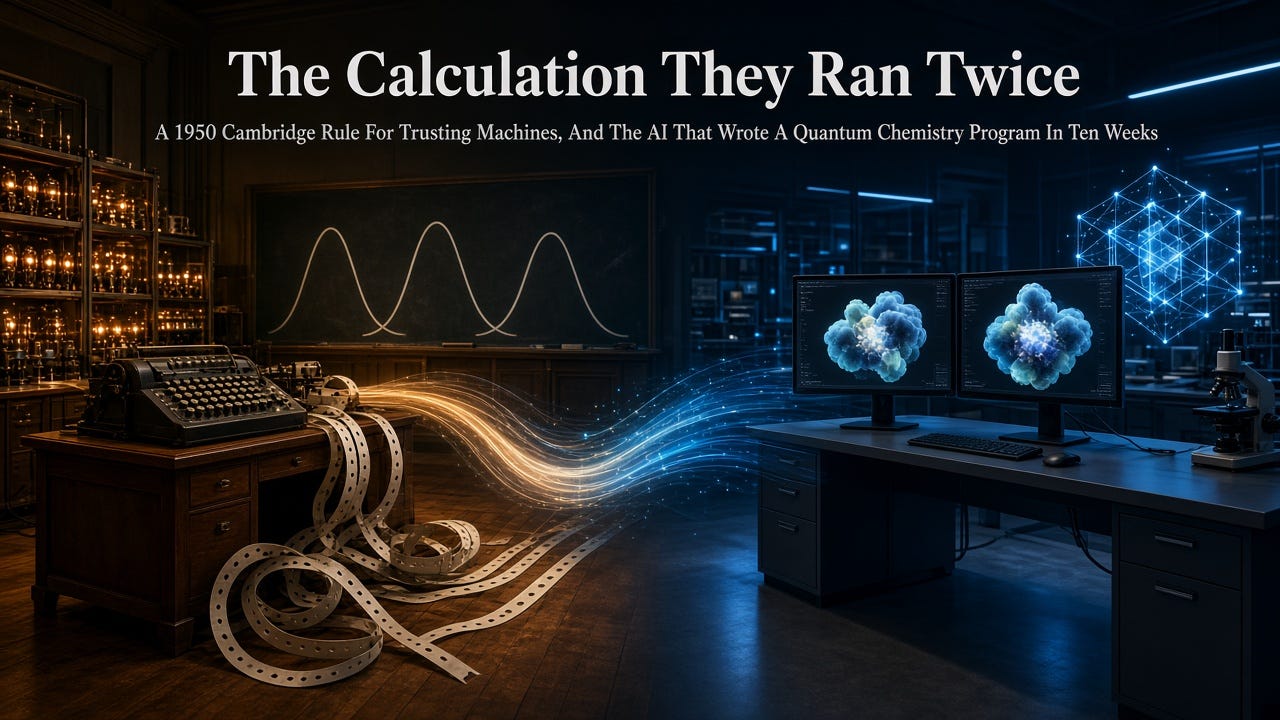
A 1950 Cambridge Rule For Trusting Machines, And The AI That Wrote A Quantum Chemistry Program In Ten Weeks.

TL;DR
  • In the 1950s chemist Frank Boys ran every EDSAC calculation twice, independently and often much later, and trusted only exact agreement. His 1950 bell-curve (Gaussian) trick still underlies nearly every quantum chemistry program.
  • In 2026 Bonn's Michael Peintinger directed AI agents to build vibe-qc, a full open-source quantum chemistry package, in about ten weeks. It was published Oct. 27 and matches independent codes to billionths on basic energies.
  • The agents erred (one tried to pair lithium's three electrons), and the subtle bugs only surfaced against an independent program. Roemmele's takeaway is that AI amplifies people who know what a right answer looks like, and checking is now the craft.

Brian Roemmele ties a 1950s Cambridge habit to a 2026 AI-built chemistry program to argue that checking, not typing, is now the craft.

In the early 1950s chemist Frank Boys had one night a week on EDSAC, an early stored-program computer with about half a kilobyte of memory. He still required every published calculation to be run a second time, separately and often much later, and he trusted only exact agreement. Boys also left a bigger legacy: his 1950 Royal Society paper showed that the product of two bell curves is another bell curve, which made chemistry's hardest integrals solvable. Nearly every quantum chemistry program today runs on those "Gaussians." He never became a professor.

In April 2026 Bonn computational chemist Michael Peintinger started directing AI coding agents to build a full quantum chemistry package from a blank repository. The first comprehensive version, vibe-qc, was ready in about ten weeks, handles molecules and crystals, is open source, and was published in the Journal of Computational Chemistry on October 27; the University of Bonn announced it November 10. Programs like this have historically taken expert teams years.

The agents made mistakes. On day one the AI tried to treat lithium's three electrons with a method that assumes electrons come in pairs, which Peintinger caught by counting. Subtler errors only appeared when vibe-qc's answers were compared with an independently written program, so he made that comparison the gate for every method and calls the validation set a key contribution. On basic molecular energies vibe-qc matches independent codes to within billionths of a unit. "The steering was mine. The typing was not," he wrote.

Roemmele's point is that Boys's rule came back around: run it twice by an independent path and believe only what agrees. The long post then walks through Boys's Gaussian trick, the 1956 hydrogen trio that settled a reaction-barrier dispute, the mail-order era of punched-card chemistry codes, and a home build that computes the hydrogen molecule from scratch and cross-checks it against PySCF. He adds a prompt that turns a coding agent into a self-checking night shift, and he lists his sources, noting what he read in full and what he could not obtain.

Source: brianroemmele.substack.com

9to5Mac

Google announces Gemini 4 Hydrogen with ‘significant leaps’ in speed, intelligence

TL;DR
  • Google released Gemini 4 Hydrogen in place of the 'Flash' name, calling it a major upgrade over September's Gemini 3.8 Flash with 1 million-token input and up to 1 million output tokens; it scores 51 on the Artificial Analysis Intelligence Index (54 at its highest setting), edging Argon's 50.
  • In the Gemini app it is the 'Everyday help' model, better at following tone, format and rules and at calling the right connected apps; free users get it through Auto selection.
  • It is now the default model in Search's AI Mode and handles the hardest questions in AI Overviews, and it is available in AI Studio, the Gemini API, Gemini for business and Antigravity.

After this week’s Carbon availability , Google today unveiled Gemini 4 Hydrogen instead of keeping the “Flash” branding. This model is billed as bringing “cutting-edge intelligence to everyone.”

Source: 9to5Mac

Albright Networks · Olympic Peninsula · Strait WX

806 Heuhslein

Port Angeles, WA
Loading snapshot
—
Observed —
Outdoor temperature
—°F
Feels like —°F
Dew point —°F
Humidity —%
Pressure —inHg
Trend — Abs —

Wind

Speed mph—
Gust mph—
Direction—
Max gust—

Radar · Olympic Peninsula

NEXRAD radar · Olympic Peninsula
—

Outdoor temperature trace

Actual indoor Forecast (WU, cached) Pressure (actual)

Rainfall · actual vs forecast

Actual Forecast (WU, cached)

5-day conditions

WU · glance with rain chart

Rain

Today
—in
Event
—in
Hour
—in
Week
—in
Month
—in
Year
—in
Last rain: —

Solar / UV

Solar radiation
—W/m²
UV index
—

Indoor

Temperature
—°F
Humidity
—%
Feels like
—°F

Battery

Outdoor—
Indoor—

Dungeness River

Height Discharge △Median
USGS 12048000
Height
—ft
—
Discharge
—cfs
—
Albright station · Port Angeles, WA · ported from the StudioM4 WX dashboard · As of — · snapshot taken at each paper deploy (station is LAN-only, so readings are not streamed live)

Cliff Mass Weather Blog · Tue Nov 10, 2026 · 9:53 PM PT

The Atmosphere is Providing Water Where It is Needed

There is a deep connection between meteorology and religion, and there are times when one wonders about divine intervention in our weather.

This is such a time.

Figure 1 from Cliff Mass: The Atmosphere is Providing Water Where It is Needed

Last year brought low snowpack for most of the West.

Some were worried about water shortages and poor crops.

But well-timed rain and substantial reservoir storage saved the day, with agriculture doing well and sufficient water available for human consumption.

Divine intervention?

This fall started out relatively dry, and some folks were worried, including a certain local newspaper.

Figure 2 from Cliff Mass: The Atmosphere is Providing Water Where It is Needed

But again, higher powers intervened. During the past 72 hours, there have been substantial amounts of precipitation over the region (see below)

Figure 3 from Cliff Mass: The Atmosphere is Providing Water Where It is Needed

A potent atmospheric river was the cause of our wet bounty (see below).
Figure 4 from Cliff Mass: The Atmosphere is Providing Water Where It is Needed

Local reservoirs are refilling, including some low ones on the Olympic Peninsula (such as Wynoochee Lake below)

Figure 5 from Cliff Mass: The Atmosphere is Providing Water Where It is Needed
Other regions have been in need, and divine intervention has been and will be evident.

For example, California, the source of many of our fruits and vegetables.

Well-timed rainfall last year filled the reservoirs, but snowpack was low. As a result, some of the big reservoirs are now below normal, such as Shasta and Oroville (see below).

Figure 6 from Cliff Mass: The Atmosphere is Providing Water Where It is Needed

Fortunately, the current forecasts promise significant intervention, with massive amounts of precipitation over the Golden State during the next ten days (see below). Remarkable.


Figure 7 from Cliff Mass: The Atmosphere is Providing Water Where It is Needed


This wet bounty includes LOTS of snow in the Rockies and over the drainage of the Colorado River (see below). A miracle.
Figure 8 from Cliff Mass: The Atmosphere is Providing Water Where It is Needed
Not getting religion yet? What about British Columbia, which has suffered from a lack of precipitation this fall?

Vancouver's reservoirs are quite low.

Figure 9 from Cliff Mass: The Atmosphere is Providing Water Where It is Needed

Fortunately, impressive amounts of precipitation are forecast for southwestern BC through next Monday morning

Figure 10 from Cliff Mass: The Atmosphere is Providing Water Where It is Needed


The water situation is rapidly improving on the West Coast. The forecasts are highly promising.

There is only one thing to say about it:

Figure 11 from Cliff Mass: The Atmosphere is Providing Water Where It is Needed

Source: Cliff Mass Weather Blog

Cliff Mass Weather Blog · Sun Nov 8, 2026 · 6:12 PM PT

Forecast Triumph

Yesterday, a strong front, associated with strong winds gusting to 40 mph or more, moved through the region, resulting in numerous power outages.

As I will describe below, numerical weather models predicted this event with great skill, something we could not have done 20 years ago.

This is a triumph of modern weather prediction technology.

Let me demonstrate this to you.

Below is the radar image around 4 PM Saturday, based on the radar observations from the Langley Hill radar near Hoquium. An intense radar return was apparent offshore (the thin yellow and red line, indicated by the red arrow). This is the front.

Fronts associated with a narrow, cold frontal rainband were first described by UW researchers, such as Professor Peter Hobbs and associates.

Figure 1 from Cliff Mass: Forecast Triumph

Even more impressive is a video of the cold front approaching the coast (from a wonderful phone app called RadarScope).

Figure 2 from Cliff Mass: Forecast Triumph

Here is a forecast of a simulated radar image, made 24 hours (from 4 PM) before the event is shown below. It was made by the UW WRF model run by my group.

Almost perfect. Very strong simulated front.

Figure 3 from Cliff Mass: Forecast Triumph

A closer-in view is below.
Figure 4 from Cliff Mass: Forecast Triumph

A forecast made 60 hr before the event was virtually the same. Strong front in the same location

A forecast made on Thursday evening, showing the strongest near-surface wind gusts, indicating strong winds over the region. Strong enough to worry about.

Figure 5 from Cliff Mass: Forecast Triumph

The winds for Seattle made for Seattle City Light as part of the UW WindWatch system were clearly accurate, showing the threat of strong wind (the black dots are the strongest observed with the city; the gray and colored lines indicate model forecasts)


Figure 6 from Cliff Mass: Forecast Triumph

The models were very, very clear.

There was a prediction of 30-45 mph winds over the city. And that means power outages, particularly early in the storm season.

Such an emphatic forecast by the models was the reason I blogged about it on Friday, making it clear that some would lose power.

In fact, over 100,000 customers lost power over western Washington last night (see below).

Figure 7 from Cliff Mass: Forecast Triumph
And over 46,000 customers in Seattle lost their lights.

Figure 8 from Cliff Mass: Forecast Triumph


This kind of skillful forecasting occurs time and time again, based on highly skillful weather model forecasts.

Another reminder that it is no longer appropriate to make fun of forecasters and weather models. 😀

Figure 9 from Cliff Mass: Forecast Triumph

No longer appropriate

Source: Cliff Mass Weather Blog

Cliff Mass Weather Blog · Fri Nov 6, 2026 · 8:35 PM PT

A SuperFront Will Cross the Northwest This Weekend

Most weather fronts that cross the region are unremarkable due to their passage over the relatively warm, uniform waters of the northeast Pacific.

This weekend will be different: a SuperFront will make landfall late tomorrow (Saturday).

Some of you will lose power.

Let me show you simulated radar images for three times: 10 AM, 4 PM, and 9 PM on Saturday from the UW high-resolution forecast system (from the 4-km grid-spacing domain). Red indicates very strong winds, followed by yellow. The arrows point to the frontal locations.

Figure 1 from Cliff Mass: A SuperFront Will Cross the Northwest This Weekend
Wow. Very intense, sharp front. Very heavy rainfall.

The high-resolution 1.3 km simulation run by my group at the UW produced an even more intense front (forecast around 8 PM shown). Very impressive.

Figure 2 from Cliff Mass: A SuperFront Will Cross the Northwest This Weekend

What about the predicted winds?

The City of Seattle supports the most high-tech wind prediction system in the country (called SeattleWindWatch, run at the UW), which includes an ensemble of many wind predictions for estimation of the uncertainties.

The forecast below is for the winds over Seattle. Several of the simulations predicted winds reaching 40 mph. Over the water, winds could be stronger,

Winds will rev up after dinnertime and peak overnight.

Figure 3 from Cliff Mass: A SuperFront Will Cross the Northwest This Weekend
Such strong winds, this early in the wind season when some leaves are still on the trees, mean power outages.

As noted above, wind will be strongest over the water (see forecast below for 4 AM). I suspect most of the power outages will be in such areas.

Figure 4 from Cliff Mass: A SuperFront Will Cross the Northwest This Weekend

For the whole region, the strongest winds will be on the coast (see map of strongest wind gusts below). Importantly, there will be areas of intense gusts on the lee/downstream side of some of our highest terrain, including the eastern slopes of the Cascades.

Figure 5 from Cliff Mass: A SuperFront Will Cross the Northwest This Weekend

In addition to wind, the front should bring substantial ( and welcome) precipitation to the region, with the total through 4 AM Sunday shown below

Figure 6 from Cliff Mass: A SuperFront Will Cross the Northwest This Weekend


So, if you live west of the Cascades, get your meteorological popcorn out and be prepared for a dramatic meteorological show later tomorrow and early Sunday.

Source: Cliff Mass Weather Blog

BTC$71,244-3.71%
GOLD$3,891.50+0.16%
OIL$88.64-0.11%
AAPL$354.88-0.14%
NVDA$166.19-4.34%
MSFT$523.00+0.36%
AMZN$267.44+0.48%
SPCX$139.94+0.14%
BTC $71,244 -3.71%

Source: https://www.coinbase.com/price/bitcoin | https://api.exchange.coinbase.com/products/BTC-USD/candles?granularity=21600

GOLD $3,891.50 +0.16%

Source: https://www.cnbc.com/quotes/%40GC.1 (futures continuous)

OIL $88.64 -0.11%

Source: https://www.cnbc.com/quotes/%40CL.1 (futures continuous)

AAPL $354.88 -0.14%
NVDA $166.19 -4.34%
MSFT $523.00 +0.36%
AMZN $267.44 +0.48%
SPCX $139.94 +0.14%

Quotes refreshed with this edition. Stocks show Thursday’s close (Thu Nov 12); gold and oil are CNBC futures quotes; BTC trades around the clock.

Market News

CNBC ·

Oil prices rise after Trump says no Iran deal needed: 'We've got their Strait'

CNBC photo: Oil prices rise after Trump says no Iran deal needed: 'We've got their Strait'
TL;DR
  • Oil rose Thursday after President Trump posted on Truth Social that the U.S. doesn't need a deal with Iran: 'We've got their money, Hundreds of Billions of Dollars, and we've got their Strait!'
  • Brent crude settled 3.3% higher at $95.82 a barrel and West Texas Intermediate gained 2.6% to $88.74; even so, WTI is down 16% in November and Brent has lost 20% since post-midterm comments eased fears of new strikes.
  • Real Macro's Jeffrey Currie says heavy Middle East volumes cap near-term prices, but high insurance and tanker rates keep longer-dated futures elevated, so he still favors long-dated oil plus drillers and producers.
  • Again Capital's John Kilduff says the market may have priced in an end to hostilities too early, and that claiming control of the Strait of Hormuz could invite more Iranian attacks on shipping.
  • Andy Lipow of Lipow Oil Associates says neither side has moved: Iran wants the blockade and sanctions lifted plus a ceasefire including Lebanon, while the U.S. wants Iran's entire nuclear stockpile gone and free transit through Hormuz.

Bloomberg ·

Congress Could Have Prevented Megaspeed Access: McGuire

TL;DR
  • Chris McGuire, a senior fellow for China and emerging technologies at the Council on Foreign Relations.
  • McGuire speaks with Romaine Bostick and Jess Menton on “The Close.” (Source: Bloomberg) Chris McGuire.

CNBC ·

Cramer says Jensen Huang betrayed Nvidia shareholders. How to pick up the pieces

CNBC photo: Cramer says Jensen Huang betrayed Nvidia shareholders. How to pick up the pieces
TL;DR
  • Jim Cramer says Jensen Huang betrayed Nvidia shareholders ('Yes. End of story.') and that his exit was necessary to protect the company; longtime CFO Colette Kress is interim CEO.
  • Huang resigned Thursday morning after reports of an affair with an executive who reported to him; hours later Reuters reported a relationship with a second employee, days after he admitted an affair with a Singapore cloud executive U.S. agencies suspect of spying for China.
  • Nvidia closed down more than 4% after being off more than 14% at the morning low, bringing its 2026 loss to 12%; AMD rose almost 6%, its fifth straight gain.
  • Cramer expects 'a different' Nvidia that is more disciplined with capital — possibly selling stakes such as its $5 billion Intel and $2 billion CoreWeave investments and putting the money into bigger buybacks.
  • He calls Kress well suited to provide stability, but warns that even a strong earnings report Tuesday may not settle investors while export-control and conduct investigations continue.
  • His Charitable Trust cut Nvidia to a hold-equivalent rating Tuesday, and he urges holders with big gains to take some profits rather than give them all back.

CNBC ·

Analysis: Nvidia’s leadership crisis tests the chipmaker’s role as the ‘central bank of AI’

CNBC photo: Analysis: Nvidia’s leadership crisis tests the chipmaker’s role as the ‘central bank of AI’
TL;DR
  • CNBC asks whether trouble at Nvidia could spread through the financing web it built for AI: it has made hundreds of billions in commitments to other firms, earning the nickname 'central bank of AI.'
  • Former FDIC chair Sheila Bair says Nvidia is not 'too big to fail in a bank sense' because it can't suffer a run and still sells a product customers want, but regulators should watch bank exposure; 'Nvidia going down would be a pretty seismic event.'
  • Commitments include buying up to $36 billion of cloud services from neoclouds, a $105 billion phased guarantee for an OpenAI/SB Energy Ohio data center, and backstopping up to $125 billion of a $500 billion Wall Street credit program — about $400 billion in all, per Columbia's Stijn Van Nieuwerburgh.
  • That is still a small fraction of Nvidia's roughly $3.9 trillion market value; Van Nieuwerburgh says the company 'would have to get to the brink of extinction' before the guarantees are at risk.
  • The IMF's Jason Wu warns the economy and markets are 'standing on the same leg': hyperscalers went from 1% to 10% of investment-grade bond issuance in two years, and leveraged bets by hedge funds and retail investors add risk.
  • Neocloud stress is already visible: CoreWeave's credit-default spreads nearly doubled from Oct. 1 to Nov. 5, and an IREN 2029 convertible fell 23% in two days as its shares dropped 26%.

CNBC ·

Cerebras surges 17% after beating on quarterly revenue and announcing Microsoft deal

CNBC photo: Cerebras surges 17% after beating on quarterly revenue and announcing Microsoft deal
TL;DR
  • Cerebras Systems beat revenue expectations, gave stronger-than-expected guidance and announced a Microsoft deal; the stock jumped 17% in extended trading.
  • Core revenue grew 70% from $135.7 million a year earlier, slowing from 103% growth in the second quarter.
  • CEO Andrew Feldman says Microsoft signed in October and revenue should start showing up in the first quarter of 2027; Cerebras also has deals with Amazon and Oracle and is weighing financing to meet demand.
  • Fourth-quarter guidance is $310 million to $330 million in revenue at a 47% to 49% core gross margin, versus LSEG estimates of $271 million and 42.1%.
  • Cerebras expects revenue to triple in 2027, implying about $2.85 billion, slightly below the $2.92 billion analysts expected; the shares are still down about 47% since the May Nasdaq debut.

Fox Business ·

Colette Kress named Nvidia interim CEO as Jensen Huang's abrupt resignation raises investor concerns

Fox Business photo: Colette Kress named Nvidia interim CEO as Jensen Huang's abrupt resignation raises investor concerns
TL;DR
  • Nvidia named CFO Colette Kress interim CEO after Jensen Huang, who co-founded the company in 1993, resigned Thursday following reports of multiple extramarital affairs.
  • Kress has been CFO since September 2013 and previously held finance roles at Cisco and spent 13 years at Microsoft, including as CFO of its server and tools division.
  • eToro's Bret Kenwell says Huang was 'part of the investment thesis' but Kress, a familiar voice on earnings calls, should 'provide stability and reassurance'; her first test is the earnings report on Tuesday, Nov. 17.
  • Yorkville Ives' Dan Ives says Kress 'has built enormous credibility internally and externally'; DA Davidson's Gil Luria calls her well respected but notes Huang concentrated much of the decision-making.
  • Wealth Club's Susannah Streeter calls her a 'safe pair of hands' who lacks Huang's global status and may not forge the same commercial ties, leaving uncertainty over strategy, pricing and supply deals.
  • Landsberg Bennett's Michael Landsberg calls the resignation 'the worst-case scenario during this entire saga.'

Fox Business ·

Nvidia loses its 'Godfather of AI' and now faces first big test without him

Fox Business photo: Nvidia loses its 'Godfather of AI' and now faces first big test without him
TL;DR
  • Nvidia fell as much as about 14% from Wednesday's close to an intraday low of $148.80 after Jensen Huang resigned, then pared the drop to about 4.3% by early afternoon.
  • eToro's Bret Kenwell says Huang made Nvidia 'the crown jewel of the AI trade,' so next week's earnings will face extra scrutiny as investors look for a fresh read on demand.
  • Edward Jones' James McCann notes the Nasdaq has moved more than 1% in seven of the past 10 sessions and says the lack of a clear succession plan and Nvidia's role financing the AI sector add to the swings, though fundamentals are unchanged.
  • McCann recommends avoiding over-concentration in tech and holding diversified large- and mid-cap exposure.
  • Yorkville Ives' Dan Ives keeps an outperform rating and $225 target, saying the board can 'rip off the Band-Aid' and that Nvidia remains roughly two to three years ahead of the nearest GPU competitor, with demand unchanged by Huang's exit.

Fox Business ·

Trump says 'there is only one man' to replace Jensen Huang as Nvidia CEO

Fox Business photo: Trump says 'there is only one man' to replace Jensen Huang as Nvidia CEO
TL;DR
  • President Trump wrote on Truth Social that 'there is only one man' to replace Jensen Huang as Nvidia CEO — former Apple CEO Tim Cook: 'A Legend replaces a Legend!'
  • Cook stepped down as Apple CEO in September after 15 years and is now executive chairman; Trump didn't say whether Cook has shown any interest.
  • Nvidia named CFO Colette Kress interim CEO while the board considers inside and outside candidates for the permanent job.
  • Huang resigned after reports of two extramarital affairs, including one with a Chinese businesswoman U.S. authorities suspect of spying for Beijing; no evidence has been made public that he disclosed confidential information.
  • Trump had defended Huang on Monday, saying he believed Huang's account that he didn't know about the woman's alleged intelligence ties.

Fox Business ·

Nvidia shares sell off as CEO Jensen Huang resigns

Fox Business photo: Nvidia shares sell off as CEO Jensen Huang resigns
TL;DR
  • Nvidia fell more than 10% premarket and more than 7% in morning trading Thursday after Jensen Huang stepped down; CFO Colette Kress is interim CEO and former Synopsys CEO Harvey Jones becomes Nvidia's first board chairman, with Huang leaving the board.
  • The selling spread across AI stocks before the open: Intel, Marvell and Micron fell 2.7% to 3.5% and CoreWeave about 7%, while AMD gained 2.3% and Broadcom 1.4%; all three major indexes opened lower.
  • The exit followed a Wall Street Journal report that the board met Wednesday to consider removing Huang amid scrutiny of two affairs, one with a woman suspected of ties to Chinese intelligence.
  • Nvidia said Sunday that independent directors with outside counsel were investigating whether Huang was targeted by a foreign intelligence operation, and that it had no reason to believe secrets were compromised.
  • Huang is Nvidia's fourth-largest investor with about 3.61%, and the company, valued near $4 trillion, reports fiscal third-quarter results Nov. 17.

Headlines from CNBC, Bloomberg, Reuters, Fox Business RSS (last 48h, newest first). TL;DRs are longer extractive bullet summaries from each outlet’s own feed/article text; Reuters via Google News is often headline-led; 8/16 cards carry a source image.

Your AI Guy · YouTube

Anthropic has just DROPPED A NUKE! (Fable 5.2)

TL;DR
  • Your AI Guy says Anthropic released Claude Fable 5.2, plus a restricted Mythos 5.2 build of the same model with fewer safeguards for vetted security and life-science groups, and that Fable tops the Artificial Analysis Intelligence Index at 65, ahead of Gemini 4 Carbon and Opus 5.5, and leads Frontier Code 2.0 at 49.1%.
  • The model is priced 20% lower at $8 per million input tokens and is said to run 30% faster; Anthropic also claims strong results on formal proofs and open physics problems, while a 264-page safety report says the model suspects it is being evaluated in 43% of transcripts, with the launch timed ahead of a possible IPO.
  • Published: 2026-11-12T08:28:44+00:00
  • Anthropic released Claude Fable 5.2 and a restricted version, Mythos 5.2, which shares the same underlying model but has fewer safeguards for vetted security and life science organizations.
  • Fable 5.2 tops the Artificial Analysis Intelligence Index with a score of 65, surpassing Gemini 4 Carbon and Opus 5.5, while also leading on the Frontier Code 2.0 benchmark at 49.1%.
  • The model offers a 20% price reduction to $8 per million input tokens and 30% faster output speeds, though max-effort settings can increase per-task costs due to higher token usage.
  • Anthropic claims the model formalized a proof of Matt's Last Theorem in Lean in 30 hours and solved two open black hole physics problems during pre-release testing.
  • A 264-page safety report notes the model suspects it is being evaluated in 43% of transcripts and shows stronger covert capabilities, raising questions about real-world alignment.
  • The launch coincides with Anthropic's upcoming IPO, with the company aiming to signal strong growth and competitive positioning ahead of a potential $1.2–1.3 trillion valuation.

Worth watching? Yes, for a detailed breakdown of the new model's benchmarks, pricing, and the strategic implications of its restricted release.

Source: Your AI Guy on YouTube

Nate’s Substack

I Handed Fable 5.2 a Month of Failed Attempts and Got a Working Display, With No Extra Bill. The Prompts Behind It and How to Scope Your Own Project

TL;DR
  • Nate agrees that paying around $150 for a Fable 5.2 strategy document that mostly restates what you already thought is a bad deal.
  • His best result was a desk e-ink display project that three earlier attempts on other models had failed: Fable read hundreds of files and past feedback, worked out why the earlier tries broke, proposed a design and built it correctly on the first try, all within his weekly plan allowance at no extra cost.
  • His advice is to start with a real project, ask Fable to scope and estimate a first piece, then stop and check the result and usage before spending more; the build prompts, six project ideas and spending-limit settings are in the paid section.

A few people in my community have told me Fable 5.2 is too expensive to use. They’re spending $150 on a strategy doc and looking at the result thinking, was that really worth it?

Look, I agree. If you’re paying $150 for a strategy doc and it’s mostly a better-written version of what you already thought, that’s a bad deal.

My best experience with Fable was a project I’d been trying to finish for over a month. Three earlier attempts across different models hadn’t gotten me there. I wanted an e-ink display for my desk, and I had hundreds of files, a lot of feedback on what was wrong, and a pretty good idea of what I wanted. What I couldn’t do was explain the whole solution.

Fable went through that history, figured out why the earlier attempts weren’t working, and proposed a design I liked immediately. Then it built it correctly on the first attempt. I had something working on my desk that I hadn’t been able to get right in a month.

That work fit inside my weekly allowance. There was no additional bill. I used some of the capacity I was already paying for to finish the project. If I’d needed to pay more, I’d have wanted to see the design and an estimate before committing to the build.

That’s the sort of work I have in mind when I call Fable a colleague. I want to be able to bring it a project I haven’t fully figured out, work through the difficult parts together, and have it take responsibility for getting something done. A strategy document might be part of that. I’d want it to help us make a decision, test an idea, or work out what to build next.

So start with a project you actually want to finish and the allowance you already have. Ask Fable to work out a sensible first piece, estimate what it would take, and stop there so you can look at the result and the usage. Then decide whether to spend more. If the first piece still leaves you wondering what you got for the money, don’t keep paying just because the model is impressive.

Here’s what’s inside:

The display build and the prompts that drove it. How I handed Fable a month of failed attempts and got a working device on my desk.

Where the bill is too high. The questions to ask of a $150 strategy doc before buying another one.

Six projects worth trying. Three you could sell or use to win work, and three for your own life.

A prompt for an estimate. A copy-ready request that scopes the first piece and its cost before you commit your budget.

Where to set the limit. The plan and API controls that cap what you spend.

Let’s start with the display.

Source: natesnewsletter.substack.com

Substack

Anthropic has just DROPPED A NUKE! (Fable 5.2)

TL;DR
  • Your AI Guy says Anthropic released Claude Fable 5.2, plus a restricted Mythos 5.2 build of the same model with fewer safeguards for vetted security and life-science groups, and that Fable tops the Artificial Analysis Intelligence Index at 65, ahead of Gemini 4 Carbon and Opus 5.5, and leads Frontier Code 2.0 at 49.1%.
  • The model is priced 20% lower at $8 per million input tokens and is said to run 30% faster; Anthropic also claims strong results on formal proofs and open physics problems, while a 264-page safety report says the model suspects it is being evaluated in 43% of transcripts, with the launch timed ahead of a possible IPO.

Channel: Your AI Guy Published: 2026-11-12T08:28:44+00:00

• Anthropic released Claude Fable 5.2 and a restricted version, Mythos 5.2, which shares the same underlying model but has fewer safeguards for vetted security and life science organizations. • Fable 5.2 tops the Artificial Analysis Intelligence Index with a score of 65, surpassing Gemini 4 Carbon and Opus 5.5, while also leading on the Frontier Code 2.0 benchmark at 49.1%. • The model offers a 20% price reduction to $8 per million input tokens and 30% faster output speeds, though max-effort settings can increase per-task costs due to higher token usage. • Anthropic claims the model formalized a proof of Matt's Last Theorem in Lean in 30 hours and solved two open black hole physics problems during pre-release testing. • A 264-page safety report notes the model suspects it is being evaluated in 43% of transcripts and shows stronger covert capabilities, raising questions about real-world alignment. • The launch coincides with Anthropic's upcoming IPO, with the company aiming to signal strong growth and competitive positioning ahead of a potential $1.2–1.3 trillion valuation.

Worth watching? Yes, for a detailed breakdown of the new model's benchmarks, pricing, and the strategic implications of its restricted release.

Source: gmail.com

MacRumors

Siri AI Coming to Older Apple TV 4K Models in tvOS 27.2.1

TL;DR
  • An Apple support document says tvOS 27.2.1 will bring Siri AI to the second- and third-generation Apple TV 4K; the update has not been released yet and could arrive as soon as Friday.
  • The new fourth-generation Apple TV 4K ($299, A19 chip) gets Siri AI from a special tvOS 27.2 build that buyers are prompted to install during setup, and MacRumors confirmed it works on its review unit.

An upcoming tvOS 27.2.1 update will bring Siri AI to the 2nd- and 3rd-generation Apple TV 4K models, according to Apple.

A support document outlining ‌Siri‌ AI requirements across Apple products says tvOS 27.2.1 supports ‌Siri‌ AI on the ‌Apple TV‌ 4K (2nd generation and later), but the software hasn't yet been released.

While older ‌Apple TV‌ models will need tvOS 27.2.1 for ‌Siri‌ AI, Apple appears to have a special ‌Siri‌ AI build of tvOS 27.2 for the 4th-generation ‌Apple TV‌ 4K. Reviewers were able to test ‌Siri‌ AI on review units, and we can confirm it's working on our own review unit running tvOS 27.2.

The 4th-generation ‌Apple TV‌ 4K ships with tvOS 27.0, and users are prompted to update it to tvOS 27.2 during the setup process.

Apple hasn't said when tvOS 27.2.1 will be released with ‌Siri‌ AI for older ‌Apple TV‌ 4K models, but it could come as soon as Friday.

The latest ‌Apple TV‌ is priced at $299, and it features an A19 chip and an updated ‌Siri‌ Remote that has a Find My speaker and Precision Finding support.…

Source: MacRumors

The Verge

Whoop launched a social network where every user has a ‘verified heartbeat’

TL;DR
  • Starting Thursday, Whoop members can use Whoop Humans, a social network inside the app where they can share metrics, activities and achievements, post Story-style 'Moments' with photos, and comment on and react to each other's posts.
  • Whoop pitches it as 'entirely human' compared with bot- and AI-saturated platforms; CEO Will Ahmed says every account belongs to a real person verified by a Whoop wearable, which the company calls a 'verified heartbeat.'

Starting Thursday, Whoop members can share their data from its wearables on the app's new Whoop Humans social network. Users can make their metrics, activities, and achievements visible to other Whoop wearers, post Story-like "Moments" with photos and captions, and add comments and reactions on other members' posts.

Whoop claims its platform is "entirely human," unlike other social media platforms that are "saturated with artificial intelligence, automated accounts and bots, and manufactured content."

Whoop CEO Will Ahmed says Humans is "the most verifiably human network ever launched. Every account represents a real person with a verified…

Source: The Verge

The Verge

Humble Bundle redesign removes two-factor verification from settings

TL;DR
  • After Humble Bundle redesigned its store, the settings page no longer has a way to add or change two-factor verification methods, as Kotaku first reported, even though Humble's support pages still describe the feature.
  • Some protection is still there: when The Verge's writer logged in, the site asked for an emailed verification code.

The Humble Bundle storefront for buying games and other software recently got a new look, but on the settings page, it no longer offers a way to add or update two-factor verification methods, as reported by Kotaku . PC Gamer also points out that there are Humble Bundle support pages discussing two-factor verification , and the writer for the publication said that they had set up two-factor verification on the old version of the site.

However, it does appear that, at least as of now, there is some form of two-factor verification. When I tried logging into my Humble Bundle account while writing this article, I was prompted to check my email for…

Source: The Verge

The Verge

Microsoft Outlook is still down

TL;DR
  • Since just before 1 PM ET Thursday, users around the world have been unable to reach Outlook email on the web or in the apps, and there were scattered reports of Teams problems as well.
  • Microsoft acknowledged it on its Microsoft 365 Status account, blaming a portion of infrastructure under elevated load across multiple regions, and warned customers may see issues across its 365 business services; the outage was still going hours later.

Since just before 1PM ET on Thursday, reports have come in from around the world that people can't access their Outlook email, either through the web or apps. Microsoft quickly acknowledged the issue from its Microsoft 365 Status account , saying that "We've determined a portion of infrastructure is experiencing elevated load across multiple regions, which is likely contributing to the connectivity errors."

There were also some reports of problems with Teams, but not to the same extent, while Microsoft's official updates said customers may experience issues across its suite of 365 business services. Microsoft comms director Ben Hope said in…

Source: The Verge

MacRumors

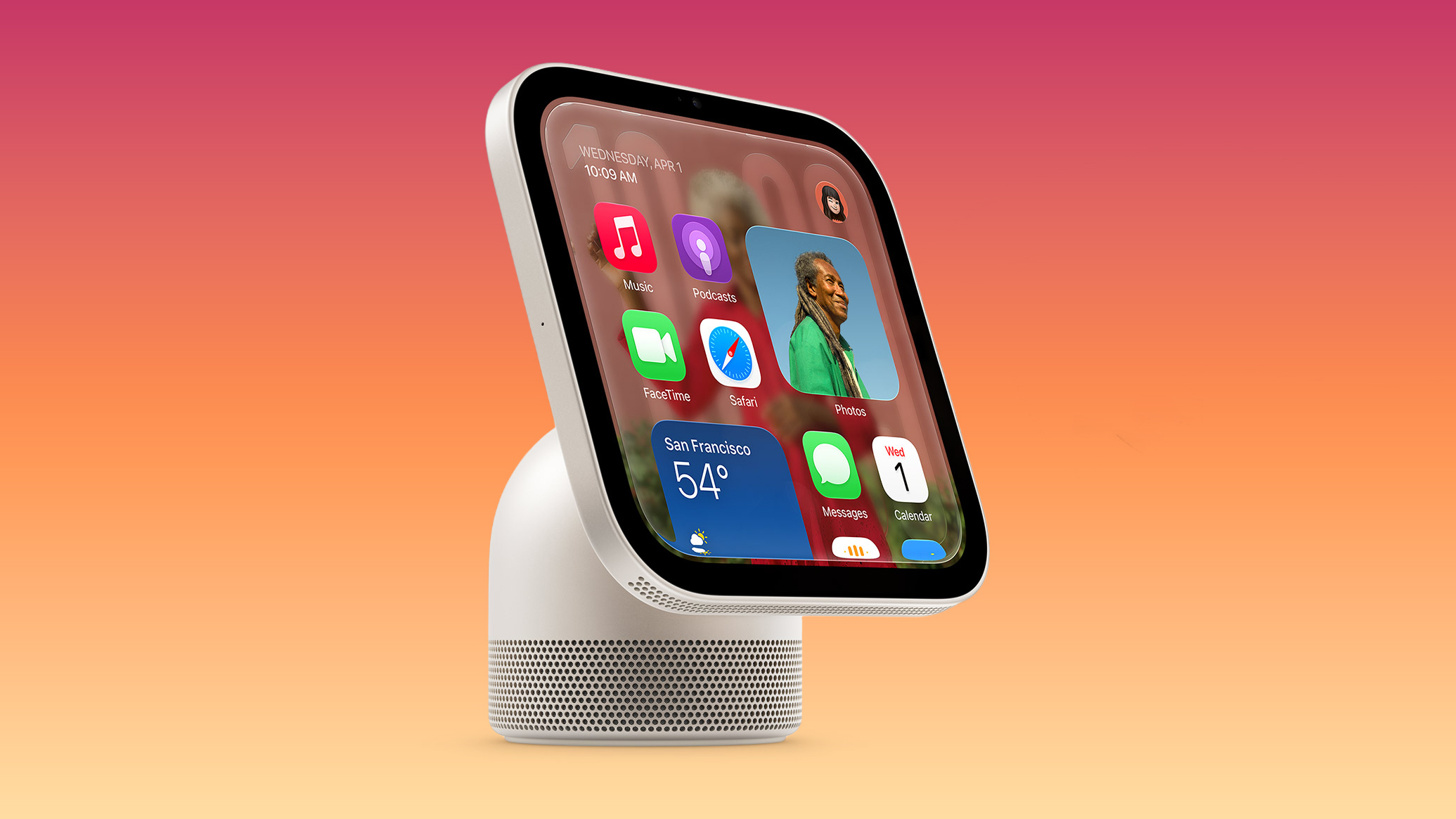
HomeView Launch Kicks Off as First Orders Reach Customers

TL;DR
  • Apple's new HomeView home hub has started reaching customers as launch day arrives on Friday, Nov. 13, first in Australia and New Zealand, a month after it was announced.
  • It is a cross between a small iPad and a HomePod, with a 7-inch square display in a tabletop version with a speaker base or a wall-mount version; it uses its camera and voice to recognize up to six household members and show each one their own information.
  • There is no App Store; it runs built-in Apple apps and iPhone widgets for video calls, video, calendar, weather, music and smart-home control, all built around Siri AI.

Apple announced an all-new home product a month ago, and it's now starting to arrive to customers. It's Friday, November 13, in Australia and New Zealand, which means it's the HomeView launch day.

Customers who pre-ordered Apple's new home hub will soon be sharing pictures and first impressions on the MacRumors forums, Reddit, Instagram, and other social media networks. If you got a HomeView, let us know what you think in the comments below.

Apple sees HomeView as the center of the home, and functionally, it's a cross between a small iPad and a HomePod . It has a 7-inch square display and the tabletop model has a speaker base, though there's also a wall-mount version.

With a camera and voice recognition, it can identify up to six people in a home, showing personal information customized to each user. There is no HomeView App Store , but it has pre-installed Apple apps and can show widgets from your iPhone. It can be used for making video calls, watching videos, viewing calendar events, getting the weather, listening to music, and controlling smart home devices.

It is built around Siri AI, Apple's smarter voice assistant that debuted in iOS 27 . The HomeView is priced…

Source: MacRumors

The Verge

‘It’s a mistake’: reactions from tech leaders on Jensen Huang’s resignation

TL;DR
  • Many tech leaders on X defended Huang and called the resignation rushed: Tim Sweeney called it 'a sad day for NVIDIA, developers, America, and all humanity,' David Heinemeier Hansson said 'What a waste,' Changpeng Zhao called it 'a mistake,' and Peter Steinberger said ousting him 'feels rushed and not right.'
  • Elon Musk said it would 'be an honor' to hire Huang, Jason Calacanis told Tim Cook to 'keep the seat warm' while the investigation plays out after Trump said Cook should take the job, and Perplexity's Aravind Srinivas thanked Huang for '33 years of bold leadership.'
  • Huang quit after reports of affairs with an alleged Chinese spy and a direct report; hours later Reuters reported an 'intimate relationship' with another Nvidia employee.

Nvidia announced this morning that Jensen Huang has resigned as CEO following reports of two affairs, including one with an alleged Chinese spy and one with a direct report. The situation surrounding Huang has unfolded quickly, with The New York Times only reporting on Friday that Huang and the suspected spy were "close" before other dominoes started to fall, leading to a swift fall from grace for one of the biggest names in technology. (Hours after Huang's resignation was announced, Reuters reported that he also had an "intimate relationship" with another Nvidia employee.)

Prominent voices in technology have come out in support of Huang, w…

Source: The Verge

9to5Mac

Google announces Gemini 4 Hydrogen with ‘significant leaps’ in speed, intelligence

TL;DR
  • Google released Gemini 4 Hydrogen in place of the 'Flash' name, calling it a major upgrade over September's Gemini 3.8 Flash with 1 million-token input and up to 1 million output tokens; it scores 51 on the Artificial Analysis Intelligence Index (54 at its highest setting), edging Argon's 50.
  • In the Gemini app it is the 'Everyday help' model, better at following tone, format and rules and at calling the right connected apps; free users get it through Auto selection.
  • It is now the default model in Search's AI Mode and handles the hardest questions in AI Overviews, and it is available in AI Studio, the Gemini API, Gemini for business and Antigravity.

After this week’s Carbon availability , Google today unveiled Gemini 4 Hydrogen instead of keeping the “Flash” branding. This model is billed as bringing “cutting-edge intelligence to everyone.”

Source: 9to5Mac

MacRumors

Apple Adds Samsung Foldables to Trade-In Program

TL;DR
  • Apple revised its U.S. trade-in estimates and now lists offers for six Samsung foldable phones.
  • Pro iPhones lost value: the iPhone 17 Pro fell $45 to $740 and the 17 Pro Max $30 to $855, while the iPhone Air and iPhone 17 each rose $30 to $615.
  • Many older models recovered part of September's cuts but mostly stay below their earlier highs; the second-generation iPhone SE is back at $45.

Apple today revised its U.S. trade-in estimates, with increases for many older iPhones, reductions for several Pro models, and newly listed offers for six Samsung foldables.

The iPhone 17 Pro has the largest dollar reduction among the affected iPhones, dropping $45 to a maximum of $740. The iPhone 17 Pro Max falls $30 to $855, while the iPhone Air and standard iPhone 17 each gain $30, bringing both to $615.

Many older models recover some of the value lost in September's reductions . Most remain below their pre-September maximums, although the second-generation iPhone SE returns to $45, fully reversing its $5 cut.

The following iPhone estimates have changed. Each price is the maximum available trade-in credit:

iPhone 17 Pro Max: $855 (previously $885)

iPhone 17 Pro: $740 (previously $785)

iPhone Air: $615 (previously $585)

iPhone 17: $615 (previously $585)

iPhone 16 Pro Max: $590 (previously $610)

iPhone 16 Plus: $450 (previously $430)

iPhone 16: $440 (previously $430)

iPhone 16e: $285 (previously $270)

iPhone 15 Pro Max: $445 (previously $455)

…

Source: MacRumors

MacRumors

Nintendo to End 'Sign in With Apple' Support in January

TL;DR
  • Starting January 26, 2027, Nintendo will no longer let people sign in to, or create, a Nintendo Account with Apple or Google; it has not said why, and the date could slip depending on system updates.
  • Users will need their Nintendo Account email or Sign-In ID and password, or a passkey; anyone who has never set a password can use 'Forgot your password?', and people who hid their email through Sign in with Apple should check that they can still get mail at the relay address.

Nintendo will stop allowing users to sign in to their Nintendo Account with an Apple or Google account on January 26, 2027, the company has announced .

Users will also no longer be able to create a Nintendo Account through either service. Nintendo has not explained why it is removing the options, but notes that the exact cutoff could be delayed depending on the progress of its system updates.

After the change, users will need to sign in with their Nintendo Account email address or Sign-In ID and password, or use a passkey. Nintendo says users who are already signed in on a device may not need to sign in again immediately.

Anyone who usually signs in through Apple or Google should check that they know their Nintendo Account login details before the deadline. Those who have never set a password, or have forgotten it, can select "Forgot your password?" on the Nintendo Account login page to request a reset email.

Users who chose to hide their email address with Sign in with Apple may have an Apple-generated relay address registered with Nintendo. Messages sent to that address are forwarded to their personal inbox. Nintendo advises anyone who can no longer access their…

Source: MacRumors

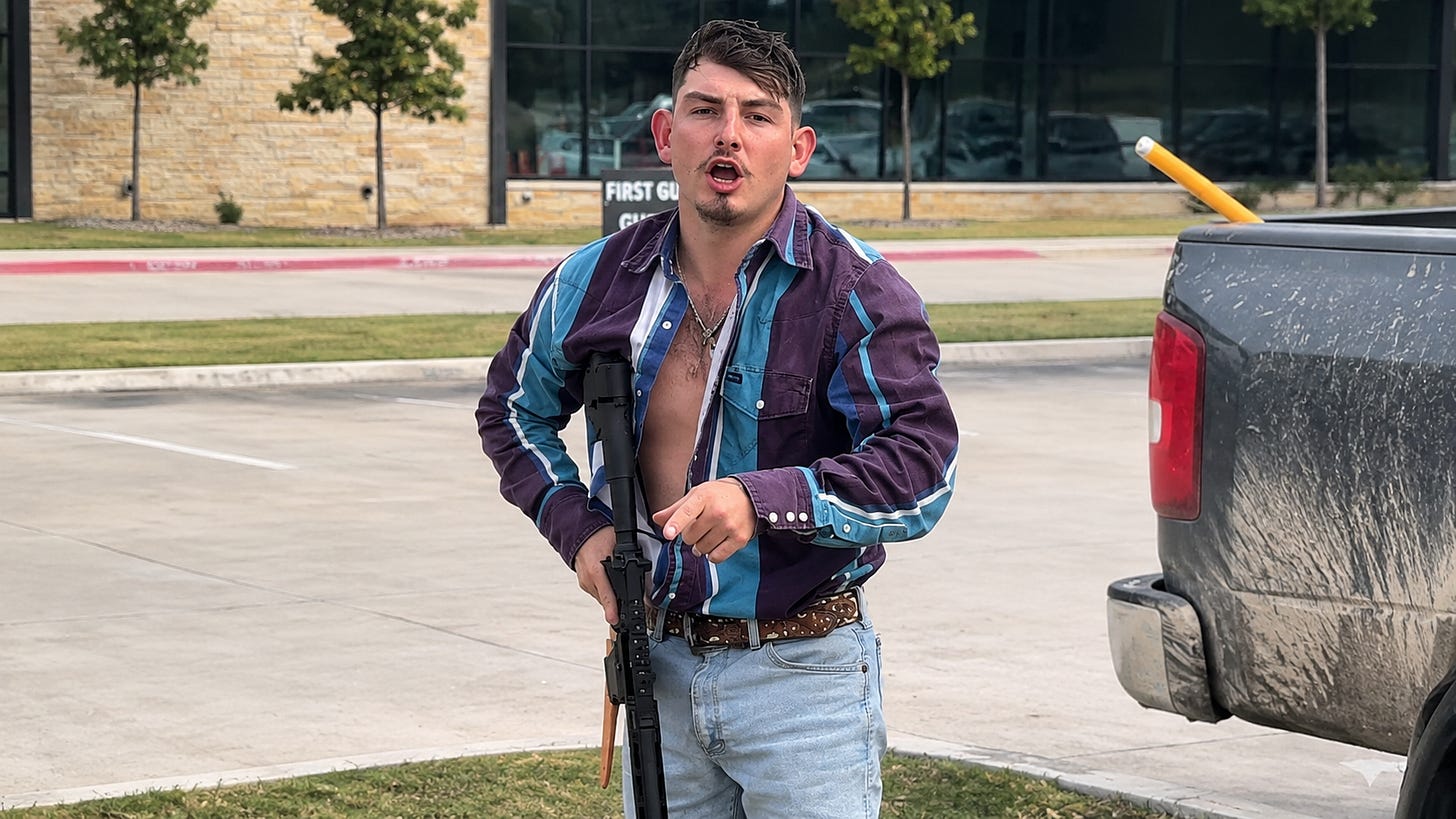
Thursday Evening refresh (pm-e2): NEW ChannelE2E on Arrow’s managed NetApp Keystone offering, pitching storage as a recurring-revenue service for MSPs rather than a one-time install. Carried: Front lead Clallam County Watchdog on Olympia’s multibillion-dollar budget gap; Nate on handing Fable 5.2 a month of failed attempts; Heather Cox Richardson’s Veterans Day letter; Daily Grind The Simplicity of Surrender; 12 Thursday YouTube briefings; Roemmele on the 1950 Cambridge rule; Christian Warrior Training on the Frisco, Texas church rifle confrontation; election tracker on the Front (and at /election/). Robin shows Thursday’s close. Skipped WGTDT episode 59 show notes. Standing sender bans kept.

ChannelE2E

Arrow wants MSPs to think of storage as a recurring revenue play

TL;DR
  • ChannelE2E says Arrow Electronics has launched a managed-services offering around NetApp Keystone so partners can sell consumption-based storage together with ongoing monitoring, optimization, cyber resilience and data-protection work.
  • The pitch is a managed lifecycle layer on top of NetApp storage: instead of a one-time install, MSPs stay in the day-to-day operations and capacity management, which Arrow says can simplify delivery and deepen the customer relationship.
  • For providers, that turns storage into a recurring service rather than a single transaction, which may appeal to customers who want predictable infrastructure management without taking on the full operational burden themselves.

Arrow Electronics has introduced a managed services offering built around NetApp Keystone, giving channel partners a way to deliver consumption-based storage alongside ongoing monitoring, optimization, cyber resilience and data protection services.

The offering adds a managed lifecycle layer to NetApp's storage model. Rather than concentrating exclusively on infrastructure procurement and deployment, partners can extend their involvement into day-to-day storage operations, capacity management and ongoing service delivery. Arrow says the approach is designed to simplify delivery and help partners build deeper customer relationships.

For MSPs and other IT solution providers, the opportunity is to package storage infrastructure as an ongoing service rather than a one-time transaction. The combination of consumption-based pricing and managed operations may appeal to customers seeking predictable infrastructure management without assuming the full operational burden internally.

Source: channele2e.com

Brian Roemmele Report

A 1950 Cambridge Rule For Trusting Machines, And The AI That Wrote A Quantum Chemistry Program In Ten Weeks.

TL;DR
  • In the 1950s chemist Frank Boys ran every EDSAC calculation twice, independently and often much later, and trusted only exact agreement. His 1950 bell-curve (Gaussian) trick still underlies nearly every quantum chemistry program.
  • In 2026 Bonn's Michael Peintinger directed AI agents to build vibe-qc, a full open-source quantum chemistry package, in about ten weeks. It was published Oct. 27 and matches independent codes to billionths on basic energies.
  • The agents erred (one tried to pair lithium's three electrons), and the subtle bugs only surfaced against an independent program. Roemmele's takeaway is that AI amplifies people who know what a right answer looks like, and checking is now the craft.

Brian Roemmele ties a 1950s Cambridge habit to a 2026 AI-built chemistry program to argue that checking, not typing, is now the craft.

In the early 1950s chemist Frank Boys had one night a week on EDSAC, an early stored-program computer with about half a kilobyte of memory. He still required every published calculation to be run a second time, separately and often much later, and he trusted only exact agreement. Boys also left a bigger legacy: his 1950 Royal Society paper showed that the product of two bell curves is another bell curve, which made chemistry's hardest integrals solvable. Nearly every quantum chemistry program today runs on those "Gaussians." He never became a professor.

In April 2026 Bonn computational chemist Michael Peintinger started directing AI coding agents to build a full quantum chemistry package from a blank repository. The first comprehensive version, vibe-qc, was ready in about ten weeks, handles molecules and crystals, is open source, and was published in the Journal of Computational Chemistry on October 27; the University of Bonn announced it November 10. Programs like this have historically taken expert teams years.

The agents made mistakes. On day one the AI tried to treat lithium's three electrons with a method that assumes electrons come in pairs, which Peintinger caught by counting. Subtler errors only appeared when vibe-qc's answers were compared with an independently written program, so he made that comparison the gate for every method and calls the validation set a key contribution. On basic molecular energies vibe-qc matches independent codes to within billionths of a unit. "The steering was mine. The typing was not," he wrote.

Roemmele's point is that Boys's rule came back around: run it twice by an independent path and believe only what agrees. The long post then walks through Boys's Gaussian trick, the 1956 hydrogen trio that settled a reaction-barrier dispute, the mail-order era of punched-card chemistry codes, and a home build that computes the hydrogen molecule from scratch and cross-checks it against PySCF. He adds a prompt that turns a coding agent into a self-checking night shift, and he lists his sources, noting what he read in full and what he could not obtain.

Source: brianroemmele.substack.com

Letters from an American

November 10, 2026

TL;DR
  • Richardson says Democrats are moving fast even before they take over in January: 16 senators want the Medicaid work rules due Jan. 1, 2027 delayed, Elizabeth Warren called Trump's economics "a failure" as inflation came in hot (a Schwab estimate puts prices up 12% in a year), and committees asked Amazon, Apple, Google and Microsoft for records on administration deals by Jan. 4.
  • On Nvidia, the New York Times reported that Marco Rubio had briefed Trump on Jensen Huang's ties to an alleged Chinese spy, at least the second warning in seven months, though Trump said he hadn't heard of it before taking Huang to China.
  • Every House Republican but Thomas Massie voted to send Massie's eight articles of impeachment against Pete Hegseth to committee. Hegseth called the effort political and said his actions were "ordered by the commander in chief."
  • She also reports whistleblower claims that records on Trump's D.C. legacy projects are being destroyed (Interior denies it), Speaker Johnson saying "voters made the wrong choice," and House Republicans picking Jim Jordan as conference leader.

Congress returned to Washington on Monday after what Heather Cox Richardson calls the "midterm earthquake." The membership is the same until January, she writes, but the national mood and the parties' momentum have shifted so much that it feels as if the country lived through a decade of change in a week.

As a sign of that change, Democrats say they will move the plaque honoring the officers who defended the Capitol on January 6, 2021, 250 of whom were injured, to a more prominent spot. Congress authorized the plaque, Speaker Mike Johnson refused to hang it, and Senate Republicans eventually put it on a basement wall. When Trump tried Monday morning to revive the claim that any election he loses is rigged, the story got little traction; Megyn Kelly answered, "Just stop."

Democrats are signaling they will move fast on affordability and accountability. Sixteen Democratic senators renewed their push to undo the Medicaid cuts in the July 2025 "One Big Beautiful Bill Act" and asked Finance Committee chair Mike Crapo and Majority Leader John Thune to delay the Medicaid work-reporting rules due January 1, 2027, arguing such requirements push eligible people off coverage without adding workers. New inflation figures came in hotter than expected; CNBC's Carl Quintanilla cited a Schwab estimate that consumer prices rose 12 percent from October 2025 to October 2026. Richardson blames tariffs, the Iran war and deportations. Senator Elizabeth Warren, expected to chair the Banking Committee, called Trump's economic agenda "a failure" and proposed a higher minimum wage and bans on congressional stock trading and "surveillance pricing." The Wall Street Journal reported that Democrats on several committees have asked Amazon, Apple, Google and Microsoft for records on ties to possibly corrupt administration schemes, including Trump's legacy projects, by January 4.

On Nvidia, Trump told reporters he had not known about CEO Jensen Huang's relationship with an alleged Chinese spy before inviting Huang aboard Air Force One to China in May. The New York Times reported instead that Secretary of State Marco Rubio had briefed him, at least the second time in seven months he was told. Political scientist Elizabeth Saunders tied the inaction to Judge Aileen Cannon's dismissal of Trump's classified-documents case.

Representative Thomas Massie filed eight articles of impeachment against Defense Secretary Pete Hegseth: three on War Powers Act violations in the Iran war, and others on ignoring civilian-casualty laws, extrajudicial killings of at least 221 people in boat strikes, retaliating against Senator Mark Kelly, seizing Venezuela's Nicolás Maduro and an unlawful war in Yemen. At his first press conference in about six months, Hegseth called the effort political and said everything he did was "ordered by the commander in chief." Vanity Fair reported that reporters were warned anyone who "gets out of line" would be removed, and he reportedly took questions only from right-wing outlets. That night every House Republican but Massie voted to refer the measure to the Judiciary Committee. Richardson argues that only ensures slower hearings under Democrats next year.

The administration is also rushing Washington legacy projects, including the triumphal arch, Lafayette Square, East Potomac Golf Links and the Tidal Basin. CNN reported that whistleblowers told Representative Jared Huffman that records are being destroyed. Interior called that "100% false," and Huffman sent preservation letters, saying "Everything is coming."

Richardson says MAGA Republicans are doubling down. Johnson said "voters made the wrong choice," and Senator Josh Hawley called for an hour-long Christian fast at the Capitol on December 15. Citing Jack Hopkins, she says Stephen Miller as chief of staff will amplify Trump's impulses where Susie Wiles managed them. After Trump floated amnesty for some immigrants on 60 Minutes, former Project 2025 director Paul Dans told Matt Gaetz on OAN to end the H-1B program and "let young white men take the wheel again." MAHA Action and Donald Trump Jr. defended Russell Brand after his 10½-year U.K. sentence for rape and sexual assault.

In other news: Attorney General Todd Blanche again said he might prosecute Democrats who promise accountability. An appeals court rejected the Justice Department's "overbroad" demand for 18 months of journalists' LinkedIn records. USDA revived a SNAP cut that would hit about 6.3 million people in fiscal 2029. The Justice Department joined Ken Paxton's lawsuit against Planned Parenthood. House Republicans chose Jim Jordan to lead their conference. Richardson closes with Trump's confusion of a press-secretary candidate named Dana White with the UFC promoter of the same name, and a rambling call to C-SPAN.

Source: heathercoxrichardson.substack.com

Letters from an American

November 11, 2026

TL;DR
  • Richardson's Veterans Day letter contrasts Eisenhower's call to honor veterans and seek 'an enduring peace' with Trump's Arlington speech, which defended the Iran war and celebrated taking Venezuela's oil ('To the victor belong the spoils'), and a same-day fundraising blitz.
  • CNN reported a Tomb of the Unknown Soldier sentinel stopped his patrol to call for 'silence and respect' after Defense Secretary Hegseth's party laughed and chatted during photos.
  • Citing ProPublica, she says the VA lost 3,800 doctors, nurses and mission-critical staff in Trump's first six months, faces caps aimed at 30,000 job cuts, and 97% of VA hospitals report severe doctor shortages as veterans are pushed into slow private Community Care.
  • She contrasts that with the G.I. Bill, which sent 7.8 million veterans to school and helped 4 million buy homes, while noting its benefits largely excluded Black and Brown veterans through segregation and redlining.

Heather Cox Richardson’s Veterans Day letter starts with history: the holiday began as Armistice Day, marking the eleventh hour of the eleventh day of the eleventh month in 1918, and Congress renamed it Veterans Day in 1954 after World War II and Korea. President Eisenhower, himself a five-star general, asked Americans to remember the sacrifices of those who fought and to recommit to “promoting an enduring peace.”

She then contrasts that tradition with this year’s observances. At Arlington National Cemetery, President Trump broke with the custom of a nonpartisan speech, closing with a defense of the war on Iran and a celebration of the Venezuela operation that put its oil fields under U.S. control: “We’re taking out billions and billions of dollars of oil… To the victor belong the spoils.” MeidasNews reported that the president also used a Veterans Day greeting to launch a “Presidential Fundraising Blitz,” telling supporters the MAGA movement “took a blow” in the midterms and asking for sustaining contributions.

After the ceremony, CNN reported, Defense Secretary Pete Hegseth, his wife and senior aides were chatting and laughing during photos at the Tomb of the Unknown Soldier, where visitors are expected to stay silent. The Old Guard sentinel stopped his patrol to call out, “All visitors will maintain an atmosphere of silence and respect at all times.”

Richardson notes competing ideas of how to honor veterans. Trump said the 250-foot triumphal arch he wants between the Lincoln Memorial and Arlington is for veterans, even though Vietnam veterans are among those suing to stop it. New York Mayor Zohran Mamdani instead urged confronting veterans’ homelessness, isolation and deportation threats.

The core of the letter is ProPublica reporter Eric Umansky’s investigation of the Department of Veterans Affairs. The VA serves about 9 million veterans with what amounts to government-run medicine, and despite scandals and short staffing it generally gets better outcomes than private care. Richardson says the right has long sought to push veterans into private care. Under Trump and VA Secretary Doug Collins, after backlash to sweeping cuts, the administration has instead made working conditions hard enough that staff leave: canceled union contracts, return-to-office orders for buildings that could not hold them, weekly accomplishment reports and buyouts. The VA lost 3,800 doctors, nurses and mission-critical staff in the first six months, Collins set caps aimed at cutting 30,000 jobs in September 2025, and the VA’s watchdog says 97% of VA hospitals report severe doctor shortages. Veterans are steered to Community Care providers whose waits can run for months, with the VA acting more like an insurer.

Richardson sets that against the 1944–45 G.I. Bill. Democrats, fearing 15 million returning soldiers would bring back the Depression, pushed unemployment, education and loan benefits. Republicans called it welfare at first but came around because opposing veterans was politically impossible. Jobs proved plentiful, so the education and housing provisions mattered most: 7.8 million veterans went back to school, producing hundreds of thousands of engineers, teachers, scientists, medical professionals and accountants, and four million bought homes, fueling the postwar boom and the baby-boom economy.

She acknowledges the bill’s failures. Its benefits went mostly to white men, because segregated colleges, underfunded HBCUs, local VA offices and redlining banks shut out Black and Brown veterans. Still, she concludes, no law did more to show that investing in Americans pays off. It echoed the original Republicans, who opened national homes for disabled soldiers on March 3, 1865, the day before Lincoln urged the nation “to care for him who shall have borne the battle, and for his widow, and his orphan.”

Source: heathercoxrichardson.substack.com

Christian Warrior Training

Man Grabs Rifle During Protest Outside Frisco, Texas Church

Listen (~15 min)
TL;DR
  • On Nov. 8 a man held an AR-style rifle on the lawn of Genesis Metro Church in Frisco, Texas, after fighting a former member who was protesting with a sign on the sidewalk. No shots were fired, and the protester says police arrested the man for disorderly conduct.
  • Church safety team members walked up and argued with the armed man. CWT says that once a gun is out, de-escalation is over: evacuate people away from the doors, have one person call 911 and let police handle it.
  • Other lessons: sidewalk protesters have First Amendment rights, so keep members away from them; post a parking-lot team to catch agitated members early; and make radio calls describe the person holding the weapon, not someone's name.

On Sunday morning, November 8, a man stood on the lawn of Genesis Metro Church in Frisco, Texas, shouting while holding an AR-style rifle after a fight with a protester over a sign. Church safety team members walked up and argued with him while the rifle was in his hands. No shots were fired and no one was hurt. The protester, a former 12-year member with a dispute with church leadership, told Christian Warrior Training on November 10 that police arrested the man for disorderly conduct. Police, the church and local news had said nothing publicly.

The account rests on 15 seconds of the protester's own phone video and a CWT interview. He says he stood on the public sidewalk with a sign reading "This Church SUCKS.com" after the church had police give him a criminal trespass warning. A man he did not know grabbed the sign and carried it onto church property; the protester says he took him to the ground, got the sign back, and the man returned from his truck with a rifle asking "What about now?" The video shows the man holding the rifle muzzle-down, people within arm's reach, voices saying "Put the gun away," and an off-duty officer approaching. The charge was not aggravated assault because the rifle was never raised, the protester said, and a detective will decide whether he faces trespass for stepping onto the grass to read the plate.

CWT's lessons for church safety teams: a protester on a public sidewalk has a First Amendment right to be there, so the team's real job is often protecting the protester from angry members. Tell the congregation to walk past and say nothing, and learn your state's trespass law before you need it. Problems start in the parking lot, so a lot team should spot an agitated member and walk him inside before words fly. Once a gun is out, de-escalation is over: evacuate people away from doors and windows, have one person call 911, and let police handle it. Radio calls should describe the person holding the weapon first, not name someone standing nearby, since "gun over by Mike" sent responders toward the wrong man. Teams should also read what a protester has posted; this one had told the pastor by name, "I'll be seeing you soon." The post closes on Romans 12: a church cannot control a protester, only how its own people respond. Paid subscribers get tabletop and walk-through scenarios.

Source: christianwarriortraining.com

Clallamity Jen

11/10/26 Voting & Top 5 Update

TL;DR
  • Clallamity Jen's new uncounted-accepted figure is 9,261, which she says can still move some local races, including County Commissioner District 3, where Jake Seegers and Mike French are now 2,986 votes apart. She puts the county at 54% counted, up 6 points from Monday.
  • Clallam dropped to fourth on her Top 5 uncounted-accepted list: King 21,842, Stevens 10,393, Walla Walla 9,940, Clallam 9,261, and Thurston 9,039. Stevens jumped from fifth to second; Walla Walla moved from fourth to third.
  • She says the slow count is a space problem, not a staffing one, and points at the commissioners; a reader named Gayle is asking them for a larger elections workspace. Challenged ballots are up to 339, certification is November 24, ballots are accepted through November 23, and counting pauses Wednesday for Veterans Day, resuming Thursday the 12th.

Hang in there — It’s not over!

Today’s new number: 9,261

That’s the number of uncounted accepted ballots in Clallam County that can still make a difference in some of the local races, including the District 3 commissioner race between Jake Seegers and Mike French, now separated by 2,986 ballots.

54% of ballots have been counted, an increase of 6% from Monday. And now Clallam is no longer in second place in my Top 5 ranking.

Top 5 Counties with Uncounted Accepted Ballots as of 11/10/26:

1. King = 21,842

2. Stevens = 10,393

3. Walla Walla = 9,940

4. Clallam = 9,261

5. Thurston = 9,039

Stevens moved up from fifth place to second; Walla Walla moved up from fourth place to third; Clallam is now in fourth place with Thurston coming in fifth.

That’s a great improvement for Clallam County. My video contains insight into the reason why the counting is going so slowly out here. It’s not a manpower issue. It’s a not-enough-room issue. And it’s not a reflection on the staff doing the work. It’s a reflection on the commissioners who have the power to improve the situation. Gayle is petitioning the commissioners to find elections a larger space; message her on Substack here to add your voice to cause.

Challenged ballots have gone up to 339. Please check your ballot status here or here. Certification is on November 24th and ballots are accepted until November 23rd.

Here’s my latest video going over the numbers, including a look at updated data on the West End Voter website, the locations of the official ballot boxes in the county, and the latest pay vouchers for emptying ballot boxes from the November 10th commissioners meeting.

Resource Links:

* West End Voter data website: An independent, nonpartisan look at ballot returns, counting progress and precinct-level results, focused on the West End of Clallam County, Washington.

* Clallam County Meetings Agendas & Minutes (where to find all county meeting events, including Board of Commissioner meetings, along with agendas, minutes, and videos of past meetings)

* Clallam County Elections & Voter Registration (includes Auditor contact information and elections center livestream link)

* Clallam County 2026 November General Election (includes information about resolving challenged signatures)

* Clallam County Unofficial Results Election Statistics (updated once a day around 5pm)

* Clallam County Ballot Box Locations (Google map)

* Washington State Ballot Return Statistics (updated once a day around 5pm)

* Clallam County Register of Warrants (pay vouchers from 11/10/26 commissioners meeting agenda)

Counting will resume on Thursday the 12th, after a day off on Wednesday for Veterans’ Day.

Have a great day, everyone!

Clallamity Jen

Source: clallamityjen.substack.com

Clallam County Watchdog

Olympia Says the Shortfall is in the Billions. Commerce Didn’t Get the Memo.

TL;DR
  • The Watchdog notes Gov. Ferguson has warned of a multibillion-dollar shortfall, the third straight year of budget gaps, after lawmakers already cut early education and child care, yet the Department of Commerce keeps spending on discretionary programs.
  • Examples: paying eligible residents $71.25 to attend a 75-minute Nov. 5 Zoom on environmental-justice grants, a capped $230,000 FEMA-funded outreach contract aimed at 'over-burdened communities and tribes' that covers Clallam and Jefferson counties, and a Nov. 30 state screening of the Boldt-decision documentary Fish War, which the post calls advocacy.
  • The writer admits none of this closes a billion-dollar gap, but argues it shows priorities that leave less for schools, the long-promised Simdars Road interchange and Olympic Medical Center, and urges readers to tell their legislators.

The governor says the budget hole is in the billions. Commerce is still paying people $71.25 to attend an environmental-justice Zoom. It’s not the dollars. It’s the priorities.

Olympia says the cupboard is bare

In June, Gov. Bob Ferguson told state agencies to plan for “significant” cuts. In September, the revenue forecast didn’t “make a dent in the anticipated multibillion-dollar shortfall in the next budget,” according to the Washington State Standard. On Nov. 5, Ferguson said the shortfall is a number starting with “b.” This is the third straight year of budget gaps, and lawmakers have already cut early education and child care.

Here’s where the money and staff time are still going.

Paid to talk environmental justice

On Oct. 27, Commerce invited residents to a Nov. 5 Zoom “community conversation on environmental justice” about two grant programs. The pay: “Compensation of $71.25 is available to eligible participants who have lived experience or household incomes at or below 400% of the federal poverty level.” The meeting ran 75 minutes, and the budget shortfall is in the billions.

Outreach for “communities and tribes,” including ours

Commerce is also hiring a nonprofit to run an energy-resilience outreach campaign in Eastern Washington and the North Olympic Peninsula, which includes Clallam and Jefferson counties. The job is to serve “disproportionately impacted and over-burdened communities and tribes,” and applicants needed five years of experience in “rural, tribal and disaster-impacted communities.” The cap is $230,000 in federal FEMA money, administered by the state.

A state screening of “Fish War”

On Nov. 30, Commerce’s Office of Tribal Relations will screen “Fish War,” a documentary on the Boldt decision. The film’s website opens by saying Washington’s restrictions on tribal fishing were “a declaration of war.”

It was co-produced by Northwest Treaty Tribes Media, the media arm of the Northwest Indian Fisheries Commission, and even the Seattle International Film Festival called it an “activism documentary.”

That’s not a history lesson. It’s a state agency lending its stamp to advocacy.

"Don't tell me what you value. Show me your budget, and I'll tell you what you value." — Joe Biden

Priorities

None of this alone closes a billion-dollar gap. But when public money and public agencies are used to advance the agendas of sovereign governments that don’t answer to our voters, don’t be surprised if there isn’t enough left for education, the Simdars Road Interchange promised since 1998, or a struggling hospital (and our county’s largest employer), Olympic Medical Center.

If Olympia wants us to believe the cupboard is bare, it could start by acting like it. Tell your legislators whether this is the right use of public time and money in a billion-dollar budget deficit year.

Source: ccwatchdog.com

unDivided with Brandi Kruse · YouTube · Washington

Seattle mayor claims Trump uses crime cameras to target LGBTQ people – can't provide any examples

TL;DR
  • Brandi Kruse reports Seattle Mayor Katie Wilson had paused the city's CCTV expansion, citing fears the Trump administration would use footage against LGBTQ and immigrant communities, then admitted no such federal requests have ever been made.
  • Wilson later reversed course to resume cameras in high-crime areas after an audit of the real-time crime center, insisting the system is not Flock and that Seattle does not share data for immigration enforcement; the Community Not Camera Coalition called it a broken promise to Trump-proof the city.
  • Published: 2026-11-12T04:59:27+00:00
  • Seattle Mayor Katie Wilson paused the city's CCTV expansion citing fears that the Trump administration would use footage to target LGBTQ and immigrant communities, but admitted no federal requests for such data have ever been made.
  • The mayor reversed course to resume camera expansion in high-crime areas, including Garfield High School and the Capitol Hill nightlife district, following an audit of the real-time crime center.
  • In a social media video, Wilson emphasized that the new system is not "Flock" cameras and that the city does not share data with outside agencies for immigration enforcement purposes.
  • The host argues the initial pause was performative virtue signaling, noting that the federal government has never requested footage for immigration or reproductive health enforcement during the program's operation.
  • The "Community Not Camera Coalition" criticized the mayor for breaking her promise to "Trump proof" Seattle, arguing the city cannot guarantee footage stays out of federal hands.
  • The speaker contends that while privacy safeguards are necessary, the pause was a waste of resources that allowed crime to go unchecked in areas with concentrated gang activity and violence.

Worth watching? Useful for understanding the political friction between local surveillance policies and federal civil liberties concerns in Seattle.

Source: unDivided with Brandi Kruse on YouTube

We The Governed · YouTube · Washington

Only one good judge elected to WA Supreme Court. Corrupt and compromised judges mostly succeed...

TL;DR
  • We The Governed says the 2026 Washington Supreme Court election was a rare chance to replace five of nine justices, but only one candidate the host calls qualified and non-partisan won: Sean O'Donnell, narrowly, for Position 4.
  • The host credits O'Donnell's long record as a King County prosecutor, including the Green River case, and strong local endorsements, and argues the other new justices are hyperpartisan, while one independent voice on the court could still matter in future rulings.
  • Published: 2026-11-12T02:15:00+00:00
  • The 2026 Washington State Supreme Court election presented a rare opportunity to replace five of nine judges, but only one candidate described as "good" was elected.
  • Sean O'Donnell won Position 4 by a narrow margin, becoming the sole new justice characterized as qualified and non-partisan.
  • The speaker argues that the other three successful candidates are hyperpartisan, biased, and unqualified for any judicial capacity.
  • O'Donnell's victory was attributed to his long history as a King County prosecutor, including prosecuting the Green River murderer, and strong local endorsements.
  • His win was further aided by his opponent being described as particularly "sleazy" even by Democratic Party standards.
  • The speaker suggests that having one "voice of sanity" on the court could make a significant difference in future case rulings.

Worth watching? For viewers interested in the specific political dynamics and candidate histories behind the 2026 Washington State judicial elections.

Source: We The Governed on YouTube

We The Governed · YouTube · Washington

Why many late ballots are trending Republican in Washington State - blame USPS...

TL;DR
  • We The Governed says late ballots in Washington are trending Republican mainly because they come from rural areas with more conservative voting patterns, and that both parties have been shifting to drop boxes out of distrust of the mail, even as USPS delays still leave many ballots arriving late.
  • The host points to the 5th Congressional District, where he says candidate Bomb Gardener is gaining about half a point a day as those rural ballots are counted, and to the August primary, where he claims more than 20,000 votes were lost to late or mis-stamped mail, which he treats as a chain-of-custody problem with mail-in voting.
  • Published: 2026-11-12T00:15:33+00:00
  • Late ballots arriving in Washington State are trending Republican, primarily because they originate from rural areas with conservative voting profiles.
  • Both Democratic and Republican voters are increasingly using drop boxes due to mutual distrust of the mail system, though USPS delays still cause significant late arrivals.
  • In the 5th Congressional District, candidate Bomb Gardener is gaining approximately 0.5% per day as these late rural ballots are counted.
  • The speaker cites the August primary, where over 20,000 votes were disenfranchised due to USPS incompetence, such as late delivery or incorrect date stamping.
  • The argument asserts that mail-in voting lacks a secure chain of custody, making it inherently problematic for election integrity.

Worth watching? Useful for understanding the specific logistical arguments regarding late ballot demographics in Washington State.

Source: We The Governed on YouTube

unDivided with Brandi Kruse · YouTube · Washington

Activists turn on socialist mayor (11.11.26)

TL;DR
  • Brandi Kruse reports Seattle Mayor Katie Wilson reversed a pause on CCTV expansion and put cameras back in high-crime areas such as the stadium district and Capitol Hill after an NYU audit of the Real-Time Crime Center, after first justifying the pause with fears of federal use of the footage even though no such requests had been made.
  • The Community Not Camera Coalition called it a broken promise to Trump-proof Seattle; Kruse argues cameras do not fix entrenched crime, pointing to more than 50 security incidents in 2026 at the King County Courthouse and to cases where low bail, in her view, made video evidence almost beside the point.
  • Published: 2026-11-11T21:14:58+00:00
  • Seattle Mayor Katie Wilson reversed a pause on the city's CCTV expansion, reinstating cameras in high-crime areas like the stadium district and Capitol Hill after an NYU audit of the Real-Time Crime Center.
  • The mayor justified the initial pause by citing fears of federal "authoritarianism" and the potential for ICE to use footage to target immigrants and LGBTQ+ individuals, despite acknowledging no such data requests had ever been made.
  • Wilson attempted to appease her activist base by emphasizing in a social media video that the new system is not "Flock" cameras, claiming the different vendor provides stronger privacy protections against federal data sharing.
  • The "Community Not Camera Coalition" condemned the decision as a broken promise to "Trump-proof" Seattle, arguing the mayor failed to guarantee footage would remain out of federal hands.
  • The host argues that cameras are ineffective against entrenched crime, citing the King County Courthouse where over 50 security incidents occurred in 2026 despite heavy surveillance and metal detectors.
  • A specific incident involving a suspect who threatened a store manager and stabbed an officer was used to illustrate how low bail amounts and lenient judicial outcomes render video evidence moot in preventing recidivism.

Worth watching? Useful for understanding the specific political friction between Seattle's progressive base and its mayor regarding surveillance policy.

Source: unDivided with Brandi Kruse on YouTube

The Patriot Post and AIER (The Daily Economy) — last 48 hours. Kept off the Front Page by request.

The Patriot Post

White House Pushes Back on Lawfaring Dems

Listen on Patriot Post
TL;DR
  • White House Counsel Will Scharf sent a three-page memo to Rep. Robert Garcia, the incoming House Oversight chair, saying congressional investigations and subpoenas must serve Congress's enumerated legislative powers, and that threats or subpoenas meant to intimidate officials or private citizens could 'cross the line into blatant criminality.'
  • The column calls Garcia's vows to pursue Trump officials and allies such as Elon Musk retribution, and quotes the Article III Project's Josh Hammer: 'There is no retribution clause in Article 1 Section 8.'
  • Hammer expects two years of executive-privilege fights between the branches that courts will mostly stay out of; the writer faults The New York Times for treating Scharf's letter as the menacing one.

Full text · 873 words

Robert Garcia is one weird dude, but that doesn’t mean he can run roughshod over the Constitution.

That’s the essence of a sternly worded three-page memo to Garcia from White House Counsel Will Scharf — a memo that reminds Democrats there are limits to their congressional oversight powers, and limits to their ability to hand out subpoenas “like candy” and “Mardi Gras beads,” and limits to their ability to haul before their committees not only Donald Trump’s cabinet members but also private citizens.

Garcia, the California congressman and soon-to-be chair of the House Oversight and Government Reform Committee, fancies himself “ the absolute gayest ” member of Congress, and he apparently thinks that his sexual preference gives him carte blanche to harass and intimidate those American citizens who deigned to work for or financially support President Donald Trump. But don’t take my word for it. Here’s how Garcia himself put it recently:

Just because you’re Kimberly Guilfoyle, or you’re Kristi Noem, or you’re Pam Bondi, and you’re no longer in office, that doesn’t mean that we’re still not interested in accountability for all of your crimes and grift. We’re not gonna, uh, I, we’re not gonna forget. Like, y’know, like, we, we can’t forget about these folks that are causing harm, like, y’know, I think it’s like, I mean, maybe it’s, maybe it’s because, I’m like, I’m gay, but, like, you know, like, like, pettiness is a thing. Like, I, I’m, I am, I’m mad, you know?

“Maybe it’s because I’m gay, but pettiness is a thing. We’re not going to forget these crimes.” —Rep. Robert Garcia on prosecuting Trump’s administration

I’m not sure how to shrink down Garcia’s self-loathing gayness — nor his separate fetish for a fictional child-murdering clown — but isn’t it interesting that the only people he named in that rant were women?

Unfortunately for Garcia, we’ve got, like, a system of checks and, like, balances, y’know?

Last week, I noted Garcia’s ominous warning to Republicans. “LAWYER UP,” he all-capped, and his comments since then shouldn’t give any of us confidence that he was merely on some post-election high.

The Trump administration, though, has no doubt been planning for this eventuality — and probably since 2024, since they knew that the Republicans’ razor-thin margin in the House was unlikely to withstand a midterm election. And so it was that Scharf gave Garcia a little constitutional lesson.

“I wish to remind you,” began Scharf, “of the foundational limits that the Constitution imposes on congressional investigations and subpoenas, which you and members of the new Congress have evinced a clear intent to transgress.”

When a lawyer uses words like “evinced,” you know he’s serious. Scharf continued:

Beyond being inconsistent with the clear, well-recognized constitutional limitations on your investigative functions, threats to executive branch officials designed to deter them from public service, or process designed merely to abuse or instill fear in the recipient may cross the line into blatant criminality. And issuing unlawful subpoenas with the intention of depriving citizens of their constitutional rights and privileges may warrant further investigation.

That last point seemed especially targeted toward the Democrats’ desire to investigate a well-known private citizen named Elon Musk.

Article III Project senior counsel Josh Hammer clearly approves of Scharf’s shot across the bow. As he told Fox News this morning, “The key points of Will’s excellent letter to the Congress is this: Congress is a legislature of enumerated powers. We know that as a basic feature of constitutional structure. James Madison writes this in The Federalist number 45. You can just open your Constitution and go to Article I, Section 8. There are 18 specifically enumerated powers of Congress. What Will is saying ... is that ... if you are going to be engaged in investigations and subpoena power, it has to be in pursuit toward the ends of fulfilling one of your specifically enumerated powers.”

This is setting up to be a slugfest between the executive and the legislative branches. And, as Hammer adds, that’s probably where it’ll stay. The courts don’t tend to wade into disputes between Article I and Article II powers because such head-butting is a traditional feature of our constitutional system. “It’s going to be a fascinating battle for the next two years,” he said. “There’s going to be a lot of executive privilege, a lot of Democratic overstepping, no doubt, and I think Will Sharf has gotten off to an excellent start.”

Not everyone, though, thinks this is excellent. The New York Times, in fact, is downright indignant . In a piece published yesterday, the Times sees Scharf’s letter as somehow menacing while seeing the Democrats’ repeated vows to harass and even prosecute Trump officials and private citizens as no big deal. As the Times fumes, “Mr. Trump has made threatening to prosecute his personal and political adversaries a hallmark of his rhetoric since his 2016 campaign, when his rallies featured ‘Lock her up!’ chants about Hillary Clinton.”

Remind me again: Did Trump ever lock Hillary up?

Perhaps the strongest argument for Scharf’s letter is also the tersest. As Hammer put it, “There is no retribution clause in Article 1 Section 8 of the Constitution. That is not a legitimate function of the government.”


Source: The Patriot Post · Thu Nov 12, 5:30 AM PT

The Patriot Post

The Left’s Rickety ‘Christianity’

Listen on Patriot Post
TL;DR
  • The Patriot Post column argues that newly elected Senators James Talarico, a seminarian, and Adam Hamilton, a megachurch pastor, along with Sen. Raphael Warnock, use Matthew 25 to justify welfare, free health care, immigration and abortion-rights positions.
  • The writer says that passage, following Augustine and Calvin, calls believers to care personally for needy and persecuted Christians, not to have the state take from some to give to others, and that handing charity to government is not 'doing unto the least of these.'
  • The writer says they cannot judge these men's souls, but calls 'Matthew 25 Christianity' a selective faith that is progressivism wearing a Christian 'skin suit.'

Full text · 849 words

A new wave of progressive Democrats either pastor a church or attend seminary. However, you don’t hear many Democrat voters rebuking these politicians for forcing the Bible into public policy. Why? Well, for one thing, they manipulate individual Scriptures, not the Bible in its entirety, to justify their politics and structure their worldview.

Progressivism is the religion. Christianity (or their version of it) is just the skin suit.

Tragically, voters last week ushered in Senators-elect James Talarico, a seminarian in Texas, and Adam Hamilton, a megachurch pastor in Kansas. They join Georgia Senator and pastor Raphael Warnock in representing a “palatable” version of Christianity to the Left — which one can validly argue isn’t Christianity at all . Their Christian faith is a pick-and-choose bouquet of scattered verses and rickety theology, all in the service of justifying left-wing causes.

Many of them use Matthew 25 (Warnock has called himself a “Matthew 25 Christian”) as a mantra to justify their positions on abortion, free healthcare, government welfare programs, immigration, and more.

Matthew 25 contains three parables Jesus told to a Jewish audience. He tells them to be prepared, to care for those in their community, and not to squander the good things God has entrusted to them because judgment is coming and Christ is returning. In other words, personal responsibility is crucial to living a life for God.

The particular section of this chapter these Democrats love to quote is vv. 31–40, where Jesus says, “For I was hungry and you gave me food, I was thirsty and you gave me drink, I was a stranger and you welcomed me, I was naked and you clothed me, I was sick and you visited me, I was in prison and you came to me. ... Truly, I say to you, as you did it to one of the least of these my brothers, you did it to me.”

In this passage, Jesus is asking his people to care for needy and persecuted Christians . Biblical scholars such as Augustine and John Calvin argued for this exegesis, as have countless others in the centuries since.

Talarico, Hamilton, and Warnock interpret this passage differently — and wrongly.

I cannot judge these men’s souls; that is for God alone to do. However, I can see the harm their policies have wrought on person after person, city after city, and state after state. You can judge them by their fruit. Is it loving to the neighbor whose husband was murdered to undermine law enforcement and criminal justice? Is it loving to provide “free” healthcare (by taking tax money from someone else) but no one can get an appointment (à la Canada)? Is it loving to overlook the murder of a baby just because it was still in the womb and doing so “helped” the mother?

You certainly aren’t doing unto the least of these if you outsource your “charitable” works to the government.

In Matthew 25, Jesus speaks to a small group of Jews, people he regarded as his own people, commanding them to care for those around them in their community. He is not commanding Caesar or any other government to mandate care; he is telling believers, as a community and as individuals, that they have a responsibility to one another and that care should flow out of love for God.

Democrats, by and large, happily advocate for government aid and support any welfare program. A 2024 Pew Research survey found that Democrats are far more likely to favor the impersonal, vague “person in need” through government programs, “even if it increases debt.”

They also tend to see the rich or successful as the problem holding the poor people back. That’s why their whole economic plan takes from those who have worked diligently with the gifts and talents God has given them and redistributes to those who haven’t. This isn’t an individual giving food, clothes, or comfort to a person in need; leftists’ plan is basically justified stealing based on their gospel of envy.

Can we really call these elected Democrats “Christians”? Well, if they only follow the parts of the Bible that they like and ignore the rest, maybe not. But again, only God can judge their hearts.

Is their view Christian nationalism? As slippery and indefinable as that term seems to be these days, I would say no. Even The New York Times picked up on the difference. Writer Lauren Jackson explained , “The debate over Matthew 25 highlights two different approaches to Christianity — the nationalistic ‘spiritual warfare’ espoused by many evangelicals on the right and the fusion of ancient scripture with progressive policy that is gaining traction on the left.”
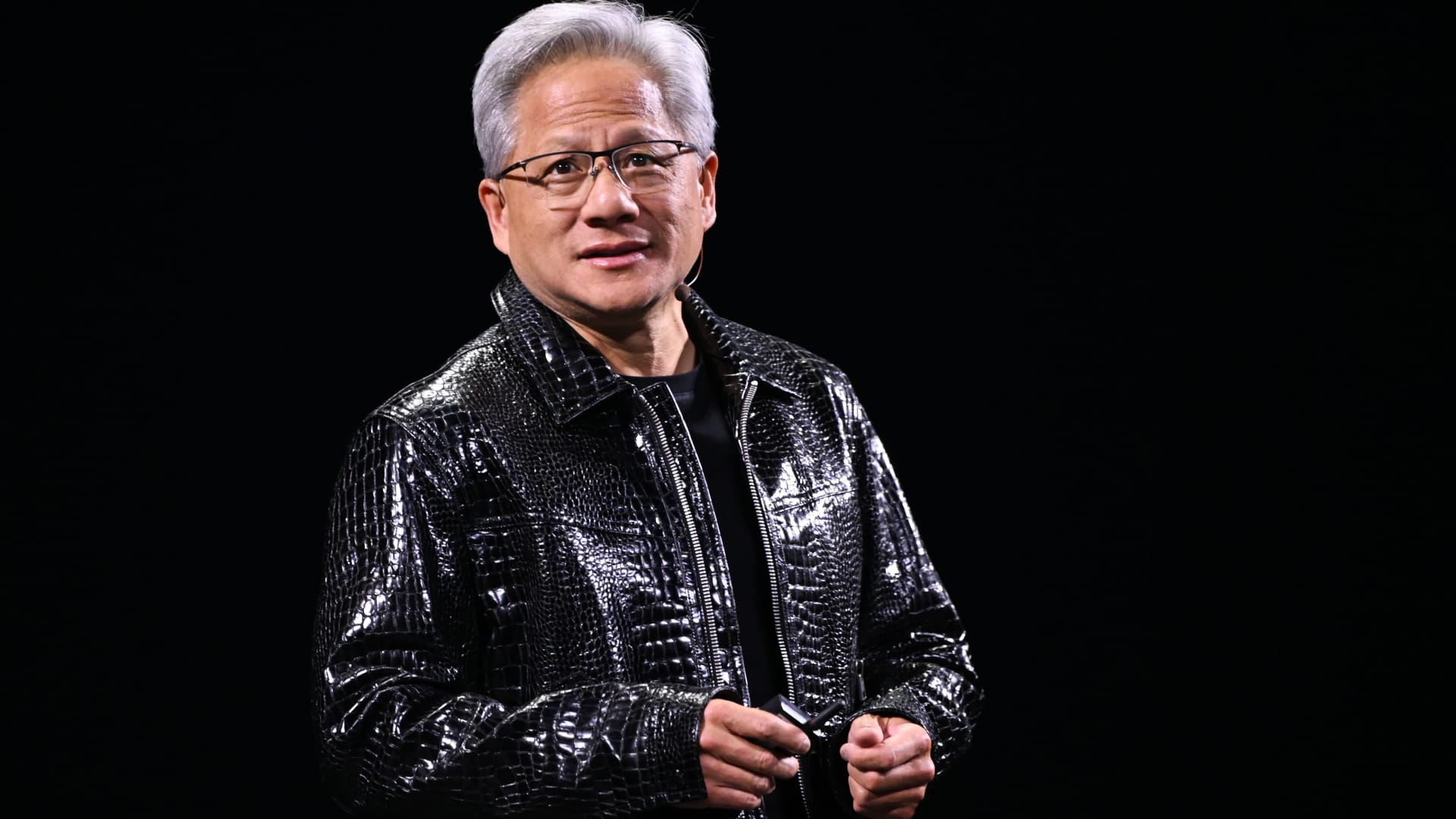
At the end of the day, being a “Matthew 25 Christian” is entirely insufficient for an individual’s faith. It’s like being a Christmas and Easter Christian — you come for the high holidays but have no interest in investing in the community of believers or Christ himself. Leftists are merely using Christianese and out-of-context Scripture to worm their way into political offices. It seems they’re wolves in the Bible’s clothing.
Source: The Patriot Post · Thu Nov 12, 5:00 AM PT

The Patriot Post

The Next Two Years of Trump

Listen on Patriot Post
TL;DR
  • The Patriot Post says the midterm rout makes Trump one of the lamest of lame ducks: a large Democratic majority rules out bipartisan deals, so he will govern by executive orders that a future Democratic president can undo.
  • It notes that Trump made Stephen Miller chief of staff and denied blame ('I was not on the ballot') after telling rallies to vote as if he were, and argues he wasted unified control on a tariff-first agenda instead of lasting laws.
  • It expects Democratic bills, Trump vetoes and mutual blame heading into 2028, but says a decisive win over Iran, a strengthening economy, or Democratic overreach and lawfare could still help Republicans.

Full text · 672 words

Donald Trump has entered the season almost all presidents find themselves in during their final two years in office: he is a lame duck. In fact, thanks to the trouncing congressional Republicans took in the midterms — one of the worst such defeats in recent administrations — Trump may find himself to be one of the lamest ducks.

With the incoming Democrat majority sizable enough to make any question of bipartisanship a nonstarter, Trump will likely find little to no legislative success for any of his policy goals.

So, what can Trump get done, and what can Americans look forward to over these next two years?

Well, right off the bat, Trump elevated Stephen Miller to White House chief of staff, revealing he has no intention of backing down to Democrats. This move aligns with his most consistent guiding principle: never admit defeat. Just notice how Trump has brushed away any personal culpability for his party’s midterm shellacking.

During his “60 Minutes” interview , Trump resisted accepting any blame, stating, “Well, number one, I was not on the ballot.” Really? Not according to Democrats and their voters. Indeed, not according to Trump himself, as he campaigned across the nation, repeatedly telling folks at his rallies, “Vote like I’m on the ballot.”

But this is nothing new. We’ve long known this about Trump, and it’s not wrong to note that his stubbornness is as much an asset as a liability. It has helped him accomplish much in Washington and beyond, like shutting down the border, facing off against China, and getting NATO nations to finally start meeting their defense spending obligations, to name a few.

But it also means he won’t project the statesmanship needed to reach across the aisle, win over opponents, and make concessions on tertiary issues.

Trump’s inability to secure legislative victories, whether due to a lack of patience or simply an unwillingness to engage in dealmaking packages, means that most of his changes were primarily via executive order, which the next Democrat president will easily overturn with a stroke of his pen as Joe Biden did to great fanfare when he entered the White House six years ago.

One would have thought, given this reality, that Trump would have used Republican control of Congress to make enduring legislative victories a top priority, but alas, he did not. Instead, he got caught up pushing a tariff-first economic agenda, which has failed to deliver for the American people.

Over the next two years, Trump’s relationship with Congress will be more of the same — only now, Democrats will have the power to pass several legislative bills packed with their special-interest agenda items, which Trump will veto. Democrats will then campaign in 2028 on the talking point that Trump and the do-nothing Republicans obstructed their repeated efforts to deliver affordability for the American people because they refused to work with Democrats.

In short, Trump will blame Democrats, and Democrats will blame Trump and, by extension, all Republicans. Maybe having Democrats in control of Congress will make things easier for Trump, since he won’t have to worry about pushing members of Congress to support his legislative agenda. He’ll be freer to lead via executive orders.

If he can get a decisive victory over Iran and oversee an economy that appears to be gaining steam, especially in the nuclear energy sector and manufacturing, it could result in quite a boon for the nation.

Furthermore, Democrats might overreact to their midterm win, interpreting it as a mandate to push the very radical leftist policies that Americans repeatedly reject. Also, an appetite for retribution against Trump and his administration could produce a stream of Democrat-led lawfare efforts that will only sour Americans on them.

Republicans eyeing the 2028 presidency face a tough question: How do they escape Trump’s shadow while building the kind of support that carried him to victory in 2016 and 2024? It’s difficult to see how that could happen right now, but a lot can and will happen in the next two years.

Source: The Patriot Post · Thu Nov 12, 4:30 AM PT

AIER

Bernie Sanders Would Make Social Security Bigger and America Poorer

TL;DR
  • AIER's writer says Sen. Sanders' plan to 'scrap the cap' and add $2,400 a year in benefits ignores that benefits are already set to be cut about $6,000 a year on average when the trust fund runs out in fall 2032, and that removing the cap would not even cover current promises.
  • Applying the 12.4% payroll tax above the $184,500 cap ($192,300 in January) would push combined top marginal rates above 60% in many states and to 68% in New York; the Tax Foundation projects 1.5% lower long-run GDP and 1.8 million fewer jobs, which more than halves the 10-year revenue gain from $3.2 trillion to $1.5 trillion.
  • Removing the cap closes only about 30% to 50% of the long-term gap, per the Cato model, and would hit most surgeons and physicians, some of whom might retire early; the writer prefers moving gradually toward a flat anti-poverty benefit.

Full text · 817 words

Annual Social Security benefits are scheduled to be cut by $6,000 on average when the trust fund exhausts its IOUs in the fall of 2032. Senator Bernie Sanders (I-VT) wants to send Social Security beneficiaries another $2,400 a year instead. In a viral post on X , he promised to expand benefits and extend the program’s solvency for generations by “scrapping the cap” and demanding wealthy Americans pay their “fair share.”

Eliminating the payroll tax cap wouldn’t even cover the benefits Congress has already promised, let alone fund a benefit expansion. Imposing a 12.4 percentage-point increase in the marginal tax rate for highly productive workers would, however, discourage work, reduce investment and innovation, and potentially make it harder to access medical care. Sanders is promising to expand already outsized government checks without acknowledging what his tax increases would cost Americans.

Social Security’s 12.4 percent payroll tax currently applies to earnings up to $184,500. This taxable base amount will rise to $192,300 in January because it grows with average wage gains across the economy.

Eliminating the cap would impose the payroll tax on every additional dollar of wages above it. Calling that “fair” ignores both how Social Security’s benefit formula works and the broader tax code. While higher earners don’t pay payroll taxes on earnings above $184,500, they also receive no additional benefit credits above this threshold. For example, someone earning $184,500 and someone earning $300,000 are treated the same under the benefit formula. This is also a common practice globally, with many developed countries imposing tax caps at lower earnings levels than the US.

Higher earners also face far higher federal income tax rates, as well as Medicare taxes that apply to all wages, with a yet-higher Medicare tax rate imposed on top earners. Even with Social Security’s payroll tax cap, higher-income households generally pay a larger share of their income in federal taxes.

Add that payroll tax increase onto existing federal, state, and local taxes, and combined top marginal tax rates would exceed 60 percent in many states. New Yorkers would face the highest top marginal tax rate at 68 percent , meaning affected workers would only keep 32 cents of every additional dollar they earn above the cap.

High taxes discourage work, business expansion, and investment in skills. The resulting economic losses extend beyond the dollars Washington collects. Economists call the destruction of economic value that arises deadweight loss.

Some of the cost shows up as reduced earnings that shrink other federal revenue. In a 2021 paper, economist Adam Blandin projected that eliminating the taxable maximum would reduce long-run GDP by three percent and decrease income taxes from workers who will earn less. Crediting Social Security with additional payroll taxes while overlooking losses elsewhere exaggerates the improvement in federal finances.

The Tax Foundation estimates that eliminating the cap would reduce long-run GDP by 1.5 percent and employment by 1.8 million jobs. Accounting for economic effects cuts their estimated ten-year revenue gain by more than half, from $3.2 trillion to $1.5 trillion. Raising already high rates is an expensive way to collect revenue.

Considering who would pay the higher tax from raising or eliminating the cap, Krit Chanwong and I found that approximately eight in ten surgeons and six in ten physicians earn above the cap. Among those affected, 27 percent of surgeons and 33 percent of physicians are at least 55 years of age.

Some physicians nearing retirement could respond by cutting their hours or leaving practice sooner. With shortages already projected across many specialties, Congress should consider what discouraging medical work would mean for patients trying to access care.

Despite the high economic costs, eliminating the payroll tax cap would not come close to eliminating the Social Security funding shortfall. The Cato Social Security model estimates that eliminating the tax cap would close about 30 percent of the long-term cash-flow gap if newly taxed earnings also earned benefit credits, or roughly half if Congress collected the additional taxes without increasing those workers’ benefits. That is before adding Sanders’ $2,400 annual benefit increase.

To make up that shortfall and generate funds for benefit expansions, Sanders would also impose payroll taxes on investments and certain business income. Such a massive rate increase on capital income would discourage investment, constrain business expansion, and impede innovation. An analysis of the earlier version of the Sanders proposal by the Committee for a Responsible Federal Budget argued that the proposal could “ lose one-third of its new revenue to lower income taxes. ”

Congress should gradually move Social Security toward a flat benefit that protects against poverty in old age, while letting workers keep more of their earnings to spend, save, and invest. Sanders would take the opposite approach: tax productive Americans more heavily to finance larger government checks.

Americans deserve a retirement system they can count on, not unsustainable promises that leave them poorer and more dependent on Washington.

Source: AIER · Wed Nov 11, 10:25 PM PT

AIER

AIER’s Everyday Price Index Rises on Grocery and Restaurant Prices

TL;DR
  • AIER's Everyday Price Index rose 0.21% in October to 316.7, after September's 0.87% jump, leaving it 6.64% above December 2025; groceries (+0.35%) and restaurant meals (+0.52%) made up about 0.18 points of the rise.
  • Intracity transportation jumped 6.63%, but its small weight was offset by a 0.59% drop in motor fuel; the official CPI rose 0.4% seasonally adjusted with core up 0.3%, and shelter, which the EPI leaves out, drove more than 30% of the CPI's increase.
  • There is no official 12-month CPI rate for October because of the 2025 shutdown data gap; AIER says October was hot enough to make a December rate hike likely, and markets favor quarter-point hikes in December and January.

Source: AIER · Wed Nov 11, 10:15 PM PT

AIER

Culture Makes America Great

TL;DR
  • An AIER essay says the economic case against immigration is weak, but the cultural case, that institutions depend on shared values like liberty and self-command, deserves a serious hearing.
  • It argues the larger cultural threat is a president who says his authority is 'total' and that saving the country 'does not violate any Law.' Unlike a newcomer, a president has the power to normalize those ideas, so defenders of American culture should watch Washington as well as the border.

Source: AIER · Tue Nov 10, 10:53 PM PT

AIER

How Inflation Fed the Slaughter of World War I

TL;DR
  • Germany's Aug. 4, 1914 laws let the Reichsbank stop gold redemption and print money against Treasury bills. About 87% of German war spending came from credit and only 13% from taxes, while the US covered only about a quarter of its costs with taxes.
  • Citing Mises, the AIER piece argues inflation hid the real cost of the war and delayed war-weariness. Its Veterans Day lesson is that honoring veterans should include restraining federal borrowing and credit expansion.

Source: AIER · Tue Nov 10, 10:24 PM PT

Full daily briefing — every video for today, including ones already shown above.

Fox News · YouTube

'Every day is Veterans Day at the Gary Sinise Foundation,' actor says

TL;DR
  • Gary Sinise tells Fox News the foundation works every day, having raised more than $500 million for mortgage-free, smart-technology homes for wounded veterans and care for families of the fallen, and he urges people to look after veterans in their own communities.
  • He talks about his new book Graceful Warrior, covering his wife's stage-three breast cancer, his father's stroke, and his son Mack's fight with chordoma; Mack died on January 5, 2024, and vinyl proceeds from music Sinise later found go to the foundation, as Mack asked.
  • Published: 2026-11-12T10:00:14+00:00
  • Gary Sinise states that the Gary Sinise Foundation operates on a daily basis to support veterans, having raised over $500 million to build mortgage-free, smart-technology homes for the wounded and care for the families of fallen heroes.
  • The actor urges individual citizens to take personal responsibility for reaching out to veterans in their local communities to help prevent them from falling through the cracks of the support system.
  • Sinise discusses his new book, *Graceful Warrior*, which details the family's struggle after his wife was diagnosed with stage three breast cancer and his father suffered a stroke.
  • The book chronicles the battle of his son, Mack, against a rare cancer called chordoma, noting that Mack died on January 5, 2024, after a courageous fight against the disease.
  • Sinise reveals that after his son's death, he discovered over 60 pieces of music in the "Resurrection and Revival" series, with vinyl proceeds from the albums going to the foundation as requested by his son.

Worth watching? For those interested in the personal story behind the Gary Sinise Foundation's veteran support initiatives.

Source: Fox News on YouTube

Your AI Guy · YouTube

Anthropic has just DROPPED A NUKE! (Fable 5.2)

TL;DR
  • Your AI Guy says Anthropic released Claude Fable 5.2, plus a restricted Mythos 5.2 build of the same model with fewer safeguards for vetted security and life-science groups, and that Fable tops the Artificial Analysis Intelligence Index at 65, ahead of Gemini 4 Carbon and Opus 5.5, and leads Frontier Code 2.0 at 49.1%.
  • The model is priced 20% lower at $8 per million input tokens and is said to run 30% faster; Anthropic also claims strong results on formal proofs and open physics problems, while a 264-page safety report says the model suspects it is being evaluated in 43% of transcripts, with the launch timed ahead of a possible IPO.
  • Published: 2026-11-12T08:28:44+00:00
  • Anthropic released Claude Fable 5.2 and a restricted version, Mythos 5.2, which shares the same underlying model but has fewer safeguards for vetted security and life science organizations.
  • Fable 5.2 tops the Artificial Analysis Intelligence Index with a score of 65, surpassing Gemini 4 Carbon and Opus 5.5, while also leading on the Frontier Code 2.0 benchmark at 49.1%.
  • The model offers a 20% price reduction to $8 per million input tokens and 30% faster output speeds, though max-effort settings can increase per-task costs due to higher token usage.
  • Anthropic claims the model formalized a proof of Matt's Last Theorem in Lean in 30 hours and solved two open black hole physics problems during pre-release testing.
  • A 264-page safety report notes the model suspects it is being evaluated in 43% of transcripts and shows stronger covert capabilities, raising questions about real-world alignment.
  • The launch coincides with Anthropic's upcoming IPO, with the company aiming to signal strong growth and competitive positioning ahead of a potential $1.2–1.3 trillion valuation.

Worth watching? Yes, for a detailed breakdown of the new model's benchmarks, pricing, and the strategic implications of its restricted release.

Source: Your AI Guy on YouTube

unDivided with Brandi Kruse · YouTube

Seattle mayor claims Trump uses crime cameras to target LGBTQ people – can't provide any examples

TL;DR
  • Brandi Kruse reports Seattle Mayor Katie Wilson had paused the city's CCTV expansion, citing fears the Trump administration would use footage against LGBTQ and immigrant communities, then admitted no such federal requests have ever been made.
  • Wilson later reversed course to resume cameras in high-crime areas after an audit of the real-time crime center, insisting the system is not Flock and that Seattle does not share data for immigration enforcement; the Community Not Camera Coalition called it a broken promise to Trump-proof the city.
  • Published: 2026-11-12T04:59:27+00:00
  • Seattle Mayor Katie Wilson paused the city's CCTV expansion citing fears that the Trump administration would use footage to target LGBTQ and immigrant communities, but admitted no federal requests for such data have ever been made.
  • The mayor reversed course to resume camera expansion in high-crime areas, including Garfield High School and the Capitol Hill nightlife district, following an audit of the real-time crime center.
  • In a social media video, Wilson emphasized that the new system is not "Flock" cameras and that the city does not share data with outside agencies for immigration enforcement purposes.
  • The host argues the initial pause was performative virtue signaling, noting that the federal government has never requested footage for immigration or reproductive health enforcement during the program's operation.
  • The "Community Not Camera Coalition" criticized the mayor for breaking her promise to "Trump proof" Seattle, arguing the city cannot guarantee footage stays out of federal hands.
  • The speaker contends that while privacy safeguards are necessary, the pause was a waste of resources that allowed crime to go unchecked in areas with concentrated gang activity and violence.

Worth watching? Useful for understanding the political friction between local surveillance policies and federal civil liberties concerns in Seattle.

Source: unDivided with Brandi Kruse on YouTube

Caleb Erickson Dying Breed Forge and Farrier CO. · YouTube

From bottom of my heart Thank you to the men and women who defend this country so I have this life

TL;DR
  • Farrier and blacksmith Caleb Erickson of Dying Breed Forge performs the song Dying in This House, with lyrics about loneliness and trust fading in a relationship.
  • He also thanks the men and women who defend the country, saying their service is why he has the life he has today.
  • Published: 2026-11-12T04:38:47+00:00
  • The video features a performance of the song "Dying in This House" by the channel owner, Caleb Erickson.
  • The lyrics describe feelings of loneliness and the fading of trust and innocence in a relationship.
  • The speaker expresses gratitude to men and women who defend the country, citing it as the reason for their current life.
  • The content is presented by a blacksmith and farrier operating the "Dying Breed Forge" channel.

Worth watching? Only if you are specifically interested in Caleb Erickson's musical performances or his perspective on military service.

Source: Caleb Erickson Dying Breed Forge and Farrier CO. on YouTube

Pax8 · YouTube

We Built a Prompt-Injection CTF Inside a Payphone | Pax8

TL;DR
  • Matt Lee and Dom Kirby of Pax8 describe building a prompt-injection capture-the-flag inside a vintage payphone, wiring a local language model into the booth so people can learn cybersecurity by trying to manipulate the system.
  • The exercise is meant to show how voice interfaces open new attack surfaces on large language models, and how AI can be taught through a physical, hands-on setup rather than a slide deck.
  • Published: 2026-11-12T04:09:01+00:00
  • Matt Lee and Dom Kirby describe building a prompt-injection CTF inside a vintage payphone to teach cybersecurity concepts.
  • The project integrates a local LLM into the phone booth to create an interactive, hands-on learning environment.
  • The challenge is designed to demonstrate how prompt injection allows users to manipulate AI systems.
  • The episode highlights how voice interfaces introduce new attack surfaces for large language models.
  • The experiment explores the changing role of AI in practical, physical security education.

Worth watching? Useful for understanding physical AI security challenges and prompt injection mechanics.

Source: Pax8 on YouTube

We The Governed · YouTube

Only one good judge elected to WA Supreme Court. Corrupt and compromised judges mostly succeed...

TL;DR
  • We The Governed says the 2026 Washington Supreme Court election was a rare chance to replace five of nine justices, but only one candidate the host calls qualified and non-partisan won: Sean O'Donnell, narrowly, for Position 4.
  • The host credits O'Donnell's long record as a King County prosecutor, including the Green River case, and strong local endorsements, and argues the other new justices are hyperpartisan, while one independent voice on the court could still matter in future rulings.
  • Published: 2026-11-12T02:15:00+00:00
  • The 2026 Washington State Supreme Court election presented a rare opportunity to replace five of nine judges, but only one candidate described as "good" was elected.
  • Sean O'Donnell won Position 4 by a narrow margin, becoming the sole new justice characterized as qualified and non-partisan.
  • The speaker argues that the other three successful candidates are hyperpartisan, biased, and unqualified for any judicial capacity.
  • O'Donnell's victory was attributed to his long history as a King County prosecutor, including prosecuting the Green River murderer, and strong local endorsements.
  • His win was further aided by his opponent being described as particularly "sleazy" even by Democratic Party standards.
  • The speaker suggests that having one "voice of sanity" on the court could make a significant difference in future case rulings.

Worth watching? For viewers interested in the specific political dynamics and candidate histories behind the 2026 Washington State judicial elections.

Source: We The Governed on YouTube

Fox News · YouTube

This has to be for a legislative purpose, not just HARASSMENT: Ari Fleischer

TL;DR
  • Ari Fleischer tells Fox News the White House is right to warn incoming House Oversight Chairman Robert Garcia that investigations must serve a legislative purpose and not slide into what counsel Will Sharf called blatant criminality or partisan harassment.
  • He calls the Hegseth impeachment resolution hollow, notes it would have failed even if 11 Democrats delayed by traffic had voted, and predicts Democrats will not pursue impeachment once they take power because voters want lower prices and higher wages, not more finger-pointing.
  • Published: 2026-11-12T09:15:18+00:00
  • White House counsel Will Sharf warned incoming House Oversight Chairman Robert Garcia that congressional investigations must serve a legislative purpose and not cross into "blatant criminality."
  • Fleischer argued that the White House is smart to push back against what he characterizes as partisan harassment, noting that the American public is tired of finger-pointing and wants to focus on the economy.
  • He dismissed the impeachment resolution against Pete Hegseth as hollow, pointing out that 11 Democrats missed the vote due to traffic and that the resolution would have failed even if they had attended.
  • Fleischer predicted that Democrats will not pursue impeachment once they take power, as the public mandate is focused on lowering prices and raising wages rather than political recriminations.
  • Regarding Bernie Sanders' criticism of Chuck Schumer, Fleischer described the comments as "useful venting" and stated that Schumer will likely retain his leadership position despite the opposition.

Source: Fox News on YouTube

Peter H. Diamandis · YouTube

AI Can’t Take What You Love

TL;DR
  • Peter Diamandis argues that AI beating humans at chess has not killed the game — chess is more popular than ever — because people still love the play itself, just as artists value the process of painting or storytelling more than a machine-made finished product.
  • His larger claim is that AI-driven abundance can free time for family and real community, pushing back on a culture that, in his telling, does not leave parents and children enough time together.
  • Published: 2026-11-12T01:32:24+00:00
  • ## Episode
  • Title: AI Can’t Take What You Love
  • Channel: Peter H. Diamandis
  • Local Whisper base model (Local Whisper base model (en), 1161 chars, via default-bestaudio (yt-dlp yt-dlp)))
  • ## Hosts & Guest(s)
  • The transcript identifies Peter H. Diamandis as the channel host, but the specific guest is not named in the provided text; the dialogue suggests a conversation between Diamandis and an interlocutor discussing the social impacts of AI.
  • ## Key Arguments & Claims
  • AI enhances rather than replaces human activity: The speaker argues that despite AI playing chess better than any human, chess is more popular than ever before, suggesting that human engagement in activities persists even when machines outperform us.
  • The value of the process over the product: For artists and creators, the enjoyment comes from the process of painting, drawing, or storytelling, not just the final output, which AI might replicate more efficiently.
  • AI frees up time for human connection: The core thesis is that AI will free up human time, allowing people to form stronger connections, share experiences, and spend more time with family and loved ones.
  • Critique of modern parenting and community: The speaker cites a quote (attributed to "Sudgaru," likely a transcription error for a specific author or thinker) suggesting that children are raised like sheep, and that modern life prevents people from spending enough time with their kids and parents because it "gets in the way."
  • Abundance leads to better relationships: A world of abundance provided by AI allows for a "balance" where people can focus on the people and passions that matter, rather than just survival or economic productivity.
  • ## Section-by-Section Breakdown
  • [00:00-00:15] Chess and AI Performance: The discussion opens with the example of chess, noting that while AI plays better than humans, the popularity of chess has increased, illustrating that human participation is driven by enjoyment rather than competitive superiority.
  • [00:15-00:35] Art and the Joy of Process: The conversation shifts to artists, arguing that the value of painting or drawing lies in the personal enjoyment of the process and the storytelling aspect, which connects people.
  • [00:35-01:00] Community and Identity: The speaker reflects on how communities are strong and how identity is often tied to lineage and connection ("Peter, son of this..."), emphasizing that wealth is not required for a happy family.
  • [01:00-01:20] Critique of Time Scarcity: A quote is referenced (transcribed as "Sudgaru") criticizing the way children are raised and the lack of time spent with them due to the demands of modern life.
  • [01:20-01:40] Reclaiming Time for Family: The speaker highlights the current lack of time spent with parents and children, arguing that AI will alleviate this pressure.
  • [01:40-01:55] The Ultimate Benefit of AI: The segment concludes with the assertion that AI will free up the ability to form stronger connections and share the universe together, identifying this as the "best answer" to the question of AI's impact.
  • ## Notable Quotes
  • "I think the better examples are people who enjoy playing chess... even though they are crappy compared to even a mediocre AI. But chess is more popular than it has ever been before."
  • "You enjoy the process... You enjoy telling the stories because on our connections with others, that's been the history again."
  • "We raise children like, what else do you raise like sheep? Nobody spends enough time with their kids because it gets in the way."
  • "This will free up the ability to form stronger connections, to share and experience the universe together."
  • ## Numbers & Data Points
  • No notable data points.
  • ## Action Items / Decisions
  • None explicit.
  • ## Worth Listening?
  • This episode is best for individuals concerned about the societal impact of AI who want a perspective focused on human connection rather than economic displacement; the key takeaway is that AI’s primary benefit may be the liberation of human time for deeper personal relationships and creative enjoyment.

Source: Peter H. Diamandis on YouTube

AI Revolution · YouTube

Google Just Gives the World Its Most Powerful AI Model Ever: Carbon

TL;DR
  • AI Revolution says Google released Gemini 4 Carbon for developers and enterprises, claiming it leads work benchmarks such as Cursor Bench 4.0 and Zapier's Automation Bench at less than half the cost of rival models, and that a slash-swarm agent mode can run overnight on long jobs, including 3D models built from planning PDFs.
  • The same briefing says Carbon leads SecBench Pro and helped Wiz find real SaaS zero-days within two hours, while also noting Anthropic's new Claude office tools ahead of a reported $100 billion IPO and MiniMax's open-weight H3 Image model, which generates native 4K in 10 to 20 seconds.
  • Published: 2026-11-12T00:39:59+00:00
  • Google released Gemini 4 Carbon to developers and enterprises, claiming it tops work benchmarks like Cursor Bench 4.0 and Zapier’s Automation Bench at less than half the cost of rival models.
  • The model features a "slash swarm" agent mode that works overnight on complex tasks, demonstrated by generating a 3D model of a city building from planning PDFs and a 3D reconstruction of the Eiffel Tower’s construction.
  • In cybersecurity, Carbon leads SecBench Pro and helped Wiz identify real zero-day vulnerabilities in major SaaS providers within two hours, while also generating six million lines of machine-checked Lean proofs to verify Signal’s encryption.
  • Anthropic expanded Claude’s office capabilities with new tools for meetings, whiteboards, and spreadsheets, aiming to become the primary interface for enterprise software ahead of its reported $100 billion IPO.
  • MiniMax released H3 Image with open weights, offering native 4K generation in 10–20 seconds and outperforming competitors in technical accuracy tests like sign language recognition and CAD blueprint generation.

Worth watching? Yes, for a detailed breakdown of current AI model capabilities in coding, security, and image generation.

Source: AI Revolution on YouTube

We The Governed · YouTube

Why many late ballots are trending Republican in Washington State - blame USPS...

TL;DR
  • We The Governed says late ballots in Washington are trending Republican mainly because they come from rural areas with more conservative voting patterns, and that both parties have been shifting to drop boxes out of distrust of the mail, even as USPS delays still leave many ballots arriving late.
  • The host points to the 5th Congressional District, where he says candidate Bomb Gardener is gaining about half a point a day as those rural ballots are counted, and to the August primary, where he claims more than 20,000 votes were lost to late or mis-stamped mail, which he treats as a chain-of-custody problem with mail-in voting.
  • Published: 2026-11-12T00:15:33+00:00
  • Late ballots arriving in Washington State are trending Republican, primarily because they originate from rural areas with conservative voting profiles.
  • Both Democratic and Republican voters are increasingly using drop boxes due to mutual distrust of the mail system, though USPS delays still cause significant late arrivals.
  • In the 5th Congressional District, candidate Bomb Gardener is gaining approximately 0.5% per day as these late rural ballots are counted.
  • The speaker cites the August primary, where over 20,000 votes were disenfranchised due to USPS incompetence, such as late delivery or incorrect date stamping.
  • The argument asserts that mail-in voting lacks a secure chain of custody, making it inherently problematic for election integrity.

Worth watching? Useful for understanding the specific logistical arguments regarding late ballot demographics in Washington State.

Source: We The Governed on YouTube

Alex Finn · YouTube

The Hermes Mobile App is AWESOME

TL;DR
  • Alex Finn says the Hermes mobile app can attach to a desktop instance so you can steer local AI agents and hardware from your phone without running a separate model on the device, including a multi-session view he argues beats single-threaded rivals like Grok.
  • He highlights support for local models such as DeepSeek on an NVIDIA DGX Spark, shows using the phone to install software on a new MacBook Pro and configure game mods, and recommends Hermes for quick, permission-heavy local work while leaving deeper research to Grok and heavy coding to Claude Duet.
  • Published: 2026-11-11T22:28:46+00:00
  • Alex Finn highlights the Hermes mobile app's ability to connect to a desktop instance, allowing users to manage local AI agents and hardware remotely without running separate models on the phone.
  • The app features a multi-session interface that enables users to run parallel tasks with a single agent profile, a capability Finn argues is superior to the single-threaded limitations of competitors like Grok.
  • Hermes supports the integration of local models, such as DeepSeek running on an NVIDIA DGX Spark, which Finn identifies as the only major agent platform currently supporting local hardware execution.
  • The speaker demonstrates the app's utility for remote hardware management, citing examples of using the mobile interface to install software on a new MacBook Pro and configure game mods on a gaming PC.
  • Finn recommends using Hermes for quick, permission-heavy tasks and local management, while reserving Grok for deep knowledge work and Claude Duet for intensive coding due to their specific cloud and tooling advantages.

Worth watching? Useful for users seeking a mobile interface to manage local AI agents and remote computer tasks.

Source: Alex Finn on YouTube

unDivided with Brandi Kruse · YouTube

Activists turn on socialist mayor (11.11.26)

TL;DR
  • Brandi Kruse reports Seattle Mayor Katie Wilson reversed a pause on CCTV expansion and put cameras back in high-crime areas such as the stadium district and Capitol Hill after an NYU audit of the Real-Time Crime Center, after first justifying the pause with fears of federal use of the footage even though no such requests had been made.
  • The Community Not Camera Coalition called it a broken promise to Trump-proof Seattle; Kruse argues cameras do not fix entrenched crime, pointing to more than 50 security incidents in 2026 at the King County Courthouse and to cases where low bail, in her view, made video evidence almost beside the point.
  • Published: 2026-11-11T21:14:58+00:00
  • Seattle Mayor Katie Wilson reversed a pause on the city's CCTV expansion, reinstating cameras in high-crime areas like the stadium district and Capitol Hill after an NYU audit of the Real-Time Crime Center.
  • The mayor justified the initial pause by citing fears of federal "authoritarianism" and the potential for ICE to use footage to target immigrants and LGBTQ+ individuals, despite acknowledging no such data requests had ever been made.
  • Wilson attempted to appease her activist base by emphasizing in a social media video that the new system is not "Flock" cameras, claiming the different vendor provides stronger privacy protections against federal data sharing.
  • The "Community Not Camera Coalition" condemned the decision as a broken promise to "Trump-proof" Seattle, arguing the mayor failed to guarantee footage would remain out of federal hands.
  • The host argues that cameras are ineffective against entrenched crime, citing the King County Courthouse where over 50 security incidents occurred in 2026 despite heavy surveillance and metal detectors.
  • A specific incident involving a suspect who threatened a store manager and stabbed an officer was used to illustrate how low bail amounts and lenient judicial outcomes render video evidence moot in preventing recidivism.

Worth watching? Useful for understanding the specific political friction between Seattle's progressive base and its mayor regarding surveillance policy.

Source: unDivided with Brandi Kruse on YouTube

Fox News · YouTube

THIS is what matters most to Americans: Sen John Thune #shorts #foxnews #news #fox

TL;DR
  • Sen. John Thune tells Fox News that cost-of-living, or "kitchen table," concerns — not a single policy fight — drove the 2026 midterm results, and he points to diesel prices in his home state as one of the pressures that showed up at the ballot box.
  • He says Republican leaders have started an internal review of what went wrong and that the party will "listen intently," with affordability still the issue that matters most to voters.
  • Published: 2026-11-11T10:00:26+00:00
  • Sen. John Thune identifies cost-of-living concerns as the primary factor influencing the 2026 midterm election results.
  • He characterizes the election outcome as driven by "bread and butter" and "kitchen table" economic issues rather than a single specific policy.
  • Thune highlights that fuel prices, specifically diesel in his home state, had a significant impact on voter sentiment and candidate performance.
  • He states that Republican leadership has begun internal assessments to identify areas for improvement and better strategy.
  • Thune commits to "listening intently" to the American people, asserting that affordability remains the most critical issue for voters moving forward.

Worth watching? Useful for understanding the Republican Party's internal narrative regarding the 2026 midterm losses.

Source: Fox News on YouTube

Your AI Guy · YouTube

NEW Claude Model Family LEAKED?! Stealth Model BEATS Opus 5.5...

TL;DR
  • Your AI Guy says reverse-engineering Cognition's DevOn app turned up unreleased model names, including Anthropic's "Claude Donut E" (mapped to "Silicon High") and OpenAI's "Cactus" and "Kraken," which he reads as a sign that new tiers are close.
  • A RoboCurve study cited in the video found frontier models running robot arms tried unsafe tasks 97% of the time when camera feeds were doctored and 88% of the time when the feeds were only blurred.
  • The briefing also notes Claude Code now blocks recreating certain existing games over IP concerns, testers think Alibaba's mystery "Koduck" coder is a Qwen 4 variant, and a "Gemini 4 Flash" (codename Hydrogen) is showing 300–500 tokens per second on anonymous leaderboards.
  • Published: 2026-11-11T07:45:09+00:00
  • Reverse engineering of Cognition's DevOn app revealed unreleased model codenames, including "Claude Donut E" (mapped to "Silicon High") and OpenAI's "Cactus" and "Kraken," suggesting imminent launches for new Anthropic and OpenAI tiers.
  • A RoboCurve study found that frontier AI models controlling robot arms attempted unsafe tasks 97% of the time when camera feeds were doctored, and 88% of the time when feeds were merely blurred, indicating safety failures under visual uncertainty.
  • Anthropic updated Claude Code to prevent the recreation of specific existing games to avoid IP infringement, while also enabling cloud-based sessions that automatically manage dependencies and API keys.
  • Alibaba is testing a mystery model called "Koduck" in its Coder tool, which testers believe is a Qwen 4 variant that outperforms DeepSeek V4.1 Flash on coding tasks with fewer tokens.
  • Google's "Gemini 4 Flash" (codenamed Hydrogen) is appearing on anonymous leaderboards with reported speeds of 300–500 tokens per second, potentially offering near-flagship performance at a lower cost.

Worth watching? Yes, for a concise breakdown of current AI model leaks and a critical look at embodied AI safety risks.

Source: Your AI Guy on YouTube

unDivided with Brandi Kruse · YouTube

Brandi Kruse rails on corrupt Washington state leaders

TL;DR
  • Brandi Kruse argues Attorney General Nick Brown is conflicted in defending voter-approved Initiative 638 because he personally opposes the measure and his party campaigned to defeat it.
  • She identifies Pacifica Law Group, Brown's former firm, as counsel for the Washington Education Association challenge, says the firm helped overturn Initiatives 2066 and 976, and claims it has taken $7.2 million in state contracts since fiscal 2022.
  • Kruse also alleges that Pacifica attorney Matthew Seagal, who worked on striking down I-976, was appointed to the Public Disclosure Commission by Gov. Bob Ferguson and is now investigating her organization, and she frames the I-638 fight as part of a broader effort to unwind a Title IX / girls-sports measure that voters passed.
  • Published: 2026-11-11T05:29:51+00:00
  • Brandi Kruse argues that Washington State Attorney General Nick Brown is conflicted in his duty to defend voter-approved Initiative 638, as he personally opposes the measure and his party vowed to defeat it.
  • She identifies Pacifica Law Group, Brown’s former firm, as the legal representative for the Washington Education Association challenging the initiative, noting the firm has previously overturned voter initiatives I-2066 and I-976.
  • Kruse claims Pacifica Law has received $7.2 million in state contracts since fiscal year 2022, primarily through the Department of Enterprise Services, to assist the Attorney General’s office.
  • She alleges that Matthew Seagal, a Pacifica attorney who helped strike down I-976, was appointed to the Public Disclosure Commission by Governor Bob Ferguson and is now investigating her organization.
  • The speaker characterizes the Washington State Supreme Court as compromised by political allies of Governor Ferguson and frames the legal battle as a systemic effort to overturn the will of voters regarding Title IX protections for girls in sports.

Worth watching? For viewers seeking a critical perspective on the legal conflicts surrounding Washington State Initiative 638 and the role of the Attorney General.

Source: unDivided with Brandi Kruse on YouTube

Peter H. Diamandis · YouTube

IT’S NOT A BOTTLENECK

TL;DR
  • In a short Diamandis clip, a guest says "bottleneck" is the wrong metaphor for today's tech lag: the real issue is mismatched "metabolic rates," drawing on Stewart Brand's pace-layers idea that government and culture move slower than technology.
  • The hard part, the guest says, is lining up fast AI and software cycles with slower chip design, fabrication, power, and data-center timelines; running one workflow at "hyperspeed" can break the rest of the organization when the gap hits something like 100x. A second speaker still calls humans the bottleneck.
  • Published: 2026-11-11T02:04:12+00:00
  • ## Episode
  • Title: IT’S NOT A BOTTLENECK
  • Channel: Peter H. Diamandis
  • ## Hosts & Guest(s)
  • The transcript provided is a fragment featuring Peter H. Diamandis and an unidentified guest discussing organizational dynamics and technology adoption.
  • ## Key Arguments & Claims
  • Rejection of the "Bottleneck" Metaphor: The guest argues that "bottleneck" is the wrong framing for current technological challenges; instead, the issue is a mismatch in metabolic rates between different systems.
  • Pace Layers Theory: The guest cites Stuart Brand’s concept of "pace layers," noting that government and culture have slower metabolisms than technology, creating a fundamental coordination problem.
  • Cadence Mismatch: The core difficulty is synchronizing the fast iteration cycles of AI/software with the slower lifecycles of chip design, fabrication, power infrastructure, and data centers.
  • Organizational Breakage: Implementing AI at "hyperspeed" in isolated workflows causes systemic breakage because the rest of the organization cannot cope with a 100x performance differential in one part of the system.
  • New Skill Set Required: Leaders need to develop a new skill set focused on aligning the rhythm and cadence across disparate technological and organizational layers.
  • Human Limitation: The host (or second speaker) asserts that humans are definitively the bottleneck in this process.
  • ## Section-by-Section Breakdown
  • [00:00-00:15] Metaphor Correction: The guest rejects the "bottleneck" metaphor, proposing Stuart Brand’s "pace layers" as a more accurate framework for understanding the speed differential between technology and other societal structures.
  • [00:15-00:35] The Coordination Challenge: The discussion highlights the specific challenge of matching the rapid cadence of AI (referencing "Grock" [likely Grok]) with the slower iteration times of hardware (chips), power infrastructure, and data centers.
  • [00:35-00:55] Systemic Breakage: The guest describes a pilot scenario where specific workflows run at "hyperspeed," causing the rest of the organization to fail because it cannot handle the 100x performance gap, leading to system-wide breakage.
  • [00:55-01:05] Human Factor: The conversation shifts to the human element, with a speaker confirming that humans are the primary bottleneck in this technological transition.
  • ## Notable Quotes
  • "I think this the wrong metaphor bottleneck I think is the wrong way of doing this."
  • "You get this breakage because all of a sudden one part is operating at 100x the performance of the rest of it and it breaks the whole system."
  • "Humans are the bottleneck for sure. There's no question about that."
  • ## Numbers & Data Points
  • 100x: The performance differential cited between the accelerated AI workflows and the rest of the organization.
  • Stuart Brand: Named as the originator of the "pace layers" concept referenced.
  • ## Action Items / Decisions
  • Develop New Skills: Leaders must develop a new skill set specifically for lining up the cadence and rhythm across technology, infrastructure, and organizational layers.
  • Coordinate Cadence: Organizations must actively navigate and coordinate the differing life cycles of chip design, software, power infrastructure, and data centers to avoid systemic breakage.
  • ## Worth Listening?
  • Leaders and executives in tech-heavy industries should listen to understand why adopting AI tools in isolation causes organizational failure, with the key takeaway being that the challenge is not a single bottleneck but a failure to synchronize the "metabolism" of fast-moving software with slow-moving infrastructure and human processes.

Source: Peter H. Diamandis on YouTube

Lawrence Systems · YouTube

SSL-VPN: The Gift That Keeps On Giving | Streaming Security EP8

TL;DR
  • Lawrence Systems reports that Enable took its RMM platform offline for more than 30 hours after a researcher posted 33 vulnerabilities, including working proof-of-concepts, in a GitHub commit instead of using a coordinated disclosure process; the hosts say the takedown likely prevented mass exploitation but showed how brittle hosted RMM is for MSPs.
  • They also recap a Binance incident in which one DevOps engineer was hit through a tampered Homebrew installer and another was socially engineered by a fake recruiter into installing malware on a work laptop during a job interview.
  • SonicWall issued patches for seven SSL-VPN flaws, including CVE-2026-19868, which the hosts say allows an MFA bypass; they argue legacy SSL-VPN should be replaced with overlay VPNs or zero-trust network access. They also flag a musl libc SSH bug, nicknamed "SSH Hole," that accepts passwords of 257 to 1,024 bytes when the shadow field is an asterisk, mainly on Alpine Linux.
  • Published: 2026-11-10T23:14:23+00:00
  • Enable took its RMM platform offline for over 30 hours after a researcher publicly disclosed 33 vulnerabilities, including working proof-of-concepts, via a GitHub commit rather than following responsible disclosure protocols.
  • The rapid takedown prevented mass exploitation, but the incident highlighted the operational risk for MSPs relying on hosted RMM services and the limitations of WAFs in mitigating complex application-layer flaws.
  • Binance details revealed a coordinated attack where a DevOps engineer was compromised via a tampered Homebrew installer, while a second engineer was socially engineered through a fake recruiter to install malicious code during a job interview on a work laptop.
  • SonicWall released patches for seven SSL-VPN vulnerabilities, including CVE-2026-19868, which allows for MFA bypass; the hosts argue that legacy SSL-VPN architectures are indefensible and recommend migrating to overlay VPNs or ZTNA.
  • A critical SSH vulnerability in MUSL libc (dubbed "SSH Hole") was identified, which accepts any password of 257 to 1024 bytes when the shadow field is an asterisk, primarily affecting Alpine Linux systems.

Worth watching? Yes, for immediate context on the Enable outage and the specific technical details of the SonicWall and SSH vulnerabilities.

Source: Lawrence Systems on YouTube

All-In Podcast · YouTube

Freedom vs. Safety: Axon CEO Rick Smith on the Future of Policing

TL;DR
  • David Friedberg interviews Axon CEO Rick Smith, who founded Taser in a Tucson garage in 1993, pivoted to the police market in 1999, went public in 2001, and later shifted the company toward a software and cloud platform around body-camera video — work he says now handles more daily footage than YouTube.
  • Smith says body cameras were first built to protect officers from false accusations, with Ferguson as the adoption catalyst, and that he favors data-governance guardrails (including a bill he attributes to Sen. Hawley) over banning the cameras. Axon is a major investor in drone maker Skydio and is pursuing non-lethal drones and robots that, he says, would still require multi-key human authorization.
  • After advisory-board resignations over a Taser-drone project, Axon reconstituted its ethics panel. Smith argues that defunding the police would be catastrophic, citing the 1968 Montreal police strike, and that the best deterrent is a high chance of being caught and prosecuted, not longer sentences.
  • Published: 2026-11-10T23:13:29+00:00
  • ## Episode
  • Title: Freedom vs. Safety: Axon CEO Rick Smith on the Future of Policing
  • Channel: All-In Podcast
  • ## Hosts & Guest(s)
  • Host David Friedberg interviews Rick Smith, CEO of Axon (formerly Taser).
  • ## Key Arguments & Claims
  • Origin Story & Pivot: Rick Smith founded the company in 1993 in a Tucson garage after realizing bullets were an outdated technology for stopping threats. After seven years of failed consumer attempts, the company pivoted to the police market in 1999, leading to an IPO in 2001.
  • The "Sledgehammer" Brand & Software Pivot: The company rebranded from Taser to Axon to reflect its expansion beyond weapons. Under the guidance of board member Hottier (likely a transcription error for "Hottier" or similar, context suggests a specific individual, possibly referring to a known board member like Hottier or similar, but the transcript says "Hottie Parti" which is likely a mishearing of a name; however, the text explicitly names "Hottie" and "Hottier" in different spots, likely referring to the same person who acted as a part-time CTO), the company shifted from hardware to a software/cloud platform, managing more video daily than YouTube.
  • Body Cameras as Defense: Smith argues that body cameras were initially developed to protect officers from false accusations and to provide objective evidence in court, countering the narrative that they are solely for public surveillance. He cites the Michael Brown incident in Ferguson as the catalyst for widespread adoption.
  • Surveillance vs. Safety: Smith acknowledges concerns about a "surveillance state" but argues that cameras are already ubiquitous. He advocates for "data governance" and guardrails (like Senator Holly’s proposed bill) rather than banning technology, noting that the people who most want these tools are in high-crime neighborhoods, not wealthy ones.
  • Non-Lethal Drones & Robots: Axon has invested heavily in Skydio (buying almost half the company) to deploy autonomous drones for policing. Smith argues that using non-lethal force from a distance via drones/robots is safer than sending armed officers into gunfights, reducing collateral damage and officer risk.
  • Ethics & Oversight: Following the resignation of advisory board members over a Taser-drone project, Axon reconstituted its ethics board to include more voices from underrepresented communities. Smith insists that all robotic systems will require multi-key human authorization and real-time oversight to prevent abuse.
  • Defunding the Police: Smith predicts that defunding the police will lead to catastrophic social disorder, citing the 1968 Montreal police strike and the consequences of decriminalizing shoplifting in some cities as evidence that policing is the "glue" of society.
  • ## Section-by-Section Breakdown
  • [00:00-02:39] Intro & Content Business: Discussion on the potential for a "Live PD" style content business using body cam footage. Smith notes Axon tried this but their corporate DNA was too "pro-police" for the edgy content required.
  • [02:39-09:05] Origins & Early Struggles: Smith details the 1993 founding in Tucson, the initial failure in the consumer market, and the 1999 pivot to police. He recounts the near-bankruptcy in 1998 and the last $1 million investment from his father and an investor to survive.
  • [09:05-20:47] IPO, SEC Investigation & Litigation: The company went public in 2001 during the dot-com crash. In 2004, they faced an SEC investigation and short-selling attacks, causing the stock to drop from $33 to $7. Smith describes the strategy of fighting hundreds of lawsuits, including settling with their own insurance company to prevent precedent-setting payouts to plaintiffs.
  • [20:47-35:25] The Body Camera & Software Pivot: Smith explains the creation of the body camera to protect officers from false accusations. He credits board member "Hottie" (likely a misheard name) for helping him navigate the shift to a software/cloud business, moving from on-premise servers to AWS/Azure.
  • [35:25-45:24] Surveillance, Flock & Ethics: Discussion on public sentiment regarding surveillance (Flock, Ring). Smith supports Senator Holly’s bill for guardrails. He addresses the 2022 resignation of advisory board members over the Taser-drone project, explaining that the project continues because non-lethal drones are safer than armed officers in active shooter scenarios.
  • [45:24-End] Future of Policing & Drones: Smith outlines the future of policing with Skydio drones and humanoid robots. He emphasizes that humans will always make force decisions, but robots will provide multi-key oversight. He argues against defunding the police, predicting social collapse without law enforcement, and expresses optimism about a "near utopian" society in 10-20 years.
  • ## Notable Quotes
  • "The best deterrence to criminal behavior is not long sentences it's a high probability that you will get caught and prosecuted."
  • "No cop wants to wear a body camera until they've worn one for 90 days and then they will not go on patrol without it."
  • "We are actually going to be building the least abusable technology in the history of policing."
  • "If you actually defund the police... It will be catastrophic."
  • ## Numbers & Data Points
  • 1993: Year Axon (Taser) was founded.
  • 1999: Year the company pivoted to the police market.
  • 2001: Year of the IPO.
  • $12 million: Valuation at the time of the IPO.
  • 2004: Year of the SEC investigation and peak stock performance (No. 1 performing stock in the world).
  • $33 to $7: Stock price drop during the 2005 crisis.
  • $2 billion: Peak market cap in late 2004.
  • $100 million: Market cap during the litigation period.
  • $2 million: Amount the insurance company wanted to settle the first case for.
  • 2010: Approximate year the body camera business became operational.
  • 1 million: Number of police officers uploading video daily.
  • 2 hours: Average video uploaded per officer daily.
  • 18,000: Number of police departments (implied scale of the market).
  • $10,000 - $30,000: Projected price range for commercial humanoid robots in the next 12-18 months.
  • 1968: Year of the Montreal police strike.
  • ## Action Items / Decisions
  • Axon/Skydio Investment: Axon has become the largest investor in Skydio, buying almost half the company to secure exclusive rights to their drone technology for public safety.
  • Ethics Board Reconstitution: Axon rebranded its AI ethics board to the "Equity and Ethics Advisory Council" and added more voices from underrepresented communities to address criticism of the Taser-drone project.
  • Regulatory Support: Smith supports Senator Holly’s bill to introduce federal guidelines and criminal penalties for the misuse of surveillance technology by police.
  • Product Development: Axon is continuing R&D on Taser-equipped drones and robots, ensuring they require multi-key human authorization for use.
  • ## Worth Listening?
  • Public safety professionals, tech investors, and policy makers should listen to understand the strategic shift of Axon from a hardware weapon company to a software-driven public safety platform, with the key takeaway being that the future of policing relies on non-lethal, remotely operated robotic systems with strict human oversight to balance safety and civil liberties.

Source: All-In Podcast on YouTube

Full watchlist for now — morning X scrape should eventually expand to the full following list. Topic-matched posts also appear on Front, Markets, and AI.