· Vol. 1, No. 1 · Port Angeles, Wash.

The Albright Daily News

Local · Markets · AI · Tech · Weather — for Albright Networks

West Coast Bible Study · WCBS

Psalm 132: The Temple and the Davidic Covenant

2026-11-10 · Amateur radio Bible study

TL;DR
  • The study reads Psalm 132 as a prayer likely written by Solomon at the temple's dedication, looking back on David bringing the Ark to Jerusalem and wanting to build God a dwelling place.
  • It ties the psalm to the Davidic Covenant in 2 Samuel 7 and names Jesus as its fulfillment, the root and offspring of David, with temple furnishings like the menorah and incense altar pointing to Christ's intercession.
  • The 'if' in verse 12 is read as the need for human perseverance alongside God's preservation, and the local church is presented as the New Covenant temple whose work runs across generations.

The study examined Psalm 132, identifying it as a prayer likely written by Solomon during the dedication of the temple. The psalm reflects on David's role in bringing the Ark to Jerusalem and his desire to build a dwelling place for God, which Solomon fulfilled. The discussion highlighted the temple's central role in Old Testament worship and its typological connection to the New Covenant church as the local assembly where God's people meet with Him.

Read / listen on WCBS · Archive

Source: wcbsdev.albrightnetworks.com

Clallam County Watchdog

DNR’s Elwha Draft Would Take 2,180 Acres of Trust Timber Offline. It Never Counts What That Costs.

TL;DR
  • DNR's draft Elwha Watershed Study backs a new 2,364-acre Elwha Hills Natural Area in four units, and about 2,180 of those acres are working state trust timber, roughly 28 percent of what DNR manages in the watershed.
  • The Watchdog's complaint is that the 171-page report never estimates lost timber revenue for the districts it names: in 2023 County Roads, the library, Crescent schools, Olympic Medical, Fire District 4 and the Port got $2.36 million in DNR timber money countywide.
  • It also cites 1,904 timber-dependent Clallam jobs, notes that replacement money depends on grants that may never come, and that about 41 percent of the boundary sits outside the Elwha watershed.
  • Public comment closes at 11:59 p.m. Friday, November 13, and the recommendation goes to the Legislature by December 1.

Clallam County Watchdog says the Department of Natural Resources' draft Elwha Watershed Study recommends taking about 2,180 acres of working state trust timber out of production, and that its 171 pages never count what that would cost the local districts that live on timber receipts. Public comment on the draft closes at 11:59 p.m. on Friday, November 13, 2026, at wadnr.commentinput.com.

The study answers a $250,000 proviso in the Legislature's 2025 capital budget. DNR was told to inventory ecological and conservation values on the land it manages in the Elwha watershed and identify acres that might become a Natural Area Preserve or a Natural Resource Conservation Area. The Watchdog's point is that nobody asked it to measure what the trust beneficiaries would lose, and the draft does not.

DNR manages about 7,700 acres of trust land in the Elwha, roughly 4 percent of the watershed. About 2,130 acres are Common School Trust, which helps pay for K-12 school construction statewide. About 5,570 acres are State Forest Transfer land managed for Clallam County and the junior taxing districts where the trees stand. The draft itself names the Elwha beneficiaries: County Roads, the Port of Port Angeles, the North Olympic Library District, Hospital District 2 (Olympic Medical), Crescent School District and Fire District 4. It also recites DNR's trustee duty to generate revenue and act with undivided loyalty to those beneficiaries, mainly through sustainable timber harvest.

The Washington Natural Heritage Program wants a new "Elwha Hills Natural Area" of about 2,364 acres in four units: Eden Valley (113 acres, preserve), Dan Kelly Ridge (799 acres, conservation area), Joyce Ridge (1,035 acres, preserve) and Whiskey Creek (417 acres, preserve). About 2,180 of those acres are DNR trust land, roughly 28 percent of what DNR manages in the watershed. Preserves generally bar recreation, and that is the proposed status for about 1,565 acres; mountain biking on the conservation area would be decided only after designation. The draft does document real species, including Taylor's checkerspot butterfly, marbled murrelet, northern spotted owl, rare plants and lichens, a state-endangered grassland and a state-threatened dry-forest type. The Watchdog grants that, but argues science can describe a hillside without excusing a missing bill.

The money is real. The county treasurer's 2024 Tax and Timber Report shows DNR timber distributions of $10,029,286.98 countywide in 2023. The six Elwha beneficiaries got $2,358,128.61 that year: County Roads $1,015,535.24, the library district $382,725.61, Crescent schools $315,089.73, Hospital District 2 $310,628.45, Fire District 4 $194,657.73 and the Port $139,491.85. From 2018 to 2023, countywide distributions averaged about $5.92 million a year, and DNR's 2025 fourth-quarter report showed $9,551,558 accrued for the county in 2025 with another $11.49 million under contract. The piece is careful that these are countywide figures, that Elwha transfer land is about 6 percent of the county's transfer base, and that DNR never says how many of the 2,180 acres are county transfer land versus school trust. Its complaint is that DNR declined to estimate lost board feet, stumpage or levy support, so nobody can put an honest dollar figure on the proposal. Once designated and acquired, those acres stop producing timber checks, and a Trust Land Transfer payment would be a one-time appropriation rather than a renewable stream.

Jobs are the other half. A 2024 Port of Port Angeles presentation cited 1,904 timber-dependent jobs in Clallam in 2023, about $117 million in labor income, including 878 direct jobs averaging $84,331. The Forks Forum reported that the August 2024 McKinley Mill closure cost nearly 500 direct and indirect jobs. DNR's public survey drew more than 1,200 responses, 44 percent from mountain bikers, with trust beneficiaries and junior taxing districts each under 1.5 percent.

The report covers only the first three of seven steps. Next come a recommendation to the Natural Heritage Advisory Council, a Clallam County public meeting and a decision by Commissioner of Public Lands Dave Upthegrove, followed by applications for Trust Land Transfer or state wildlife and recreation grants to buy the land from the trusts "if funds are awarded." The Watchdog notes that an August 2026 advocacy report from Earth Economics, the Elwha Legacy Forests Coalition and allied groups sought a much larger lockup, that the Lower Elwha Klallam Tribe got an exclusive two-week preview from October 16 to November 2, and that the posted draft's tribal and public comment sections are still blank. About 41 percent of the proposed boundary, 1,233 acres, sits outside the Elwha watershed the Legislature asked about, and part of Whiskey Creek has not been surveyed. The recommendation goes to the Legislature by December 1, and the Watchdog urges readers to comment before Friday night that the economic chapter is missing.

Source: ccwatchdog.com

Clallamity Jen

11/10/26 Voting & Top 5 Update

TL;DR
  • Clallamity Jen's new uncounted-accepted figure is 9,261, which she says can still move some local races, including County Commissioner District 3, where Jake Seegers and Mike French are now 2,986 votes apart. She puts the county at 54% counted, up 6 points from Monday.
  • Clallam dropped to fourth on her Top 5 uncounted-accepted list: King 21,842, Stevens 10,393, Walla Walla 9,940, Clallam 9,261, and Thurston 9,039. Stevens jumped from fifth to second; Walla Walla moved from fourth to third.
  • She says the slow count is a space problem, not a staffing one, and points at the commissioners; a reader named Gayle is asking them for a larger elections workspace. Challenged ballots are up to 339, certification is November 24, ballots are accepted through November 23, and counting pauses Wednesday for Veterans Day, resuming Thursday the 12th.

Hang in there — It’s not over!

Today’s new number: 9,261

That’s the number of uncounted accepted ballots in Clallam County that can still make a difference in some of the local races, including the District 3 commissioner race between Jake Seegers and Mike French, now separated by 2,986 ballots.

54% of ballots have been counted, an increase of 6% from Monday. And now Clallam is no longer in second place in my Top 5 ranking.

Top 5 Counties with Uncounted Accepted Ballots as of 11/10/26:

1. King = 21,842

2. Stevens = 10,393

3. Walla Walla = 9,940

4. Clallam = 9,261

5. Thurston = 9,039

Stevens moved up from fifth place to second; Walla Walla moved up from fourth place to third; Clallam is now in fourth place with Thurston coming in fifth.

That’s a great improvement for Clallam County. My video contains insight into the reason why the counting is going so slowly out here. It’s not a manpower issue. It’s a not-enough-room issue. And it’s not a reflection on the staff doing the work. It’s a reflection on the commissioners who have the power to improve the situation. Gayle is petitioning the commissioners to find elections a larger space; message her on Substack here to add your voice to cause.

Challenged ballots have gone up to 339. Please check your ballot status here or here. Certification is on November 24th and ballots are accepted until November 23rd.

Here’s my latest video going over the numbers, including a look at updated data on the West End Voter website, the locations of the official ballot boxes in the county, and the latest pay vouchers for emptying ballot boxes from the November 10th commissioners meeting.

Resource Links:

* West End Voter data website: An independent, nonpartisan look at ballot returns, counting progress and precinct-level results, focused on the West End of Clallam County, Washington.

* Clallam County Meetings Agendas & Minutes (where to find all county meeting events, including Board of Commissioner meetings, along with agendas, minutes, and videos of past meetings)

* Clallam County Elections & Voter Registration (includes Auditor contact information and elections center livestream link)

* Clallam County 2026 November General Election (includes information about resolving challenged signatures)

* Clallam County Unofficial Results Election Statistics (updated once a day around 5pm)

* Clallam County Ballot Box Locations (Google map)

* Washington State Ballot Return Statistics (updated once a day around 5pm)

* Clallam County Register of Warrants (pay vouchers from 11/10/26 commissioners meeting agenda)

Counting will resume on Thursday the 12th, after a day off on Wednesday for Veterans’ Day.

Have a great day, everyone!

Clallamity Jen

Source: clallamityjen.substack.com

Letters from an American

November 10, 2026

TL;DR
  • Richardson says Democrats are moving fast even before they take over in January: 16 senators want the Medicaid work rules due Jan. 1, 2027 delayed, Elizabeth Warren called Trump's economics "a failure" as inflation came in hot (a Schwab estimate puts prices up 12% in a year), and committees asked Amazon, Apple, Google and Microsoft for records on administration deals by Jan. 4.
  • On Nvidia, the New York Times reported that Marco Rubio had briefed Trump on Jensen Huang's ties to an alleged Chinese spy, at least the second warning in seven months, though Trump said he hadn't heard of it before taking Huang to China.
  • Every House Republican but Thomas Massie voted to send Massie's eight articles of impeachment against Pete Hegseth to committee. Hegseth called the effort political and said his actions were "ordered by the commander in chief."
  • She also reports whistleblower claims that records on Trump's D.C. legacy projects are being destroyed (Interior denies it), Speaker Johnson saying "voters made the wrong choice," and House Republicans picking Jim Jordan as conference leader.

Congress returned to Washington on Monday after what Heather Cox Richardson calls the "midterm earthquake." The membership is the same until January, she writes, but the national mood and the parties' momentum have shifted so much that it feels as if the country lived through a decade of change in a week.

As a sign of that change, Democrats say they will move the plaque honoring the officers who defended the Capitol on January 6, 2021, 250 of whom were injured, to a more prominent spot. Congress authorized the plaque, Speaker Mike Johnson refused to hang it, and Senate Republicans eventually put it on a basement wall. When Trump tried Monday morning to revive the claim that any election he loses is rigged, the story got little traction; Megyn Kelly answered, "Just stop."

Democrats are signaling they will move fast on affordability and accountability. Sixteen Democratic senators renewed their push to undo the Medicaid cuts in the July 2025 "One Big Beautiful Bill Act" and asked Finance Committee chair Mike Crapo and Majority Leader John Thune to delay the Medicaid work-reporting rules due January 1, 2027, arguing such requirements push eligible people off coverage without adding workers. New inflation figures came in hotter than expected; CNBC's Carl Quintanilla cited a Schwab estimate that consumer prices rose 12 percent from October 2025 to October 2026. Richardson blames tariffs, the Iran war and deportations. Senator Elizabeth Warren, expected to chair the Banking Committee, called Trump's economic agenda "a failure" and proposed a higher minimum wage and bans on congressional stock trading and "surveillance pricing." The Wall Street Journal reported that Democrats on several committees have asked Amazon, Apple, Google and Microsoft for records on ties to possibly corrupt administration schemes, including Trump's legacy projects, by January 4.

On Nvidia, Trump told reporters he had not known about CEO Jensen Huang's relationship with an alleged Chinese spy before inviting Huang aboard Air Force One to China in May. The New York Times reported instead that Secretary of State Marco Rubio had briefed him, at least the second time in seven months he was told. Political scientist Elizabeth Saunders tied the inaction to Judge Aileen Cannon's dismissal of Trump's classified-documents case.

Representative Thomas Massie filed eight articles of impeachment against Defense Secretary Pete Hegseth: three on War Powers Act violations in the Iran war, and others on ignoring civilian-casualty laws, extrajudicial killings of at least 221 people in boat strikes, retaliating against Senator Mark Kelly, seizing Venezuela's Nicolás Maduro and an unlawful war in Yemen. At his first press conference in about six months, Hegseth called the effort political and said everything he did was "ordered by the commander in chief." Vanity Fair reported that reporters were warned anyone who "gets out of line" would be removed, and he reportedly took questions only from right-wing outlets. That night every House Republican but Massie voted to refer the measure to the Judiciary Committee. Richardson argues that only ensures slower hearings under Democrats next year.

The administration is also rushing Washington legacy projects, including the triumphal arch, Lafayette Square, East Potomac Golf Links and the Tidal Basin. CNN reported that whistleblowers told Representative Jared Huffman that records are being destroyed. Interior called that "100% false," and Huffman sent preservation letters, saying "Everything is coming."

Richardson says MAGA Republicans are doubling down. Johnson said "voters made the wrong choice," and Senator Josh Hawley called for an hour-long Christian fast at the Capitol on December 15. Citing Jack Hopkins, she says Stephen Miller as chief of staff will amplify Trump's impulses where Susie Wiles managed them. After Trump floated amnesty for some immigrants on 60 Minutes, former Project 2025 director Paul Dans told Matt Gaetz on OAN to end the H-1B program and "let young white men take the wheel again." MAHA Action and Donald Trump Jr. defended Russell Brand after his 10½-year U.K. sentence for rape and sexual assault.

In other news: Attorney General Todd Blanche again said he might prosecute Democrats who promise accountability. An appeals court rejected the Justice Department's "overbroad" demand for 18 months of journalists' LinkedIn records. USDA revived a SNAP cut that would hit about 6.3 million people in fiscal 2029. The Justice Department joined Ken Paxton's lawsuit against Planned Parenthood. House Republicans chose Jim Jordan to lead their conference. Richardson closes with Trump's confusion of a press-secretary candidate named Dana White with the UFC promoter of the same name, and a rambling call to C-SPAN.

Source: heathercoxrichardson.substack.com

MacRumors

'Apple Support Community' Permanently Closing on November 20

TL;DR
  • Apple's user-to-user Apple Support Community forums went read-only Tuesday evening, around 5:49 p.m. PT, and will shut down for good on Friday, November 20.
  • Apple is pointing people to its official Apple Support site instead. The forums date to the 1998 Apple Tech Exchange and were renamed Apple Discussions in 2000 and Apple Support Communities in 2011.

Apple today announced that the long-running Apple Support Community discussion forums will be permanently closing on Friday, November 20.

Effectively immediately, the Apple Support Community forums are in a read-only state, with new posts no longer being accepted. The final message posted to the site appears to have been submitted at 5:49 p.m. Pacific Time today.

There is still a sign-in button, but it leads to an internal portal for Apple's corporate employees.

Apple's full notice added to the site: The Apple Support Community will permanently close on November 20, 2026. Starting today, the site will no longer accept new posts and is available in a read-only state.

You can continue to find trusted guidance and support on the official Apple Support site .

We want to thank the community members who have contributed their time and expertise to help others with their Apple products. It is the end of an era. Apple offered an online discussion forum for user-to-user technical support since 1998, when it launched the Apple Tech Exchange. The forums were renamed to Apple Discussions in 2000, and then to the Apple Support Communities in 2011, before taking on their current…

Source: MacRumors

Brian Roemmele Report

A Forgotten 1988 NASA Design, And The Model That Reads Ten Million Tokens In 25 Megabytes

TL;DR
  • The 1988 design is Pentti Kanerva's Sparse Distributed Memory from NASA Ames: a fixed set of memory locations that can recall a stored pattern from a close, noisy cue without growing as more is stored.
  • The new model is Muir, a November 5 Google and UT Austin preprint. Its 1.34-billion-parameter version reads 10.5-million-token streams in a fixed 25 MB state, where a same-shape Transformer would need about 2 TB of cache.
  • Roemmele warns the labels matter: the paper isn't peer reviewed, no weights are public, the flat long-stream perplexity matches resetting memory every 64,000 tokens, and near-perfect passkey recall belongs to a different variant than the full model (12.5 percent at 1 million tokens).
  • He includes a laptop NumPy demo, a running-state SuperPrompt and two checks for any long-context claim: does memory grow with each page, and can it recall one planted fact from early in the text.

Brian Roemmele ties a 1988 NASA idea to a new long-context language model and argues that the useful question is whether a model's working memory stays a fixed size as the text gets longer.

The 1988 idea is Pentti Kanerva's Sparse Distributed Memory, published that year by MIT Press from work at NASA Ames Research Center under contract NCC2-408. Kanerva wanted a memory that could take a long, slightly messy cue and still find what was stored, while the hardware stayed the same size. His design uses long binary addresses and builds only a sparse sample of possible locations, called hard locations. A write goes into every location within a set Hamming distance (the count of differing bits) of the cue. A read lets those nearby locations vote, so a close cue is enough. Kanerva's 1993 chapter shows the memory building a clean prototype from nine noisy copies of a pattern, and walking a stored sequence forward from a noisy cue. A February 1988 Stanford report, filed as NASA-CR-184554, describes a buildable prototype using ordinary dynamic RAM, 256-bit addresses and words, and 8K to 128K locations. The table of chips stays fixed and only the set of things it can recall grows.

The modern half is "Muir," a November 5, 2026 arXiv preprint (2611.08376) by Tushaar Gangavarapu of UT Austin and Google with Gil Tabak and Clemens JS Schaefer of Google. A standard Transformer keeps a key-value cache that grows with every token it reads, and at some length that cache is what runs out of memory. Linear-attention models instead compress what they have read into a fixed-size state. Muir builds on the Gated DeltaNet-2 line with three changes. It merges the erase and write gates into a thinner low-rank projection and spends the savings on a 30.4 percent wider feed-forward layer. It adds a "matched-filter readout" that re-weights the state so slow-fading channels, which the authors measured at more than 100 times the energy of fast ones, don't drown out faint traces from far back in the text. And it uses a chunked JAX kernel for stable training on TPUs.

The authors trained models from 166 million to 1.34 billion parameters on 100 billion FineWeb-Edu tokens with a 4,096-token training length. They report that the 1.34-billion model reads continuous 10,485,760-token streams, 2,560 times its training length, in a 25 MB float32 state with no perplexity drift. Roemmele checks the 25 MB against the architecture: 24 layers times 16 heads times a 128-by-128 state times 4 bytes is 25,165,824 bytes. By comparison, a same-shape Transformer's bfloat16 cache at that length would be about 2.06 TB, which the authors round to 2.1 TB. Muir also lowers perplexity 1.8 to 2.0 percent against GDN-2 and 2.5 to 3.6 percent against a same-size Transformer, and trains 2.74 times faster than the Transformer at 32,000 tokens.

He is careful about the labels. The paper is a preprint, not peer reviewed, and he found no public weights on GitHub or Hugging Face as of the morning of November 10. The flat 8.11 perplexity at 10 million tokens equals the score when the state is reset every 64,000 tokens, so on its own it doesn't prove the model uses the whole stream as one memory. The near-perfect passkey retrieval belongs to a static-readout variant (90.0 percent at 1 million tokens zero-shot, 99.4 percent after extra training). The full dynamic model finds the passkey 85.6 percent of the time at 32,000 tokens but only 12.5 percent at 1 million. He says the two variants should not be mixed into one headline.

The practical case is for people who run models at home or in a small shop, where a growing cache eventually pushes the job off the machine. A working state that stays the same size at 4,000 tokens and at 10 million changes that planning. Roemmele includes a small Python and NumPy script, "The Fixed Desk," that builds a toy sparse distributed memory and compares Muir's constant state with a Transformer cache at lengths up to 10 million tokens. On his machine the toy recovered a 12-bit-error cue with 4 errors and walked a six-step sequence exactly. He stresses that it doesn't run Muir.

He closes with a "Kanerva's Desk" SuperPrompt that keeps a short running list of key facts, open questions and pointers, erasing old facts before writing replacements. He also gives two checks before trusting any long-context claim. The first asks whether working memory grows with each page. The second hides a unique fact early in a long document and asks for it at the end. A not-financial-advice opportunity map follows.

Source: brianroemmele.substack.com

Clallam County Watchdog

Smoke and Mirrors Goes to Court

TL;DR
  • The fight: Luminary Resorts’ Grouse Glen project (32 mirrored cabins + events center off Hwy 101 between Forks and Lake Crescent) got a conditional-use approval on March 4 with 23 conditions. The developer is in Clallam County Superior Court under LUPA trying to kill four of them.
  • The four limits at issue: 20 cabins instead of 32; season April 1–Sept 30 (not year-round); no mirrored/reflective exteriors; community center for registered cabin guests only — not a public wedding/event venue for up to 122.
  • County stance: the Oct 23 response brief defends all four and asks for dismissal with prejudice, stressing that 19 neighbors’ sworn testimony is “evidence,” including Heather Cantua’s winter-storm notes for the Sol Duc Valley.
  • Next: hearing Thursday, Nov 12 at 2:30 p.m. before Judge Simon Barnhart at the Clallam County Courthouse; open to the public. CC Watchdog’s point — showing up mattered enough that the County is still leaning on that record in court.

Neighbors spoke. The Hearing Examiner imposed limits. The developer sued. Now Clallam County is telling a judge that residents’ sworn testimony matters: “This is evidence.” On November 12, the fight over Grouse Glen’s resort proposal moves into Superior Court.

Check your ballot status here. Read how to cure a challenged ballot here.

The Resort That Didn’t Get Everything It WantedWhen CC Watchdog published “Smoke and Mirrors” on February 10, the question was straightforward: What happens when a developer proposes a sizable resort in the middle of a quiet rural neighborhood?

Thanks to Heather Cantua, who shared the court filings and provided this update, we now know the next chapter. The resort received approval—but not on the developer’s preferred terms. Those restrictions are now being challenged in court.

Grouse Glen sits off Highway 101 between Forks and Lake Crescent. The neighborhood consists of 23 five-acre parcels, many with homes, reached by a single private gravel road maintained by residents.

Luminary Resorts, through 9999GrouseGlen LLC, purchased roughly 21 forested acres in the middle of that neighborhood, with the shared road running through the property.

The original proposal called for 32 mirrored cabins, saunas, pickleball courts, a 4,800-square-foot community center, and a 50-space overflow parking lot. The community center could accommodate weddings and events of up to 122 people. The original layout included eight vehicle connections to the road residents use to get home.

Four Conditions the Developer Wants GoneResidents testified at the February hearing about the road, fire and emergency response, wells, rural character, and elk moving through the property.

On March 4, the Hearing Examiner approved the conditional use permit with 23 conditions. Four are at the center of this appeal:

20 cabins instead of 32.

An operating season of April 1 through September 30, rather than year-round use.

No mirrored or reflective cabin exteriors.

A community center limited to registered cabin guests, rather than a public event venue.

The distinction matters. The County did not reject the resort. It approved a smaller, seasonal project with restrictions intended to address its surroundings.

The developer wants those four limits removed.

“This Is Evidence”The company challenged the decision under Washington’s Land Use Petition Act in Clallam County Superior Court.

Its petition argues that the disputed conditions exceed the County’s authority and amount to unconstitutional demands on the project.

Lupa 26 2 00261 05 Petition 2026 03 243.37MB ∙ PDF fileDownloadDownloadIn short, the developer contends that the restrictions lack the required legal justification.

The County disagrees.

In its October 23 response brief, Clallam County defends all four conditions and asks the court to dismiss the petition with prejudice.

Brief 10 29 2026 12585KB ∙ PDF fileDownloadDownloadOne passage deserves particular attention. Defending the seasonal restriction, the County emphasizes that nineteen witnesses testified under oath about specific facts they had observed. Its blunt conclusion: “This is evidence.”

The brief also cites Cantua’s testimony about winter storms in the Sol Duc Valley.

For residents wondering whether showing up accomplishes anything, there is your answer. Their testimony became part of the record. It helped support permit conditions. And now the County is relying on it in court.

That does not guarantee the conditions will survive. It does show that public participation was more than a box checked before approval.

The November 12 HearingAccording to Cantua’s update, the hearing is scheduled for Thursday, November 12, at 2:30 p.m., before Judge Simon Barnhart at the Clallam County Courthouse.

The hearing is open to the public. It is a court proceeding to hear the parties’ arguments, not a public-comment session.

The published remote-access information for Superior Court Courtroom II lists Zoom meeting ID 968-5772-2818, with passcode 12345. Confirm the hearing time, courtroom assignment, and remote-access instructions with the court before attending; calendars can change.

“Never doubt that a small group of thoughtful, committed citizens can change the world; indeed, it’s the only thing that ever has.” — Margaret Mead

Approval Is Not a Blank CheckThis dispute is not about whether a property owner received permission to build a resort. That permission was granted.

It is about whether the conditions attached to that permission will stand.

The neighbors presented facts about where they live. The Hearing Examiner imposed limits. The developer challenged them. Now a judge will decide whether those limits hold up under the law.

Credit to Heather Cantua for continuing to follow the case, sharing the filings, and bringing this update to CC Watchdog.

Stay Engaged This WeekYour property. Your county. Your chance to speak.

On Tuesday, November 10, at 10:30 a.m., commissioners will continue the public hearing on the ordinance and resolution concerning Clallam County’s Comprehensive Plan and zoning amendments. They are still taking public comment.

Why show up?

Protect private property rights. Broad planning policies lay the groundwork for future restrictions on where and how residents build and use their land. Ask what new restrictions these policies could support.

Question optional additions. The Climate Vulnerability Assessment (CVA) is recommended by the state Department of Commerce, not specifically required by the Growth Management Act. Recommended is not mandatory. Commissioners should explain why they are adopting it and how it could influence future regulations.

Insist on equal treatment. Ask whether policies identifying and prioritizing particular communities could lead to preferences based on race—and what safeguards ensure every resident is treated fairly.

Attend at the Commissioners’ Meeting Room, Clallam County Courthouse, 223 E. Fourth Street, Port Angeles, or participate virtually. See the agenda and attendance instructions.

Don’t wait until a broad policy becomes a restriction on your property. Ask the questions now, while public comment is still open.f


Source: ccwatchdog.com

The Verge

The US is winning the AI race. Jensen Huang could have blown it

TL;DR
  • Nvidia CEO Jensen Huang has admitted an affair with a woman suspected of being a Chinese spy, reportedly while US intelligence and President Trump knew about the spying.

  • Experts told The Verge the fallout reaches past Huang's marriage and Nvidia, to the US lead in AI chips and how far Washington can trust the company that supplies them.

As espionage targets go, Jensen Huang is perhaps one of the least surprising on Earth. The Nvidia CEO runs one of the world's most valuable companies, controls the in-demand technology fueling the AI boom, and is cozy with presidents, CEOs, and all manner of important people. He also wears a cool leather jacket.

Which makes Huang's admission that he had an affair with a woman suspected of being a Chinese spy - reportedly while her spying was known to US intelligence and even President Donald Trump - all the more shocking. The fallout goes well beyond his marriage, his reputation, or Nvidia itself. Experts tell The Verge the incident threate…

Source: The Verge

Albright Networks · Olympic Peninsula · Strait WX

806 Heuhslein

Port Angeles, WA
Loading snapshot
—
Observed —
Outdoor temperature
—°F
Feels like —°F
Dew point —°F
Humidity —%
Pressure —inHg
Trend — Abs —

Wind

Speed mph—
Gust mph—
Direction—
Max gust—

Radar · Olympic Peninsula

NEXRAD radar · Olympic Peninsula
—

Outdoor temperature trace

Actual indoor Forecast (WU, cached) Pressure (actual)

Rainfall · actual vs forecast

Actual Forecast (WU, cached)

5-day conditions

WU · glance with rain chart

Rain

Today
—in
Event
—in
Hour
—in
Week
—in
Month
—in
Year
—in
Last rain: —

Solar / UV

Solar radiation
—W/m²
UV index
—

Indoor

Temperature
—°F
Humidity
—%
Feels like
—°F

Battery

Outdoor—
Indoor—

Dungeness River

Height Discharge △Median
USGS 12048000
Height
—ft
—
Discharge
—cfs
—
Albright station · Port Angeles, WA · ported from the StudioM4 WX dashboard · As of — · snapshot taken at each paper deploy (station is LAN-only, so readings are not streamed live)

Cliff Mass Weather Blog · Tue Nov 10, 2026 · 9:53 PM PT

The Atmosphere is Providing Water Where It is Needed

There is a deep connection between meteorology and religion, and there are times when one wonders about divine intervention in our weather.

This is such a time.

Figure 1 from Cliff Mass: The Atmosphere is Providing Water Where It is Needed

Last year brought low snowpack for most of the West.

Some were worried about water shortages and poor crops.

But well-timed rain and substantial reservoir storage saved the day, with agriculture doing well and sufficient water available for human consumption.

Divine intervention?

This fall started out relatively dry, and some folks were worried, including a certain local newspaper.

Figure 2 from Cliff Mass: The Atmosphere is Providing Water Where It is Needed

But again, higher powers intervened. During the past 72 hours, there have been substantial amounts of precipitation over the region (see below)

Figure 3 from Cliff Mass: The Atmosphere is Providing Water Where It is Needed

A potent atmospheric river was the cause of our wet bounty (see below).
Figure 4 from Cliff Mass: The Atmosphere is Providing Water Where It is Needed

Local reservoirs are refilling, including some low ones on the Olympic Peninsula (such as Wynoochee Lake below)

Figure 5 from Cliff Mass: The Atmosphere is Providing Water Where It is Needed
Other regions have been in need, and divine intervention has been and will be evident.

For example, California, the source of many of our fruits and vegetables.

Well-timed rainfall last year filled the reservoirs, but snowpack was low. As a result, some of the big reservoirs are now below normal, such as Shasta and Oroville (see below).

Figure 6 from Cliff Mass: The Atmosphere is Providing Water Where It is Needed

Fortunately, the current forecasts promise significant intervention, with massive amounts of precipitation over the Golden State during the next ten days (see below). Remarkable.


Figure 7 from Cliff Mass: The Atmosphere is Providing Water Where It is Needed


This wet bounty includes LOTS of snow in the Rockies and over the drainage of the Colorado River (see below). A miracle.
Figure 8 from Cliff Mass: The Atmosphere is Providing Water Where It is Needed
Not getting religion yet? What about British Columbia, which has suffered from a lack of precipitation this fall?

Vancouver's reservoirs are quite low.

Figure 9 from Cliff Mass: The Atmosphere is Providing Water Where It is Needed

Fortunately, impressive amounts of precipitation are forecast for southwestern BC through next Monday morning

Figure 10 from Cliff Mass: The Atmosphere is Providing Water Where It is Needed


The water situation is rapidly improving on the West Coast. The forecasts are highly promising.

There is only one thing to say about it:

Figure 11 from Cliff Mass: The Atmosphere is Providing Water Where It is Needed

Source: Cliff Mass Weather Blog

Cliff Mass Weather Blog · Sun Nov 8, 2026 · 6:12 PM PT

Forecast Triumph

Yesterday, a strong front, associated with strong winds gusting to 40 mph or more, moved through the region, resulting in numerous power outages.

As I will describe below, numerical weather models predicted this event with great skill, something we could not have done 20 years ago.

This is a triumph of modern weather prediction technology.

Let me demonstrate this to you.

Below is the radar image around 4 PM Saturday, based on the radar observations from the Langley Hill radar near Hoquium. An intense radar return was apparent offshore (the thin yellow and red line, indicated by the red arrow). This is the front.

Fronts associated with a narrow, cold frontal rainband were first described by UW researchers, such as Professor Peter Hobbs and associates.

Figure 1 from Cliff Mass: Forecast Triumph

Even more impressive is a video of the cold front approaching the coast (from a wonderful phone app called RadarScope).

Figure 2 from Cliff Mass: Forecast Triumph

Here is a forecast of a simulated radar image, made 24 hours (from 4 PM) before the event is shown below. It was made by the UW WRF model run by my group.

Almost perfect. Very strong simulated front.

Figure 3 from Cliff Mass: Forecast Triumph

A closer-in view is below.
Figure 4 from Cliff Mass: Forecast Triumph

A forecast made 60 hr before the event was virtually the same. Strong front in the same location

A forecast made on Thursday evening, showing the strongest near-surface wind gusts, indicating strong winds over the region. Strong enough to worry about.

Figure 5 from Cliff Mass: Forecast Triumph

The winds for Seattle made for Seattle City Light as part of the UW WindWatch system were clearly accurate, showing the threat of strong wind (the black dots are the strongest observed with the city; the gray and colored lines indicate model forecasts)


Figure 6 from Cliff Mass: Forecast Triumph

The models were very, very clear.

There was a prediction of 30-45 mph winds over the city. And that means power outages, particularly early in the storm season.

Such an emphatic forecast by the models was the reason I blogged about it on Friday, making it clear that some would lose power.

In fact, over 100,000 customers lost power over western Washington last night (see below).

Figure 7 from Cliff Mass: Forecast Triumph
And over 46,000 customers in Seattle lost their lights.

Figure 8 from Cliff Mass: Forecast Triumph


This kind of skillful forecasting occurs time and time again, based on highly skillful weather model forecasts.

Another reminder that it is no longer appropriate to make fun of forecasters and weather models. 😀

Figure 9 from Cliff Mass: Forecast Triumph

No longer appropriate

Source: Cliff Mass Weather Blog

Cliff Mass Weather Blog · Fri Nov 6, 2026 · 8:35 PM PT

A SuperFront Will Cross the Northwest This Weekend

Most weather fronts that cross the region are unremarkable due to their passage over the relatively warm, uniform waters of the northeast Pacific.

This weekend will be different: a SuperFront will make landfall late tomorrow (Saturday).

Some of you will lose power.

Let me show you simulated radar images for three times: 10 AM, 4 PM, and 9 PM on Saturday from the UW high-resolution forecast system (from the 4-km grid-spacing domain). Red indicates very strong winds, followed by yellow. The arrows point to the frontal locations.

Figure 1 from Cliff Mass: A SuperFront Will Cross the Northwest This Weekend
Wow. Very intense, sharp front. Very heavy rainfall.

The high-resolution 1.3 km simulation run by my group at the UW produced an even more intense front (forecast around 8 PM shown). Very impressive.

Figure 2 from Cliff Mass: A SuperFront Will Cross the Northwest This Weekend

What about the predicted winds?

The City of Seattle supports the most high-tech wind prediction system in the country (called SeattleWindWatch, run at the UW), which includes an ensemble of many wind predictions for estimation of the uncertainties.

The forecast below is for the winds over Seattle. Several of the simulations predicted winds reaching 40 mph. Over the water, winds could be stronger,

Winds will rev up after dinnertime and peak overnight.

Figure 3 from Cliff Mass: A SuperFront Will Cross the Northwest This Weekend
Such strong winds, this early in the wind season when some leaves are still on the trees, mean power outages.

As noted above, wind will be strongest over the water (see forecast below for 4 AM). I suspect most of the power outages will be in such areas.

Figure 4 from Cliff Mass: A SuperFront Will Cross the Northwest This Weekend

For the whole region, the strongest winds will be on the coast (see map of strongest wind gusts below). Importantly, there will be areas of intense gusts on the lee/downstream side of some of our highest terrain, including the eastern slopes of the Cascades.

Figure 5 from Cliff Mass: A SuperFront Will Cross the Northwest This Weekend

In addition to wind, the front should bring substantial ( and welcome) precipitation to the region, with the total through 4 AM Sunday shown below

Figure 6 from Cliff Mass: A SuperFront Will Cross the Northwest This Weekend


So, if you live west of the Cascades, get your meteorological popcorn out and be prepared for a dramatic meteorological show later tomorrow and early Sunday.

Source: Cliff Mass Weather Blog

BTC$74,002-0.45%
GOLD$4,060.20+0.74%
OIL$86.87+0.96%
AAPL$348.51-0.62%
NVDA$168.89-5.47%
MSFT$533.16-2.20%
AMZN$270.87+1.48%
SPCX$143.09+0.72%
BTC $74,002 -0.45%

Source: https://www.coinbase.com/price/bitcoin | https://api.exchange.coinbase.com/products/BTC-USD/candles?granularity=21600

GOLD $4,060.20 +0.74%

Source: https://www.cnbc.com/quotes/%40GC.1 (futures continuous)

OIL $86.87 +0.96%

Source: https://www.cnbc.com/quotes/%40CL.1 (futures continuous)

AAPL $348.51 -0.62%
NVDA $168.89 -5.47%
MSFT $533.16 -2.20%
AMZN $270.87 +1.48%
SPCX $143.09 +0.72%

Quotes refreshed with this edition. Stocks show Tuesday’s close (Tue Nov 10); gold and oil are CNBC futures quotes; BTC trades around the clock.

Market News

Bloomberg ·

EDP CEO Sees Opportunities in US Renewable Energy

TL;DR
  • The US already accounts for 60% of EDP's planned renewable energy investments through 2028 with Stilwell saying the Portuguese energy company could add further US investment in a new business plan extending beyond 2028.
  • (Source: Bloomberg) EDP CEO Miguel Stilwell d'Andrade speaks to Bloomberg's Anna Edwards and Tom Mackenzie on The Opening Trade.
  • EDP CEO Miguel Stilwell d'Andrade speaks to Bloomberg's Anna Edwards and Tom Mackenzie on The Opening Trade.

CNBC ·

How Democrats could snarl Trump administration stakes in private-sector companies

CNBC photo: How Democrats could snarl Trump administration stakes in private-sector companies
TL;DR
  • The Trump administration holds some form of equity position in 41 companies as of November, up from 14 in January, per the Cato Institute's tracker, including nine announcements in May alone.
  • It started with the June 2025 "golden share" in U.S. Steel, which gives Trump veto power over pay, capital spending and even the company name, then a $400 million MP Materials stock deal and a 10% stake in Intel.
  • U.S. Steel's amended charter says that after Trump leaves office the veto passes to the Treasury and Commerce Departments, not to his successor.
  • No new stakes have been announced since the Nov. 3 midterm rout, but Indiana University's Sarah Bauerle Danzman says a lame-duck Trump "might feel he has less to lose" and could keep pushing deals.
  • Democrats taking the House and Senate in January plan corruption probes of companies that courted Trump, and in July they already asked Skadden Arps about its role in the Intel deal.
  • Bauerle Danzman expects them to push oversight, making sure stakes serve real national-security goals rather than political or family favors, rather than cancel the deals, and says some chastened Republicans could join in.
  • The White House says the stakes are voluntary investments in willing companies meant to rebuild the industrial base.

CNBC ·

Nvidia shares rebound 5% as Huang faces scrutiny ahead of earnings

CNBC photo: Nvidia shares rebound 5% as Huang faces scrutiny ahead of earnings
TL;DR
  • Nvidia was up 5.3% premarket Wednesday as of 5:47 a.m. ET after falling 4.3% Monday and 5.47% Tuesday on details of CEO Jensen Huang's affair with an alleged Chinese spy.
  • On Tuesday Nvidia hired Wachtell, Lipton, Rosen & Katz to investigate whether company secrets or national security were compromised.
  • Huang worked from the office Monday and Tuesday to project "business as usual" ahead of quarterly earnings on Nov. 17.
  • Bank of America's Vivek Arya laid out three scenarios: contained with leadership continuity, prolonged uncertainty weighing on the valuation before earnings, or escalation with adverse findings, leadership disruption or tighter restrictions.
  • Zacks' John Blank said the selloff reflects fear of new U.S. restrictions and of more revelations ("What else has Jensen done?"), calling it bad for Nvidia, Huang and the AI trade.
  • Morgan Stanley dropped Nvidia as a top pick Wednesday after a more than 25% slide since it was added on Oct. 2, calling Huang's leadership "crucial" to the company's direction.

Bloomberg ·

CEO Andersen as Vestas Shares Fall After Third-Quarter Revenue Miss

TL;DR
  • (Source: Bloomberg) Vestas CEO Henrik Andersen joins Bloomberg's Anna Edwards and Tom Mackenzie on The Opening Trade as the Danish wind turbine maker reported third quarter earnings.
  • Vestas CEO Henrik Andersen joins Bloomberg's Anna Edwards and Tom Mackenzie on The Opening Trade as the Danish wind turbine maker reported third quarter earnings.
  • Shares were down after Vestas missed some third-quarter revenue estimates.

CNBC ·

Nissan CEO breaks down how it plans to fight back against Chinese companies, after second outlook cut in months

CNBC photo: Nissan CEO breaks down how it plans to fight back against Chinese companies, after second outlook cut in months
TL;DR
  • Nissan cut its sales outlook for the year ending March 2027 for the second time in months, to 2.97 million to 3 million vehicles from 3.15 million (it was 3.3 million before August), while keeping its operating profit and net cash guidance.
  • The company blamed China, citing weaker demand, a faster-than-expected shift to new energy vehicles and fiercer competition.
  • Second-quarter operating profit fell 96% to 2.1 billion yen ($13 million), far below the 54.9 billion yen analysts expected, because last year's lower U.S. emissions costs did not repeat. Revenue rose 8.2% to 3.1 trillion yen.
  • CEO Ivan Espinosa's answer is to fight Chinese rivals with "speed, cost, and good technology," taking exports of China-developed models from two to five and aiming at 12 regional market clusters in the very near term.
  • His turnaround plan to shrink manufacturing and cut 15% of the workforce has saved 365 billion yen in about 18 months. Shares are down 29% this year.
  • Volvo Cars hit the same wall in October, swinging to an operating loss and saying global cars built in Europe no longer sell in China.

CNBC ·

CoreWeave stock pops 11% after outlook raise eases AI slowdown concerns

CNBC photo: CoreWeave stock pops 11% after outlook raise eases AI slowdown concerns
TL;DR
  • CoreWeave rose about 11% premarket Wednesday after third-quarter revenue jumped 168% to $3.7 billion, beating estimates, and it raised its full-year guidance.
  • New guidance is $13 billion to $13.3 billion in 2026 revenue and $1.275 billion to $1.375 billion in adjusted operating income, above the LSEG ($12.86 billion revenue) and Visible Alpha ($1.07 billion operating income) consensus.
  • CEO Michael Intrator called it a "breakout quarter" funded by multiple sources, including financing backed by customer contracts and about $9 billion in customer prepayments and deposits.
  • The rally comes after alarm over neocloud financing: spreads on CoreWeave's credit default swaps had widened past 11%, a level usually read as distress.
  • Other neoclouds also rose premarket: Nebius up 10.2%, Applied Digital 6.4% and IREN 6.3%.
  • Zacks' John Blank said moving away from unsecured bonds has eased the financing worry and "it might be the bottom," since beaten-up shares leave more upside than downside.

Fox Business ·

Short seller flagged Jensen Huang’s 'uncomfortably close' ties to alleged Chinese spy months ago

Fox Business photo: Short seller flagged Jensen Huang’s 'uncomfortably close' ties to alleged Chinese spy months ago
TL;DR
  • Culper Research's May 2026 short report, "NVIDIA (NVDA): The China Problem," described an "uncomfortably close relationship" between Jensen Huang and Megaspeed's Alice Huang, months before he disclosed the affair.
  • The report didn't allege an affair, but it said the two were seen together in June 2024 and May 2025 and that Huang had personally vouched for Megaspeed.
  • Megaspeed, a Singapore-based buyer, is Nvidia's largest chip customer in Southeast Asia and has faced U.S. and Singapore investigations. Culper alleged that Alibaba financed it through shell companies.
  • Culper said Chinese firms still reach Nvidia's advanced chips through diversion in Southeast Asia despite U.S. export controls, and quoted a Megaspeed employee saying Huang visits its data centers every few months with Alibaba representatives.
  • Nvidia's board says it has no reason to believe national security or company secrets were compromised, but its independent inquiry will examine all available information.

Fox Business ·

Anthropic targets valuation around $1T in blockbuster AI IPO, below initial expectation

Fox Business photo: Anthropic targets valuation around $1T in blockbuster AI IPO, below initial expectation
TL;DR
  • Anthropic's amended SEC filing seeks up to $64.4 billion by selling 825 million shares at $70 to $78, valuing it at up to $1.02 trillion.
  • A separate $26 billion private placement with Google, Nvidia, Microsoft and AMD brings the total raise to as much as $90.4 billion. It will list on the Nasdaq as "ANT," led by Goldman Sachs and Morgan Stanley.
  • That valuation is well below the $1.5 trillion investors had discussed, and the $2 trillion once floated, as Wall Street weighs AI's huge compute costs.
  • Revenue reached $33.2 billion in the first nine months of 2026, up from $2.5 billion a year earlier, with about $17 billion in the third quarter.
  • Anthropic posted a $1.3 billion operating loss over those nine months and a $104 billion net loss, mostly noncash financing charges. Operating cash flow was a positive $6.6 billion.
  • It has nearly $900 billion in computing commitments with partners such as Amazon and Google. Analysts were split between calling the deal "fairly bullish" and saying the price will take a lot of convincing.

Fox Business ·

Nvidia shares fall after investigation into CEO's relationship with alleged Chinese spy

Fox Business photo: Nvidia shares fall after investigation into CEO's relationship with alleged Chinese spy
TL;DR
  • Nvidia shares fell more than 5% Monday and were down nearly 6% around noon after the board opened an internal investigation into CEO Jensen Huang's relationship with an alleged Chinese spy.
  • The probe is overseen by outside independent counsel and a committee of independent directors; the board says it has no reason to believe national security or Nvidia secrets were compromised.
  • Huang apologized Sunday for being unfaithful to his wife — "There is no excuse for what I did. I am deeply sorry" — and pledged full cooperation.
  • China's Foreign Ministry called the spy allegation "unsubstantiated" and a smear.
  • Trump called Huang "an honorable guy" who has "done an amazing job for our country" and said he would take him on an upcoming Asia trip.
  • Investors' concern is less the personal scandal than whether the probe exposes Nvidia to new political or export-control scrutiny; the stock was already volatile on China chip-sales headlines.

Headlines from Bloomberg, CNBC, Reuters, Fox Business RSS (last 48h, newest first). TL;DRs are longer extractive bullet summaries from each outlet’s own feed/article text; Reuters via Google News is often headline-led; 7/15 cards carry a source image.

MacRumors

Make Apple Watch Listen for Sounds Like the Doorbell

TL;DR
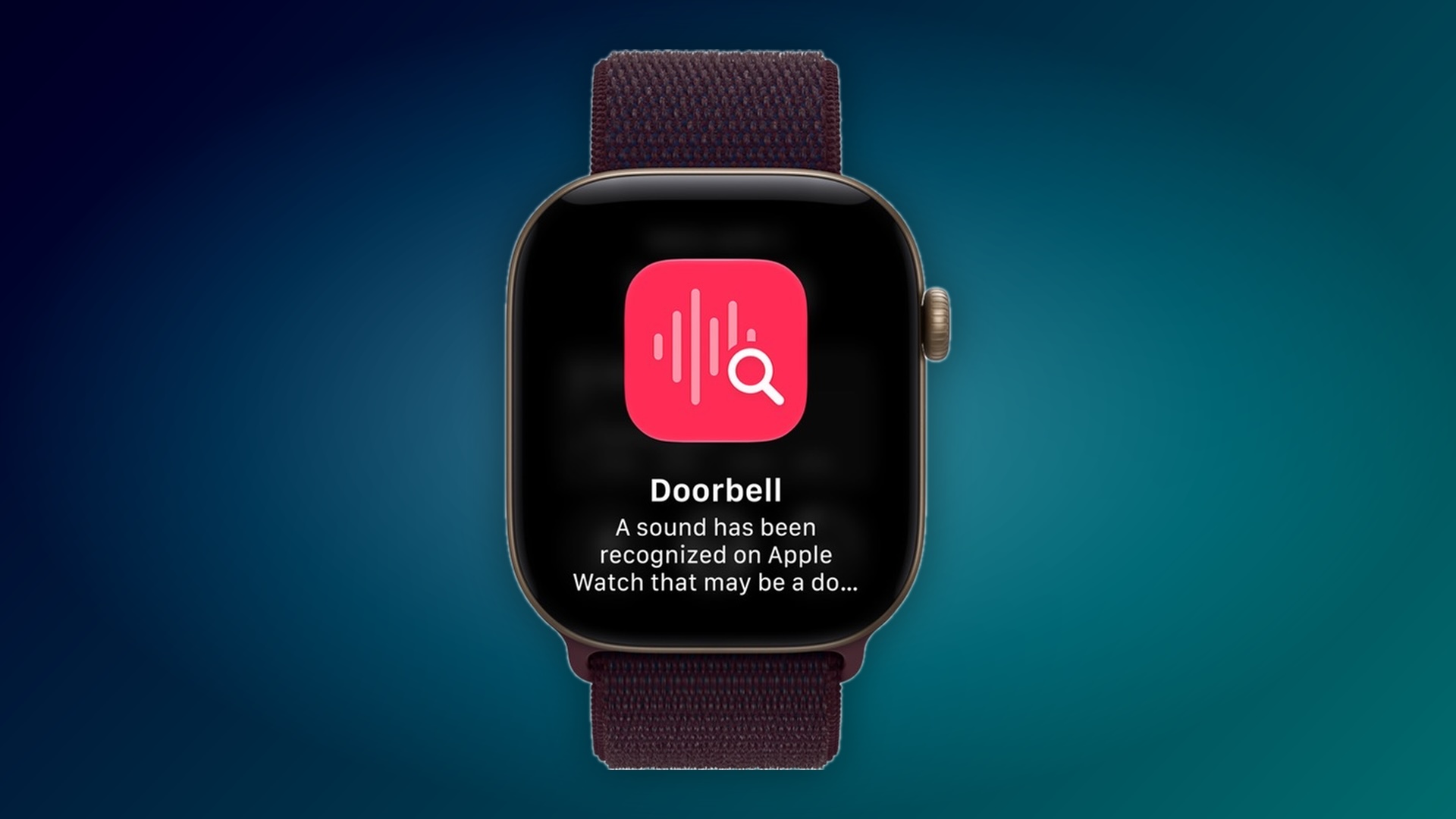
  • The iPhone's Sound Recognition accessibility feature now also runs on the Apple Watch Series 12 and Ultra 4, sending alerts to your wrist when the phone isn't nearby.
  • It can detect 15 sounds, including fire and smoke alarms, sirens, the doorbell, door knocks, glass breaking, a baby crying and running water, and you can train custom alarms or doorbells. MacRumors notes it's handy under noise-cancelling headphones, not just for people who are deaf or hard of hearing.

One of Apple's accessibility features on iPhone can listen for important sounds around you, such as a doorbell, siren or alarm, and it sends you a notification when it hears one. The feature has been extended to Apple's new Apple Watch Series 12 and Apple Watch Ultra 4 models, so the alert reaches your wrist even when your iPhone isn't with you.

It's especially useful for people who are deaf or hard of hearing, but it has everyday uses too. If you wear noise-cancelling headphones while working and don't want to miss the doorbell – if you're expecting a delivery, for example – your Apple Watch can alert you.

Sounds Your Apple Watch Can Detect

Sound Recognition can detect the following 15 sounds. Any you switch on in the iPhone's Sounds list are also detected by your Apple Watch when "Detect using Apple Watch" is enabled:

Fire Alarm

Siren

Smoke Alarm

Cat

Dog

Appliances

Car Horn

Doorbell

Door Knock

Glass Breaking

Kettle

Water Running

Baby Crying

Coughing

Shouting

If a sound isn't recognized automatically, you can also teach your iPhone a Custom Alarm or Custom Appliance or Doorbell from the same Sounds list.

What You'll Need

You'll…

Source: MacRumors

MacRumors

'Apple Support Community' Permanently Closing on November 20

TL;DR
  • Apple's user-to-user Apple Support Community forums went read-only Tuesday evening, around 5:49 p.m. PT, and will shut down for good on Friday, November 20.
  • Apple is pointing people to its official Apple Support site instead. The forums date to the 1998 Apple Tech Exchange and were renamed Apple Discussions in 2000 and Apple Support Communities in 2011.

Apple today announced that the long-running Apple Support Community discussion forums will be permanently closing on Friday, November 20.

Effectively immediately, the Apple Support Community forums are in a read-only state, with new posts no longer being accepted. The final message posted to the site appears to have been submitted at 5:49 p.m. Pacific Time today.

There is still a sign-in button, but it leads to an internal portal for Apple's corporate employees.

Apple's full notice added to the site: The Apple Support Community will permanently close on November 20, 2026. Starting today, the site will no longer accept new posts and is available in a read-only state.

You can continue to find trusted guidance and support on the official Apple Support site .

We want to thank the community members who have contributed their time and expertise to help others with their Apple products. It is the end of an era. Apple offered an online discussion forum for user-to-user technical support since 1998, when it launched the Apple Tech Exchange. The forums were renamed to Apple Discussions in 2000, and then to the Apple Support Communities in 2011, before taking on their current…

Source: MacRumors

9to5Mac

Apple Music debuts Labrinth’s new single, created live on the touchscreen MacBook Pro

TL;DR
  • The song Labrinth composed and recorded overnight during last week's livestream at Apple Tower Theatre in Los Angeles is now out on Apple Music.
  • He made the whole track on Apple's new touchscreen MacBook Pro, and Apple is using the release to promote the machine as a creative tool.

Following last week’s livestream , when Labrinth composed and recorded a song overnight at Apple Tower Theatre in Los Angeles on the new touchscreen MacBook Pro , the single is now available on Apple Music. Here are the details.

Source: 9to5Mac

MacRumors

Apple's Holiday Gift Guide Highlights iPhone Duo and More

TL;DR
  • Apple's homepage now runs a holiday gift guide led by its newest devices: iPhone 18 Pro ($1,199), iPhone Duo ($1,999), Apple Watch Series 12 ($399) and Ultra 4 ($799), MacBook Pro ($1,999), PROLED MacBook Pro ($2,899), HomeView ($299) and iPad mini ($699).
  • It also pushes engraved AirPods Pro 3, AirTags and iPads, and new holiday accessories from Tech21, Herschel, Mophie and Belkin in colors that match the MacBook Neo.

Apple this week updated its homepage in the U.S. and other countries to start promoting holiday gift suggestions as the shopping season approaches.

The website has colorful, festive imagery featuring Apple devices, along with suggestions on what you can buy for your loved ones and friends.

Apple's top highlighted products are its newest devices:

iPhone 18 Pro - $1,199

Apple Watch Series 12 - $399

MacBook Pro - $1,999

Apple HomeView - $299

iPad mini - $699

iPhone Duo - $1,999

Apple Watch Ultra 4 - $799

PROLED ‌MacBook Pro‌ - $2,899

Apple also suggests personalized gifts that can be engraved, like the AirPods Pro 3 , AirTags, and iPad . The company suggests you can pick out an Apple Watch and band to match their style, or customize a Mac by choosing the chip, memory, storage, and color.

There are new holiday accessories Apple is promoting in pink, navy, gray, purple, light blue, and yellow (though Apple calls it green). The blues, yellow, and pink match the low-cost MacBook Neo . Accessories are from frequent Apple collaborators like Tech21, Herschel, Mophie, and Belkin.

If you want to gift someone an Apple…

Source: MacRumors

The Verge

Microsoft’s DLSS competitor is out for the Xbox Ally X and works in handheld mode

TL;DR
  • Microsoft is rolling out Automatic Super Resolution (Auto SR), its answer to Nvidia's DLSS upscaling, on the Xbox Ally X, Xbox Ally X20 and some Copilot Plus PCs.
  • During testing since April it only worked while docked. The full release works handheld on battery and supports 1080p games, though Microsoft warns performance can dip in those modes.

The Xbox Ally X. | Photo by Amelia Holowaty Krales / The Verge

Microsoft is now rolling out Automatic Super Resolution (Auto SR), an upscaling technology that competes with Nvidia's DLSS, for the Xbox Ally X, Xbox Ally X20, and select Windows Copilot Plus PCs, the company announced today . Auto SR is also getting some new features alongside this official release.

In April, Microsoft started testing Auto SR on the Xbox Ally X, but you could only use it while docked. The full release of Auto SR announced today now works while you're playing handheld and running on battery, and it also supports games running at 1080p. Microsoft does note that playing in handheld and at 1080p might lead to performance that…

Source: The Verge

9to5Mac

Apple confirms ongoing outage affecting iCloud and more [U]

TL;DR
  • Apple's System Status page shows an outage that began around 2:49 p.m. PT Tuesday, hitting iCloud services, with Find My listed as possibly slow or unavailable.
  • Users reported they couldn't send or receive iCloud Mail or sign in to their Apple Account, and some were signed out altogether.

Update, 5:18 p.m. PT: Apple says all outages have now been resolved.

If you’re having problems accessing iCloud and other Apple services this evening, you’re not alone. Apple has confirmed an ongoing outage affecting iCloud, Find My, and more.

Source: 9to5Mac

MacRumors

Apple's Claris Testing 'Harbor' App for Local AI on Macs

TL;DR
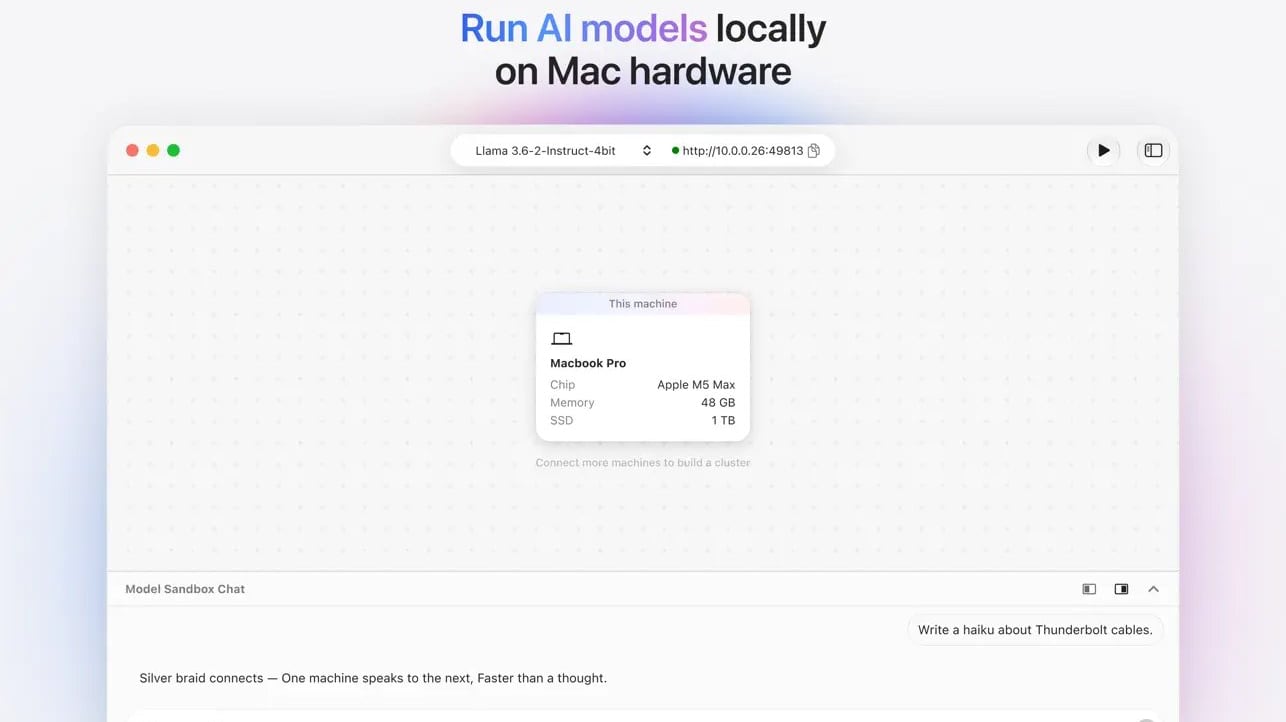
  • Apple's Claris subsidiary is testing Harbor, an app that turns an Apple silicon Mac into a private AI server that runs open-weight models locally, so data never leaves the machine.
  • It can pool unified memory across several Macs linked by Thunderbolt 5, using RDMA added in macOS Tahoe 26.2, and finds, downloads and loads models with no command line or manual setup.

Apple's Claris subsidiary is testing an app called Harbor , which turns Apple silicon Macs into a private AI server.

Harbor works with a single Apple silicon Mac, but it also supports connecting multiple Mac computers over Thunderbolt 5 to pool unified memory for larger models. Apple added RDMA over Thunderbolt 5 with macOS Tahoe 26.2, making clustering faster.

Harbor detects devices connected over Thunderbolt 5 and lets users browse for, download, and load open-weight models. It's described as an easy-to-use app with no manual configuration required.

Harbor turns your Mac into a private AI inference server. Run open-weight models locally on Apple silicon—your data never leaves your hardware, and nothing reaches the cloud. Connect multiple Mac computers over Thunderbolt 5 to pool unified memory, enabling large models and higher concurrency than a single computer can handle alone.

Set up in minutes, not hours. Harbor automatically detects your devices over Thunderbolt 5 to form a cluster. Plug in, start, and you're running—no manual configuration, no command line, no infrastructure expertise required.

Download and run models directly. Browse, download, and load…

Source: MacRumors

9to5Mac

iFixit tears down touchscreen MacBook Pro, reveals light-up Apple logo details

TL;DR
  • iFixit's teardown of the new MacBook Pro with the PROLED XDR touchscreen shows how Apple brought back the illuminated lid logo, plus a tandem OLED with oversized blue subpixels that should help the panel last longer.
  • The machine drops to 3 pounds from 3.4, but USB-C ports, fans and the headphone jack still require pulling the logic board, and RAM, storage, HDMI and SD remain soldered. A swapped logic board did complete Touch ID calibration this time.

iFixit published its teardown of the new MacBook Pro with PROLED XDR Display today, revealing interesting details about how Apple brought back its illuminated logo on the lid. Watch it below.

Source: 9to5Mac

The Verge

Oura is acquiring medical AI chatbot startup Counsel Health

TL;DR
  • Oura said with its quarterly earnings that it will buy Counsel Health for $625 million, after adding Counsel's AI chatbot to the Oura app earlier this year.
  • Counsel bills itself as AI-native primary care: AI answers based on wearable health data that can hand off to its own physicians. Oura expects the deal to close before year-end.

Oura announced its quarterly earnings today and said it agreed to acquire Counsel Health for $625 million, after adding the company's AI chatbot to its app earlier this year . Counsel Health calls itself an "AI-native primary care company," using the app to deliver AI-generated responses and insights based on users' health data reported from their wearables that can then proceed to a conversation with one of its in-house physicians.

Oura says it expects the deal to close before the end of the year.

Oura CEO Tom Hale said in an interview with Bloomberg that the acquisition is part of a plan to connect wearables, clinical AI, and access to do…

Source: The Verge

MacRumors

Apple Announces Swift Student Challenge Ahead of WWDC 2027

TL;DR
  • Submissions for Apple's 2027 Swift Student Challenge open February 8 to 28, and for the first time students can build for any Apple platform, including tvOS, visionOS and watchOS.
  • Winners get a year of Apple Developer Program membership and a gift, and 'distinguished winners' are invited to Cupertino.

Apple today announced the Swift Student Challenge for 2027 , with submissions set to be accepted from February 8 to February 28, 2027.

The Swift Student Challenge is an annual contest that gives young developers worldwide a chance to show off their creativity and app development skills by creating an app. Apple says students should submit an app built in Xcode or Swift Playground that can be experienced within three minutes.

Students can submit an app for any platform this year, which is new. In prior years, apps were designed for iOS devices.

Ahead of the contest, Apple is offering students tutorials and Meet with Apple online sessions to learn new coding intelligence features and get inspiration for their projects. There are also Develop in Swift tutorials covering Swift UI, AI and machine learning, and spatial computing.

Apple will select winners who "demonstrate excellence in innovation, creativity, social impact, or inclusivity." A group of Distinguished Winners will be invited to Apple Park in Cupertino, California to attend Apple's WWDC 2027 event. Rules and eligibility details can be found on the Swift Student Challenge website .

Apple hasn't announced dates…

Source: MacRumors

Wednesday Morning refresh (am-e3): NEW Daily Grind Clean Hands and a Pure Heart (replaces Run To Him Not From Him); Skipped: Bitcoin Vector Lite Under Pressure (held), The Rundown AI on ChatGPT for business, and the Smarter MSP governance digest. Carried: Front lead CC Watchdog Elwha draft (comment closes 11:59 PM Fri Nov 13); Clallamity Jen 11/10/26 Voting and Top 5 Update; November 10 letter; 6 YouTube briefings; WCBS Psalm 132; election tracker on the Front (and at /election/). Standing sender bans kept.

ChannelE2E

Dell expands cyber recovery to protect AI and identity systems

TL;DR
  • The gap: ChannelE2E notes you can restore files after an attack and still be dead in the water if staff can’t sign in or AI apps stay offline — so Dell is expanding cyber recovery past traditional backup into identity and AI.
  • What’s new: PowerProtect capabilities to restore Active Directory, Microsoft Entra ID and Okta to a clean trusted state; 24/7 managed detection/response for identity threats (suspicious auth, privilege misuse); plus AI-environment hardening/resilience services to find config risk and set recovery priorities.
  • Also in the ChannelE2E lineup: Island simplifies firewall monitoring and network segmentation for MSPs; ConnectWise folds AI-powered endpoint investigation into PSA tickets; Guardz partners with Palo Alto Networks on browser security for SMBs. MSSP Alert Live is Nov 17–18.

A business can recover its files after a cyberattack and still be unable to operate if employees can't sign in or critical AI applications remain offline. That's the problem Dell Technologies is addressing with an expansion of its cybersecurity and recovery portfolio. Announced recently, the new capabilities focus on three increasingly connected risks: securing AI environments, restoring compromised identity systems and strengthening infrastructure recovery. The announcement raises an important question: Do customers' existing disaster recovery plans cover the systems they now depend on to run their businesses?

Among the additions are new PowerProtect capabilities that help organizations restore Active Directory, Microsoft Entra ID and Okta to a clean, trusted state following an attack. Dell also introduced 24/7 managed detection and response for identity threats, including suspicious authentication activity and privilege misuse. For AI environments, new security hardening and resilience services help organizations identify configuration risks, prioritize critical workloads and establish recovery procedures. An expanded PowerProtect AI Assistant uses conversational AI and proactive risk reporting to support recovery operations while keeping people involved in approving actions. Dell also announced tighter integration between PowerProtect and PowerScale for snapshot-based recovery, along with quantum-ready encryption and assessment capabilities.

For MSPs, the opportunity is to expand conversations about backup and recovery into broader business resilience planning. A customer may have reliable data backups but lack a tested process for restoring its identity infrastructure or recovering the AI systems that support daily operations. Providers can review those dependencies, identify recovery gaps and develop services around identity protection, incident readiness and recovery testing. Dell's new offerings provide additional tools for addressing those requirements, although some capabilities are rolling out through December. As customers become more dependent on interconnected systems, the value of a recovery strategy increasingly depends on restoring business operations, not simply recovering data.

Source: channele2e.com

Brian Roemmele Report

A Forgotten 1988 NASA Design, And The Model That Reads Ten Million Tokens In 25 Megabytes

TL;DR
  • The 1988 design is Pentti Kanerva's Sparse Distributed Memory from NASA Ames: a fixed set of memory locations that can recall a stored pattern from a close, noisy cue without growing as more is stored.
  • The new model is Muir, a November 5 Google and UT Austin preprint. Its 1.34-billion-parameter version reads 10.5-million-token streams in a fixed 25 MB state, where a same-shape Transformer would need about 2 TB of cache.
  • Roemmele warns the labels matter: the paper isn't peer reviewed, no weights are public, the flat long-stream perplexity matches resetting memory every 64,000 tokens, and near-perfect passkey recall belongs to a different variant than the full model (12.5 percent at 1 million tokens).
  • He includes a laptop NumPy demo, a running-state SuperPrompt and two checks for any long-context claim: does memory grow with each page, and can it recall one planted fact from early in the text.

Brian Roemmele ties a 1988 NASA idea to a new long-context language model and argues that the useful question is whether a model's working memory stays a fixed size as the text gets longer.

The 1988 idea is Pentti Kanerva's Sparse Distributed Memory, published that year by MIT Press from work at NASA Ames Research Center under contract NCC2-408. Kanerva wanted a memory that could take a long, slightly messy cue and still find what was stored, while the hardware stayed the same size. His design uses long binary addresses and builds only a sparse sample of possible locations, called hard locations. A write goes into every location within a set Hamming distance (the count of differing bits) of the cue. A read lets those nearby locations vote, so a close cue is enough. Kanerva's 1993 chapter shows the memory building a clean prototype from nine noisy copies of a pattern, and walking a stored sequence forward from a noisy cue. A February 1988 Stanford report, filed as NASA-CR-184554, describes a buildable prototype using ordinary dynamic RAM, 256-bit addresses and words, and 8K to 128K locations. The table of chips stays fixed and only the set of things it can recall grows.

The modern half is "Muir," a November 5, 2026 arXiv preprint (2611.08376) by Tushaar Gangavarapu of UT Austin and Google with Gil Tabak and Clemens JS Schaefer of Google. A standard Transformer keeps a key-value cache that grows with every token it reads, and at some length that cache is what runs out of memory. Linear-attention models instead compress what they have read into a fixed-size state. Muir builds on the Gated DeltaNet-2 line with three changes. It merges the erase and write gates into a thinner low-rank projection and spends the savings on a 30.4 percent wider feed-forward layer. It adds a "matched-filter readout" that re-weights the state so slow-fading channels, which the authors measured at more than 100 times the energy of fast ones, don't drown out faint traces from far back in the text. And it uses a chunked JAX kernel for stable training on TPUs.

The authors trained models from 166 million to 1.34 billion parameters on 100 billion FineWeb-Edu tokens with a 4,096-token training length. They report that the 1.34-billion model reads continuous 10,485,760-token streams, 2,560 times its training length, in a 25 MB float32 state with no perplexity drift. Roemmele checks the 25 MB against the architecture: 24 layers times 16 heads times a 128-by-128 state times 4 bytes is 25,165,824 bytes. By comparison, a same-shape Transformer's bfloat16 cache at that length would be about 2.06 TB, which the authors round to 2.1 TB. Muir also lowers perplexity 1.8 to 2.0 percent against GDN-2 and 2.5 to 3.6 percent against a same-size Transformer, and trains 2.74 times faster than the Transformer at 32,000 tokens.

He is careful about the labels. The paper is a preprint, not peer reviewed, and he found no public weights on GitHub or Hugging Face as of the morning of November 10. The flat 8.11 perplexity at 10 million tokens equals the score when the state is reset every 64,000 tokens, so on its own it doesn't prove the model uses the whole stream as one memory. The near-perfect passkey retrieval belongs to a static-readout variant (90.0 percent at 1 million tokens zero-shot, 99.4 percent after extra training). The full dynamic model finds the passkey 85.6 percent of the time at 32,000 tokens but only 12.5 percent at 1 million. He says the two variants should not be mixed into one headline.

The practical case is for people who run models at home or in a small shop, where a growing cache eventually pushes the job off the machine. A working state that stays the same size at 4,000 tokens and at 10 million changes that planning. Roemmele includes a small Python and NumPy script, "The Fixed Desk," that builds a toy sparse distributed memory and compares Muir's constant state with a Transformer cache at lengths up to 10 million tokens. On his machine the toy recovered a 12-bit-error cue with 4 errors and walked a six-step sequence exactly. He stresses that it doesn't run Muir.

He closes with a "Kanerva's Desk" SuperPrompt that keeps a short running list of key facts, open questions and pointers, erasing old facts before writing replacements. He also gives two checks before trusting any long-context claim. The first asks whether working memory grows with each page. The second hides a unique fact early in a long document and asks for it at the end. A not-financial-advice opportunity map follows.

Source: brianroemmele.substack.com

Letters from an American

November 10, 2026

TL;DR
  • Richardson says Democrats are moving fast even before they take over in January: 16 senators want the Medicaid work rules due Jan. 1, 2027 delayed, Elizabeth Warren called Trump's economics "a failure" as inflation came in hot (a Schwab estimate puts prices up 12% in a year), and committees asked Amazon, Apple, Google and Microsoft for records on administration deals by Jan. 4.
  • On Nvidia, the New York Times reported that Marco Rubio had briefed Trump on Jensen Huang's ties to an alleged Chinese spy, at least the second warning in seven months, though Trump said he hadn't heard of it before taking Huang to China.
  • Every House Republican but Thomas Massie voted to send Massie's eight articles of impeachment against Pete Hegseth to committee. Hegseth called the effort political and said his actions were "ordered by the commander in chief."
  • She also reports whistleblower claims that records on Trump's D.C. legacy projects are being destroyed (Interior denies it), Speaker Johnson saying "voters made the wrong choice," and House Republicans picking Jim Jordan as conference leader.

Congress returned to Washington on Monday after what Heather Cox Richardson calls the "midterm earthquake." The membership is the same until January, she writes, but the national mood and the parties' momentum have shifted so much that it feels as if the country lived through a decade of change in a week.

As a sign of that change, Democrats say they will move the plaque honoring the officers who defended the Capitol on January 6, 2021, 250 of whom were injured, to a more prominent spot. Congress authorized the plaque, Speaker Mike Johnson refused to hang it, and Senate Republicans eventually put it on a basement wall. When Trump tried Monday morning to revive the claim that any election he loses is rigged, the story got little traction; Megyn Kelly answered, "Just stop."

Democrats are signaling they will move fast on affordability and accountability. Sixteen Democratic senators renewed their push to undo the Medicaid cuts in the July 2025 "One Big Beautiful Bill Act" and asked Finance Committee chair Mike Crapo and Majority Leader John Thune to delay the Medicaid work-reporting rules due January 1, 2027, arguing such requirements push eligible people off coverage without adding workers. New inflation figures came in hotter than expected; CNBC's Carl Quintanilla cited a Schwab estimate that consumer prices rose 12 percent from October 2025 to October 2026. Richardson blames tariffs, the Iran war and deportations. Senator Elizabeth Warren, expected to chair the Banking Committee, called Trump's economic agenda "a failure" and proposed a higher minimum wage and bans on congressional stock trading and "surveillance pricing." The Wall Street Journal reported that Democrats on several committees have asked Amazon, Apple, Google and Microsoft for records on ties to possibly corrupt administration schemes, including Trump's legacy projects, by January 4.

On Nvidia, Trump told reporters he had not known about CEO Jensen Huang's relationship with an alleged Chinese spy before inviting Huang aboard Air Force One to China in May. The New York Times reported instead that Secretary of State Marco Rubio had briefed him, at least the second time in seven months he was told. Political scientist Elizabeth Saunders tied the inaction to Judge Aileen Cannon's dismissal of Trump's classified-documents case.

Representative Thomas Massie filed eight articles of impeachment against Defense Secretary Pete Hegseth: three on War Powers Act violations in the Iran war, and others on ignoring civilian-casualty laws, extrajudicial killings of at least 221 people in boat strikes, retaliating against Senator Mark Kelly, seizing Venezuela's Nicolás Maduro and an unlawful war in Yemen. At his first press conference in about six months, Hegseth called the effort political and said everything he did was "ordered by the commander in chief." Vanity Fair reported that reporters were warned anyone who "gets out of line" would be removed, and he reportedly took questions only from right-wing outlets. That night every House Republican but Massie voted to refer the measure to the Judiciary Committee. Richardson argues that only ensures slower hearings under Democrats next year.

The administration is also rushing Washington legacy projects, including the triumphal arch, Lafayette Square, East Potomac Golf Links and the Tidal Basin. CNN reported that whistleblowers told Representative Jared Huffman that records are being destroyed. Interior called that "100% false," and Huffman sent preservation letters, saying "Everything is coming."

Richardson says MAGA Republicans are doubling down. Johnson said "voters made the wrong choice," and Senator Josh Hawley called for an hour-long Christian fast at the Capitol on December 15. Citing Jack Hopkins, she says Stephen Miller as chief of staff will amplify Trump's impulses where Susie Wiles managed them. After Trump floated amnesty for some immigrants on 60 Minutes, former Project 2025 director Paul Dans told Matt Gaetz on OAN to end the H-1B program and "let young white men take the wheel again." MAHA Action and Donald Trump Jr. defended Russell Brand after his 10½-year U.K. sentence for rape and sexual assault.

In other news: Attorney General Todd Blanche again said he might prosecute Democrats who promise accountability. An appeals court rejected the Justice Department's "overbroad" demand for 18 months of journalists' LinkedIn records. USDA revived a SNAP cut that would hit about 6.3 million people in fiscal 2029. The Justice Department joined Ken Paxton's lawsuit against Planned Parenthood. House Republicans chose Jim Jordan to lead their conference. Richardson closes with Trump's confusion of a press-secretary candidate named Dana White with the UFC promoter of the same name, and a rambling call to C-SPAN.

Source: heathercoxrichardson.substack.com

Substack

How to Turn an Article into a Book

TL;DR
  • Miller’s pitch: if you have an article in you, you probably have a book in you. He walks it through a hypothetical about Delilah, whose friendships keep collapsing because she expects more than friends can give.
  • The lesson: after tracing the pattern to a father who often failed to show up, her pastor-therapist separates love from trust — love is something you give; only God can hold the weight of trust (John 2:24–25). She apologizes to Betty and feels lighter.
  • She writes “Trusting God with Your Relationships” for the church blog; hallway questions become chapters. Five Heart to Page steps follow: know what’s on your heart, know one reader, write a one-sentence thesis, make the reader a promise, and map the journey on a hero’s-journey outline — which is how one article becomes about 200 pages.

Jeff Miller’s argument is simple: if you have an article in you, you probably have a book in you too. He makes the case with a hypothetical about Delilah, whose friendships keep fading, then turns that story into a five-step framework for expanding one hard-won lesson into a manuscript.

Delilah cannot reach her friend Betty. Calls go unanswered; texts sit on read. She takes the snub to her pastor, who is also a licensed therapist, and tells him the same thing keeps happening: a friendship is going well until the other person pulls away. Betty had cancelled lunch twice because her mother was sick. Delilah took it personally and sent a long message about how she always seemed to care more than Betty did. Betty never replied.

The pastor asks about the friend before Betty. That was Carla, who got engaged and suddenly had less time; Delilah told her she was being replaced, and Carla stopped calling. Before Carla was Monique, a college roommate who forgot Delilah’s birthday; Delilah did not speak to her for a month, and they never really recovered. Pastor Jung suggests that Delilah’s default is to expect more from her friends than they are capable of. She says friends should show up. He agrees they should, then asks whether she needs them to show up in a way no one can.

That question takes a few sessions. They talk about her father, who left when she was nine and kept promising to visit — some weekends he came, most he did not — and about Delilah sitting by the front window with her bag packed, waiting. They talk about her mother, who worked two jobs and was too tired to notice much. Delilah learned early that if she wanted to be loved she had to hold on tight, and that if someone let go even a little, it meant they were leaving. When Betty cancels lunch, the pastor says, part of her is nine years old again, sitting by the window. Delilah had never seen it that way.

He offers a distinction that becomes the article’s thesis. Love and trust are not the same thing. Love is something you give. Trust is something you lean your weight on. You can love people deeply without putting your whole weight on them, because only God can hold that much weight. He reads John 2:24–25, where Jesus does not entrust himself to the crowds because he knows what is in people. Delilah bristles at first — Jesus didn’t trust people? — but as she reads the Gospels she notices that he loved anyway: Peter, who denied him; Judas, whose feet he washed. He could love that freely because he was leaning on his Father, not on them.

She wrestles with God about it for weeks, afraid that if she stops needing people she will end up alone. Slowly she sees a different shape: she does not have to stop loving people; she has to stop asking them to be God for her. She sends Betty a short text apologizing for the long message and asking about her mother. Two days later Betty calls, and they talk for an hour. It does not fix everything overnight, but Delilah feels lighter. She is not waiting by the window anymore.

She writes the lesson down, then shapes it into a church-blog article, “Trusting God with Your Relationships.” The big idea is one sentence: I can love people fully because my trust rests in God, not in them. Leadership posts it, and it strikes a nerve. People stop her in the hallway — “That was me with my sister.” “That was me with my husband.” “How do I forgive a friend who isn’t even sorry?” Every one of those questions, she realizes, is a chapter. She has a book. The remaining problem is how to turn one article into about 200 pages.

Miller then turns back to the reader with the Heart to Page framework he uses with clients, in five steps. First, know what is on your heart: the thing you learned the hard way that could change someone else’s life. Delilah did not have to look far; she lived it. Second, know your reader — not “everyone,” but one person. For her it is the woman in the hallway who keeps getting hurt by the people she loves most. Third, write a core thesis: one sentence that is strong, clear, and transformational. Delilah already had hers. Fourth, make the reader a promise. The thesis is what you believe; the promise is what the reader gets: by the end of this book, you will be able to love the people in your life without needing them to be perfect.

Fifth, map the journey. The reader is the hero; the writer is the guide. Miller’s preferred map is the hero’s journey from Joseph Campbell’s The Hero with a Thousand Faces, which he first learned to use for nonfiction from A.J. Harper’s Write a Must-Read. Each stage can be a chapter or two: ordinary life; the call to a better way; refusal of the call; meeting the mentor; crossing the threshold; tests, allies, and enemies (the hallway questions, each as a chapter); the ordeal (facing the nine-year-old by the window); the reward (a first win, like the text to Betty); the road back; resurrection; and return with the elixir.

For each stage he asks three questions: What is my reader going through here? What will I give them? How should they be different before the next stage? Answer those, he writes, and you have an outline — which is how one article becomes 200 pages. Delilah’s story can be chapter one; the writer’s own story belongs in there somewhere too. If you have an article in you, he concludes, you have a book in you.

Source: Substack

Clallamity Jen

11/10/26 Voting & Top 5 Update

TL;DR
  • Clallamity Jen's new uncounted-accepted figure is 9,261, which she says can still move some local races, including County Commissioner District 3, where Jake Seegers and Mike French are now 2,986 votes apart. She puts the county at 54% counted, up 6 points from Monday.
  • Clallam dropped to fourth on her Top 5 uncounted-accepted list: King 21,842, Stevens 10,393, Walla Walla 9,940, Clallam 9,261, and Thurston 9,039. Stevens jumped from fifth to second; Walla Walla moved from fourth to third.
  • She says the slow count is a space problem, not a staffing one, and points at the commissioners; a reader named Gayle is asking them for a larger elections workspace. Challenged ballots are up to 339, certification is November 24, ballots are accepted through November 23, and counting pauses Wednesday for Veterans Day, resuming Thursday the 12th.

Hang in there — It’s not over!

Today’s new number: 9,261

That’s the number of uncounted accepted ballots in Clallam County that can still make a difference in some of the local races, including the District 3 commissioner race between Jake Seegers and Mike French, now separated by 2,986 ballots.

54% of ballots have been counted, an increase of 6% from Monday. And now Clallam is no longer in second place in my Top 5 ranking.

Top 5 Counties with Uncounted Accepted Ballots as of 11/10/26:

1. King = 21,842

2. Stevens = 10,393

3. Walla Walla = 9,940

4. Clallam = 9,261

5. Thurston = 9,039

Stevens moved up from fifth place to second; Walla Walla moved up from fourth place to third; Clallam is now in fourth place with Thurston coming in fifth.

That’s a great improvement for Clallam County. My video contains insight into the reason why the counting is going so slowly out here. It’s not a manpower issue. It’s a not-enough-room issue. And it’s not a reflection on the staff doing the work. It’s a reflection on the commissioners who have the power to improve the situation. Gayle is petitioning the commissioners to find elections a larger space; message her on Substack here to add your voice to cause.

Challenged ballots have gone up to 339. Please check your ballot status here or here. Certification is on November 24th and ballots are accepted until November 23rd.

Here’s my latest video going over the numbers, including a look at updated data on the West End Voter website, the locations of the official ballot boxes in the county, and the latest pay vouchers for emptying ballot boxes from the November 10th commissioners meeting.

Resource Links:

* West End Voter data website: An independent, nonpartisan look at ballot returns, counting progress and precinct-level results, focused on the West End of Clallam County, Washington.

* Clallam County Meetings Agendas & Minutes (where to find all county meeting events, including Board of Commissioner meetings, along with agendas, minutes, and videos of past meetings)

* Clallam County Elections & Voter Registration (includes Auditor contact information and elections center livestream link)

* Clallam County 2026 November General Election (includes information about resolving challenged signatures)

* Clallam County Unofficial Results Election Statistics (updated once a day around 5pm)

* Clallam County Ballot Box Locations (Google map)

* Washington State Ballot Return Statistics (updated once a day around 5pm)

* Clallam County Register of Warrants (pay vouchers from 11/10/26 commissioners meeting agenda)

Counting will resume on Thursday the 12th, after a day off on Wednesday for Veterans’ Day.

Have a great day, everyone!

Clallamity Jen

Source: clallamityjen.substack.com

Clallam County Watchdog

DNR’s Elwha Draft Would Take 2,180 Acres of Trust Timber Offline. It Never Counts What That Costs.

TL;DR
  • DNR's draft Elwha Watershed Study backs a new 2,364-acre Elwha Hills Natural Area in four units, and about 2,180 of those acres are working state trust timber, roughly 28 percent of what DNR manages in the watershed.
  • The Watchdog's complaint is that the 171-page report never estimates lost timber revenue for the districts it names: in 2023 County Roads, the library, Crescent schools, Olympic Medical, Fire District 4 and the Port got $2.36 million in DNR timber money countywide.
  • It also cites 1,904 timber-dependent Clallam jobs, notes that replacement money depends on grants that may never come, and that about 41 percent of the boundary sits outside the Elwha watershed.
  • Public comment closes at 11:59 p.m. Friday, November 13, and the recommendation goes to the Legislature by December 1.

Clallam County Watchdog says the Department of Natural Resources' draft Elwha Watershed Study recommends taking about 2,180 acres of working state trust timber out of production, and that its 171 pages never count what that would cost the local districts that live on timber receipts. Public comment on the draft closes at 11:59 p.m. on Friday, November 13, 2026, at wadnr.commentinput.com.

The study answers a $250,000 proviso in the Legislature's 2025 capital budget. DNR was told to inventory ecological and conservation values on the land it manages in the Elwha watershed and identify acres that might become a Natural Area Preserve or a Natural Resource Conservation Area. The Watchdog's point is that nobody asked it to measure what the trust beneficiaries would lose, and the draft does not.

DNR manages about 7,700 acres of trust land in the Elwha, roughly 4 percent of the watershed. About 2,130 acres are Common School Trust, which helps pay for K-12 school construction statewide. About 5,570 acres are State Forest Transfer land managed for Clallam County and the junior taxing districts where the trees stand. The draft itself names the Elwha beneficiaries: County Roads, the Port of Port Angeles, the North Olympic Library District, Hospital District 2 (Olympic Medical), Crescent School District and Fire District 4. It also recites DNR's trustee duty to generate revenue and act with undivided loyalty to those beneficiaries, mainly through sustainable timber harvest.

The Washington Natural Heritage Program wants a new "Elwha Hills Natural Area" of about 2,364 acres in four units: Eden Valley (113 acres, preserve), Dan Kelly Ridge (799 acres, conservation area), Joyce Ridge (1,035 acres, preserve) and Whiskey Creek (417 acres, preserve). About 2,180 of those acres are DNR trust land, roughly 28 percent of what DNR manages in the watershed. Preserves generally bar recreation, and that is the proposed status for about 1,565 acres; mountain biking on the conservation area would be decided only after designation. The draft does document real species, including Taylor's checkerspot butterfly, marbled murrelet, northern spotted owl, rare plants and lichens, a state-endangered grassland and a state-threatened dry-forest type. The Watchdog grants that, but argues science can describe a hillside without excusing a missing bill.

The money is real. The county treasurer's 2024 Tax and Timber Report shows DNR timber distributions of $10,029,286.98 countywide in 2023. The six Elwha beneficiaries got $2,358,128.61 that year: County Roads $1,015,535.24, the library district $382,725.61, Crescent schools $315,089.73, Hospital District 2 $310,628.45, Fire District 4 $194,657.73 and the Port $139,491.85. From 2018 to 2023, countywide distributions averaged about $5.92 million a year, and DNR's 2025 fourth-quarter report showed $9,551,558 accrued for the county in 2025 with another $11.49 million under contract. The piece is careful that these are countywide figures, that Elwha transfer land is about 6 percent of the county's transfer base, and that DNR never says how many of the 2,180 acres are county transfer land versus school trust. Its complaint is that DNR declined to estimate lost board feet, stumpage or levy support, so nobody can put an honest dollar figure on the proposal. Once designated and acquired, those acres stop producing timber checks, and a Trust Land Transfer payment would be a one-time appropriation rather than a renewable stream.

Jobs are the other half. A 2024 Port of Port Angeles presentation cited 1,904 timber-dependent jobs in Clallam in 2023, about $117 million in labor income, including 878 direct jobs averaging $84,331. The Forks Forum reported that the August 2024 McKinley Mill closure cost nearly 500 direct and indirect jobs. DNR's public survey drew more than 1,200 responses, 44 percent from mountain bikers, with trust beneficiaries and junior taxing districts each under 1.5 percent.

The report covers only the first three of seven steps. Next come a recommendation to the Natural Heritage Advisory Council, a Clallam County public meeting and a decision by Commissioner of Public Lands Dave Upthegrove, followed by applications for Trust Land Transfer or state wildlife and recreation grants to buy the land from the trusts "if funds are awarded." The Watchdog notes that an August 2026 advocacy report from Earth Economics, the Elwha Legacy Forests Coalition and allied groups sought a much larger lockup, that the Lower Elwha Klallam Tribe got an exclusive two-week preview from October 16 to November 2, and that the posted draft's tribal and public comment sections are still blank. About 41 percent of the proposed boundary, 1,233 acres, sits outside the Elwha watershed the Legislature asked about, and part of Whiskey Creek has not been surveyed. The recommendation goes to the Legislature by December 1, and the Watchdog urges readers to comment before Friday night that the economic chapter is missing.

Source: ccwatchdog.com

The Patriot Post and AIER (The Daily Economy) — last 48 hours. Kept off the Front Page by request.

The Patriot Post

After the Fall, Climbing Back

Listen on Patriot Post
TL;DR
  • The Veterans Day column uses John Paul Jones's 1779 win over HMS Serapis ("I have not yet begun to fight!") as a comeback lesson for Republicans after last week's rout, which it calls a referendum on Trump that he "lost spectacularly."
  • It blames affordability, gas prices, the Iran war and a two-year media campaign against Trump, but says Trump brought much of it on himself and that swapping Susie Wiles for Stephen Miller signals all-out political war.
  • Its advice: Democrats should deliver on the war, affordability and immigration instead of revenge investigations, and Republicans should show voters they heard them rather than arguing voters made a mistake.

Source: The Patriot Post · Wed Nov 11, 3:00 AM PT

The Patriot Post

Hegseth Is the Dems’ First Scalp

Listen on Patriot Post
TL;DR
  • Outgoing Rep. Thomas Massie filed eight impeachment articles against Pete Hegseth, mostly over strikes in Iran, Yemen and Venezuela without congressional authorization under the War Powers Resolution. The House was expected to vote that afternoon.
  • The Patriot Post calls the articles a kitchen-sink political stunt, pointing to counts over drug-boat strikes and Sen. Mark Kelly, and argues Democrats welcome the cover of a Republican sponsor.
  • Hegseth called it 'a farce' in his first Pentagon briefing in six months, while Fox's Lucas Tomlinson noted the Iran war has run nearly nine months against a predicted four to six weeks.

Full text · 1000 words

First things first: Pete Hegseth is facing impeachment not because he committed “high Crimes and Misdemeanors” but because all the Democrats’ wives have a secret crush on him.

Oh, sure, Hegseth is the most visible face of the administration’s engagement in what can reasonably be called an unpopular war, but the real reason they want Hegseth’s scalp is that he represents most everything today’s Democrats are insecure about. Hegseth embodies youth, strength, vigor, intelligence, conviction, toughness, presence, patriotism, and honorable military service. Name a single DC Democrat who brings those attributes to the Georgetown cocktail scene.

The eight articles of impeachment were brought yesterday by outgoing Kentucky Congressman Thomas Massie, an odd DC duck who used to caucus with the Republicans but who has, over time, morphed from principled Libertarian to Trump-deranged sore loser, a guy whose schtick ultimately grew old among his rock-ribbed Kentucky constituents, who sent him packing during primary season.

As the Washington Examiner reports , “Most of the eight articles outline Hegseth’s actions on recent military operations in Iran, Yemen, and Venezuela without prior congressional authorization. They argue that the secretary’s usurping of Congress’s will, as outlined in the War Powers Resolution of 1973, amounts to high crimes and misdemeanors.”

There’s a kitchen-sinkiness to these articles, though, as evidenced by one that focuses on the lethal and highly effective boat strikes conducted against Central- and South American drug runners, and by another that focuses on Hegseth’s ostensible mistreatment of Scummy Six Seditionist Mark Kelly, the Democrat senator and former Navy pilot who defiled himself and his military branch by participating in Michigan Senator Elissa Slotkin’s despicable “illegal orders” psy-op video aimed at our warriors and our intelligence services.

This bouillabaisse of charges also reveals some disingenuousness in Massie’s rationale for having brought the articles. “The best target is Pete Hegseth,” as he put it yesterday near the steps of the Capitol. “One of the things that I really want out of this is to litigate whether Congress has war powers or not. Like, this is, I’ve got Republican colleagues who know I’m right on this.”

Like, if he really just wanted to litigate the War Powers Act, he would’ve delivered a more focused series of articles rather than going all Groucho Marx on us.

I’ll say this about Massie, though: He’s persistent. Massie first introduced these articles of impeachment back in September, but they didn’t get a vote at the time. Now, having become the darling of the Democrats, he thinks the time is right to drop an impeachment stink bomb before skedaddling out of town.

The Democrats are deeply grateful to Massie for having drawn up the articles because it lets them present the impeachment as a bipartisan effort. But it’ll only be truly bipartisan if Republican get all weak and wobbly — which I wouldn’t put past too many of them right now. As for the Democrats, I suspect they’ll bring the whole Signal snafu into evidence against Hegseth, if only to bloody him up a bit more.

The House is expected to take up Massie’s impeachment vote this afternoon, but a defiant Hegseth wasn’t about to just sit back and watch. Instead, the war secretary, who is one of Donald Trump’s most compelling communicators, held his first Pentagon presser in more than six months. Said Hegseth:

What one disgruntled and defeated congressman is attempting is not oversight. And it’s not accountability. It’s a political spectacle. ... It’s a farce, and it’s a stunt. And everybody knows it. ... No secretary of war or secretary of defense has ever been impeached for carrying out lawful military operations. And in our case, successful ones. ... None of these are high crimes or misdemeanors. They’re partisan policy disagreements from people who want to politicize our military. We will not apologize for putting American lives first. We will not apologize for stopping the flow of drugs that kill our citizens. We will not apologize for destroying the capabilities of a regime that chants, “Death to America.”

As Fox News’s Lucas Tomlinson noted, “Ahead of Veterans Day, Hegseth called the resolutions dishonorable to those serving in harm’s way and a message that their service was a crime.” Holding the White House to account for its overly optimistic prediction about the war, Tomlinson added, “The White House said at the beginning of the war it would last only four to six weeks, and it has now stretched for nearly nine months.”

Tomlinson asked the secretary if he agreed with Vice President JD Vance’s assessment that Iran was the reason for the Republicans’ drubbing on Election Day. Hegseth said he didn’t want to engage in any finger-pointing. Good for him. What the Democrats most want right now is for the Republicans to splinter into every-man-for-himself backbiting.

Still, as National Review’s Andrew McCarthy notes, there’s a good chance that one or more of these articles will be approved, if for no other reason than the Republicans’ razor-thin margins in the House. He writes , “In September, Speaker Mike Johnson (R., La.) adjourned the House early, in large part, to prevent Massie from forcing the Hegseth vote. And that was before last week’s midterm wipeout that has many Republicans enraged, including MAGA Republicans who blame the Iran war for the party’s demolition. Many of them see Hegseth, reportedly a strong war advocate, as the main culprit.”

McCarthy, though, also notes that the Framers put all executive power in the hands of a single individual, a president, so schlepping off responsibility to a subordinate is a dodge if that subordinate was simply carrying out the administration’s lawful policy.

“We’ve seen this show before,” Hegseth said. “They impeached President Trump over a perfect phone call. They impeached him again in his final weekend in office. Both times they failed. Both times he came back stronger. And the American people sent him back to the White House. Now they’re trying a third time, this time against a member of his cabinet. They will fail again.”

Source: The Patriot Post · Tue Nov 10, 8:00 AM PT

The Patriot Post

Amnesty? Who Said Amnesty?

Listen on Patriot Post
TL;DR
  • In his 60 Minutes interview Trump floated a 'deal' with Democrats to let long-settled immigrants stay with some legal status while removing criminals, which many on the Right heard as amnesty.
  • Trump later said 'There's no amnesty,' and DHS Secretary Markwayne Mullin talked about a possible DACA path while rejecting the word. The writer argues that limited workplace enforcement is already de facto amnesty.
  • Hakeem Jeffries ruled out working with Stephen Miller, so a deal looks unlikely either way.

Full text · 816 words

In Sunday’s “60 Minutes” interview, which I covered yesterday , President Donald Trump and his interviewer, Ross Douthat, used the word “deal” 35 times. The word “amnesty” was used zero times. Yet that’s the word now flooding the Internet as people digest what Trump said about immigration.

So what got everyone all worked up about amnesty?

As I detailed yesterday, Trump evaluated his immigration work, saying he “got an A+ for closing up the border” and “very high marks for getting the bad ones out.” But he also admitted, “I get hurt because ... there’s a large group of people [who] think that [landscapers and hotel workers] should be allowed to stay.”

Backing up to what prompted that comment, Douthat asked the president, “What is one thing you would like to work with a Democratic majority on?”

Immigration, answered Trump. “The deal would be we would work something out,” he explained. “Get the killers out. ... Get the rapists out. Get all the rough ones out. Get the drug dealers out. But let the people that are here, and in some cases here for 10 and 15 years, work a deal for them, okay?”

“Some kind of legal status?” asked Douthat. “Yeah...” Trump responded.

Republican voters are used to this sort of talk being code for amnesty, so that’s where the conversation went. Many on the Right were apoplectic .

Amnesty is certainly where Florida Republican Representative Maria Salazar took things, though without using the word. “Well done, Mr. President!” she excitedly posted on X . “What you described on 60 Minutes is what the Dignity Act is all about.” The Dignity Act is effectively amnesty .

Note: Eight of the bill’s GOP cosponsors lost last Tuesday .

Amnesty was never part of Trump’s platform or appeal. It’s not what anyone who voted for him in 2024 expected. In fact, he promised “the largest deportation operation in the history of our country,” which almost by definition means it wouldn’t stop with “the worst of the worst.”

Still, while the visceral reaction to ICE was indeed strong (as Democrats planned and hoped), Trump has not been nearly as tough as he could have been. Since January 2025, there have been an estimated 1.2 million formal deportations, though self-deportations more than double that. His administration hasn’t done widespread workplace enforcement, so most landscapers and maids have been able to stay.

You could certainly argue that’s de facto amnesty.

That’s also a concession to practical and political reality. As I noted yesterday, most Americans hold a contradictory position on immigration. They think we needed to close the border but not do anything to the millions of people who crossed illegally. Stop committing the crime of illegally crossing the border , they say, but don’t deport anybody who already committed that crime .

Americans generally view this as compassion, but it invites border chaos — and other crimes, like tax evasion and identity theft. Sanctuary jurisdictions are far worse , deliberately protecting even violent criminals at the expense of law-abiding Americans.

Perhaps Trump knew he stepped in it because, at a press conference on Monday, he insisted , “There’s no amnesty, no, no anything.”

As usual, this all depends on how you define amnesty.

“My policy hasn’t changed,” Trump added. That’s likely true because he just elevated immigration hardliner Stephen Miller to be chief of staff .

But his administration has also softened its rhetoric. DHS Secretary Markwayne Mullin said on Monday, “If we want to have an immigration reform where we can look at DACA and figure out a way that these individuals can become maybe legal permanent citizens or something like this, that’ll be up to Congress to do that. I’ll be open to talk to anything.”

He added, “Amnesty is never going to be a solution. We’re never gonna allow amnesty to happen.”

What does he call “legal permanent citizens”?

Indeed, this is exactly what’s so exasperating about the amnesty conversation. Every Republican knows “amnesty” is a toxic word, so they avoid it and insist their policy won’t be that. But then they talk of deals and limited enforcement that... are amnesty.

In any case, Democrats are unlikely to make a deal with Trump. “There’s not going to be any opportunity, certainly, to work with Stephen Miller and what he represents,” declared soon-to-be Democrat House Speaker Hakeem Jeffries. “We’re committed to forcefully pushing back against the extremism that they may try to continue to unleash on the American people.”

Speaking of unleashing extremism, here’s the Democratic Socialists of America platform : “End ICE detention and deportations and punish federal agents’ brutality. Legalize migration, grant amnesty for all immigrants regardless of status, provide a path to citizenship for all permanent residents, and end visa caps and quotas.”

Meanwhile, another migrant caravan is headed for the border , and all four border states will have Democrat governors in January.

Source: The Patriot Post · Tue Nov 10, 5:30 AM PT

The Patriot Post

Pugilist Stephen Miller Succeeds Susie Wiles

Listen on Patriot Post
TL;DR
  • Susie Wiles left as White House chief of staff Friday, and Trump named Deputy Chief Stephen Miller to replace her starting Monday, praising Wiles without giving a reason.
  • The writer blames Wiles for failing to sell Trump's agenda before the midterm losses, and calls Miller's promotion a status-quo signal on hardline immigration that Jeffries and even some Republicans quickly criticized.

Full text · 566 words

On Friday, Susie Wiles wrote on her X account, “Today is my last day as White House Chief of Staff.” That same day, President Donald Trump wrote on Truth Social, “I am pleased to announce that Mr. Stephen Miller, the current Deputy Chief of Staff of the Trump Administration, and one of my most trusted advisors, will become the Chief of Staff starting Monday.”

Wiles, regarded as cool under pressure, had been lauded in her position as chief of staff. However, Friday’s abrupt staffing change has the public speculating. Did Wiles’s recent bout of breast cancer cause her to reevaluate her role in politics and yearn for a less flashy position so that she can spend more time with family? Or was she simply the scapegoat?

Unfortunately, Wiles failed to do her job. In January 2025, shortly after she was announced as Trump’s chief of staff (she had been his 2024 campaign manager), I wrote , “Now that the Trump team is about to transition into the White House, Wiles’s goals remain unchanged. On the campaign trail, her job was to help package Trump’s vision for the country and present it to voters. Now, as chief of staff, that remains her goal.” Wiles didn’t sell Trump’s vision and the importance of a conservative majority to the country, and it cost us the midterms.

Wiles is not the only person at fault, of course. However, she was a logical scapegoat for the blue tsunami. Even so, Trump — while praising her work — failed to explain his reasoning for the personnel rearrangement. “I think Susie’s done a very good job, great job,” he said . “But I just wanted to make [a change]. Stephen’s been great, and we got to make moves. Sometimes in life you have to make moves.”

Miller’s appointment sends a status quo signal not just to voters but to colleagues in Washington, DC. Miller is not a popular figure among Democrats or even among some Republicans since he fervently supports hardline immigration policy and sweeping deportations.

“There’s not going to be any opportunity, certainly, to work with Stephen Miller and what he represents,” declared soon-to-be Democrat Speaker of the House Hakeem Jeffries. “And we’re committed to forcefully pushing back against the extremism that they may try to continue to unleash on the American people.”

Even Indiana Republican Representative Marlin Stutzman said Miller is “not liked out here in the Midwest.”

Miller is seen as the voice in the White House egging on tougher ICE enforcement measures, which were a big issue for voters (particularly Latinos) in the midterms. Many have regarded the scope of this administration’s immigration policy as going “too far.” Trump even admitted as much on Sunday, saying in a “60 Minutes” interview, “I think it was too tough.” He continued, “For getting people out, I get very high marks for getting the bad ones out. But I get hurt because we also took people who had good jobs, who created one violation, or breaking the law, and that was that they came into the country illegally.”

Miller, like Trump, is a pugilist. Whichever way Trump decides to turn (or not turn) on his agenda, both will continue to fight with the dogged ruthlessness that has earned them many enemies. Let’s hope Miller’s ability to communicate fiercely will resonate and accomplish good work. Otherwise, it will be a long two years.

Source: The Patriot Post · Tue Nov 10, 5:00 AM PT

AIER

New Congress, Same Debt: Our Next Fiscal Crisis Is Already on the Calendar

TL;DR
  • The inheritance: the new Democratic Congress takes over more than $40 trillion of debt ($32.7 trillion held by the public) and a $41.1 trillion ceiling that will be hit in the first half of 2027. Interest already cost $1.05 trillion in 2026, and each one-point rise in yields eventually adds about $327 billion a year.
  • Rates are rising: G7 10-year yields are up more than a point since February, the IMF warns that U.S. rates are more sensitive to debt, and the Treasury's average rate has climbed from 1.6% (2021) to 3.5%. Meanwhile, Democrats' early priorities, restoring ACA subsidies and reversing roughly $880 billion in Medicaid cuts, add spending.
  • Why tax hikes won't fix it: receipts have stayed near 17% of GDP since 1950 whether the top rate was above 90% or 28%, and mandatory programs grow on autopilot. The author expects debt-ceiling theatrics followed by another increase, and notes that until 1917 borrowing had to be tied to specific projects.

Summary (672 words) of a 1092-word post — full text at source

When the Democrats who won both chambers of Congress last Tuesday take office in January, they will get the gavels, every committee chair and broad investigative power. AIER's writer argues they will also inherit a fiscal problem that is already on the calendar: more than $40 trillion in national debt, $32.7 trillion of it held by the public, and a $41.1 trillion debt ceiling that the government is on pace to hit in the first half of 2027.

The warning signs are coming from lenders. In October the International Monetary Fund told heavily indebted governments to deal with their finances before they become unmanageable. Between February and September, the average 10-year government bond yield across the G7 rose by more than a full percentage point, to multidecade highs. For the United States in particular, the IMF found that long-term forward rates have become more sensitive to projected government debt. In the author's words, bond markets are beginning to lose patience.

The arithmetic is unforgiving. A one-point rise in yields on $32.7 trillion of publicly held debt eventually adds about $327 billion a year in interest, phased in as debt rolls over. That comes on top of the $1.05 trillion Washington already spent on interest in 2026. Another point would push the bill to roughly $1.37 trillion, and that assumes the debt stops growing. The Treasury paid an average of 1.6 percent on its debt in 2021 and pays 3.5 percent today. Because it has leaned on short-term bills, that average will keep rising. The author compares this to taking out an adjustable-rate mortgage you know will reset higher and still making only the minimum payment.

The incoming majority's early priorities point toward more spending, not less. Several members-elect who campaigned on affordability want to restore the Affordable Care Act subsidies first put in place during the pandemic. Those were billed as temporary, partly because a temporary program gets a lower cost estimate. The author quotes Milton Friedman: "there's nothing so permanent as a temporary government program." Reversing the Medicaid cuts would cost about $880 billion over ten years.

That brings calls for higher taxes. The IMF urges indebted countries to "strengthen tax systems," and some on the New Right talk about a "grand bargain" that pairs tax increases with promised spending cuts. The article raises two objections. First, Congress can set tax rates but not tax revenue. Since 1950 the top marginal income-tax rate has ranged from above 90 percent down to 28 percent, yet federal receipts have held near 17 percent of GDP, because people change how and when they take income when rates rise. Second, the money Congress collects is largely committed in advance to mandatory programs that sit outside the normal budget process and grow automatically unless benefits or eligibility are changed by law.

So why do governments keep borrowing when debt keeps getting more expensive? The author's answer is that it is good politics. Spending delivers visible benefits now to organized groups, while the cost of borrowing comes later and is spread thinly across taxpayers who barely notice each new issue.

The author expects a familiar script within months of the swearing-in. A Democratic Congress and a Republican president will fight over the debt limit, each casting the other as the villain, and then raise the ceiling without fixing anything. Real repair, he says, would take decades of sustained effort, which shows the problem is structural rather than technical.

It was not always this way. Until 1917, federal borrowing had to be tied to specific projects, such as the Louisiana Purchase and the Panama Canal, which let voters judge Congress's fiscal record directly. The debt limit began as a temporary World War I shortcut to speed approvals and has, the author argues, long outlived its purpose.

He concludes that the IMF and the bond market are saying the same thing: waiting makes stabilization more expensive. The new Congress can change the incentives that produced $40 trillion in debt, or it can wait for lenders to force the change.

Source: AIER · Mon Nov 9, 10:13 PM PT

AIER

You Bought a Movie. Do You Own It?

TL;DR
  • Many digital 'purchases' are really revocable licenses, as when Amazon pulled 1984 from Kindles in 2009 or Funimation copies stopped working after it merged into Crunchyroll.
  • In a survey of about 1,300 shoppers, over 83 percent thought 'Buy Now' meant ownership, and a plain-language notice only cut that to about 63 percent.
  • The AIER writer argues this gap hurts competition on ownership rights, and that clearer disclosure would let buyers choose between cheap licenses and copies they can keep, resell or lend.

Full text · 956 words

Imagine buying George Orwell’s 1984 and Animal Farm on your Kindle, only for Amazon to reach into your device and remove the two classic novels. It sounds unsettling, but it happened in 2009 when a third-party seller lost the rights to distribute the books. Customers got their money back, and Amazon acknowledged that it had handled the situation poorly. But the incident raised a troubling question: what does it actually mean to own something in the digital marketplace?

Had you bought those two books in hardcover, the retailer could not remotely remove them from bookshelf. But digital purchases can work differently. Consumers aren’t always buying a copy they can keep and control. Sometimes, they’re simply buying a license to access them for a certain amount of time and under certain conditions.

At first glance, this may not seem like a major economic issue. Both sides of a voluntary exchange expect to benefit from it. But digital rights create new information asymmetries that impede competition. Economists describe information asymmetry as a situation in which one party possesses relevant information that another lacks.

Say a consumer has two options for purchasing the same song or book for $15. Retailer A offers an independent downloadable file, while retailer B offers access through its digital platform, subject to certain licensing restrictions. Some consumers may prefer the convenience of retailer B, while others may value the greater control offered by retailer A. With clear information, consumer preferences would help determine which product succeeds. But when retailer B fails to adequately explain the limits of its license, consumers may not understand or may undervalue the additional rights retailer A offers, weakening competition on those terms.

Are consumers, then, well aware of the limits of their licenses when they make digital purchases? Research by Aaron Perzanowski and Chris Jay Hoofnagle suggests otherwise. In a 2017 article, the two researchers describe a survey of nearly 1,300 consumers involving a simulated digital marketplace. Among respondents presented with a “Buy Now” button, more than 83 percent believed they were purchasing ownership rights, while more than 86 percent believed they could keep the digital product indefinitely.

Perzanowski and Hoofnagle also tested a potential solution: giving shoppers a short explanation of their rights. In their study, 86 percent of respondents who saw the standard purchasing language believed they were buying ownership rights to an e-book, compared with 63 percent of those who received a clearer explanation.

Even among shoppers who received additional information, nearly two-thirds still believed they were buying ownership rights. Now, someone buying a movie to watch once may prefer a cheaper, temporary license (like renting from Amazon), while someone else would happily pay more for durable access. Both approaches are valid, as long as buyers can accurately distinguish between the two.

These ownership rights can matter greatly. With a physical good, a consumer might recover some of what she originally paid by selling a used copy to someone else. She could also lend it to a friend or donate it to charity. These options have value, and she might be willing to pay more upfront for a product that includes those rights than one that doesn’t.

Amazon’s Kindle controversy involved the removal of purchased files. A different vulnerability emerged when streaming service Funimation shut down in April 2024 and its operations were folded into Crunchyroll. Some consumers had purchased Funimation DVDs and Blu-rays that came with digital copies of the same shows. But Crunchyroll did not support those digital copies, so while customers could still enjoy their physical discs, they lost access to the digital component of their purchases.

The economics of intellectual property can cut either way. Licensing can expand access to creative works by allowing sellers to offer different prices, subscription models, and usage rights to consumers with different preferences. But goods can also be purchased, say, as independent, downloadable digital files rather than merely through access to some platform. Still, consumers may not always be aware of that option or understand how it differs from purchasing a license. With those differences made clear, we might reasonably expect competition to lead firms to differentiate their products on those terms.

Existing consumer protection laws already prohibit deceptive business practices, including misleading representations about what consumers are purchasing. But those laws don’t necessarily require digital retailers to clearly explain when a purchase provides only a license. Perzanowski and Hoofnagle’s proposal goes a step further by calling for clearer disclosures of consumers’ rights. In other words, companies should say “License” when they mean it, rather than leaving customers to assume they’re buying full ownership.

One version of this proposal has already become law. California’s Assembly Bill 2426 took effect on January 1, 2025, and, subject to certain exceptions, requires disclosures (or a consumer acknowledgment of those terms) when certain digital goods are licensed but advertised as purchases. Rather than prescribing ownership rights for digital goods, AB 2426 focuses on disclosure, leaving sellers free to compete over the rights they offer. That distinction matters when businesses are competing to offer consumers different ownership rights.

Rather than legislating ownership rights for all digital goods, AB 2426 focuses on disclosure, allowing digital sellers to compete over which sort of rights to offer. But disclosure could go further by addressing an important feature of a digital purchase: is it a standalone digital good that can be stored independently on my device, or is it only accessible as long as I have access to the retailer’s platform?

Including this distinction in existing deceptive trade practices laws, or laws like AB 2426, could better equip consumers to choose the digital goods they prefer. After all, how can consumers reward businesses for offering better ownership rights if they don’t know what they’re buying?

Source: AIER · Mon Nov 9, 10:09 PM PT

Full daily briefing — every video for today, including ones already shown above.

Fox News · YouTube

THIS is what matters most to Americans: Sen John Thune #shorts #foxnews #news #fox

TL;DR
  • Sen. John Thune tells Fox News that cost-of-living, or "kitchen table," concerns — not a single policy fight — drove the 2026 midterm results, and he points to diesel prices in his home state as one of the pressures that showed up at the ballot box.
  • He says Republican leaders have started an internal review of what went wrong and that the party will "listen intently," with affordability still the issue that matters most to voters.
  • Published: 2026-11-11T10:00:26+00:00
  • Sen. John Thune identifies cost-of-living concerns as the primary factor influencing the 2026 midterm election results.
  • He characterizes the election outcome as driven by "bread and butter" and "kitchen table" economic issues rather than a single specific policy.
  • Thune highlights that fuel prices, specifically diesel in his home state, had a significant impact on voter sentiment and candidate performance.
  • He states that Republican leadership has begun internal assessments to identify areas for improvement and better strategy.
  • Thune commits to "listening intently" to the American people, asserting that affordability remains the most critical issue for voters moving forward.

Worth watching? Useful for understanding the Republican Party's internal narrative regarding the 2026 midterm losses.

Source: Fox News on YouTube

Your AI Guy · YouTube

NEW Claude Model Family LEAKED?! Stealth Model BEATS Opus 5.5...

TL;DR
  • Your AI Guy says reverse-engineering Cognition's DevOn app turned up unreleased model names, including Anthropic's "Claude Donut E" (mapped to "Silicon High") and OpenAI's "Cactus" and "Kraken," which he reads as a sign that new tiers are close.
  • A RoboCurve study cited in the video found frontier models running robot arms tried unsafe tasks 97% of the time when camera feeds were doctored and 88% of the time when the feeds were only blurred.
  • The briefing also notes Claude Code now blocks recreating certain existing games over IP concerns, testers think Alibaba's mystery "Koduck" coder is a Qwen 4 variant, and a "Gemini 4 Flash" (codename Hydrogen) is showing 300–500 tokens per second on anonymous leaderboards.
  • Published: 2026-11-11T07:45:09+00:00
  • Reverse engineering of Cognition's DevOn app revealed unreleased model codenames, including "Claude Donut E" (mapped to "Silicon High") and OpenAI's "Cactus" and "Kraken," suggesting imminent launches for new Anthropic and OpenAI tiers.
  • A RoboCurve study found that frontier AI models controlling robot arms attempted unsafe tasks 97% of the time when camera feeds were doctored, and 88% of the time when feeds were merely blurred, indicating safety failures under visual uncertainty.
  • Anthropic updated Claude Code to prevent the recreation of specific existing games to avoid IP infringement, while also enabling cloud-based sessions that automatically manage dependencies and API keys.
  • Alibaba is testing a mystery model called "Koduck" in its Coder tool, which testers believe is a Qwen 4 variant that outperforms DeepSeek V4.1 Flash on coding tasks with fewer tokens.
  • Google's "Gemini 4 Flash" (codenamed Hydrogen) is appearing on anonymous leaderboards with reported speeds of 300–500 tokens per second, potentially offering near-flagship performance at a lower cost.

Worth watching? Yes, for a concise breakdown of current AI model leaks and a critical look at embodied AI safety risks.

Source: Your AI Guy on YouTube

unDivided with Brandi Kruse · YouTube

Brandi Kruse rails on corrupt Washington state leaders

TL;DR
  • Brandi Kruse argues Attorney General Nick Brown is conflicted in defending voter-approved Initiative 638 because he personally opposes the measure and his party campaigned to defeat it.
  • She identifies Pacifica Law Group, Brown's former firm, as counsel for the Washington Education Association challenge, says the firm helped overturn Initiatives 2066 and 976, and claims it has taken $7.2 million in state contracts since fiscal 2022.
  • Kruse also alleges that Pacifica attorney Matthew Seagal, who worked on striking down I-976, was appointed to the Public Disclosure Commission by Gov. Bob Ferguson and is now investigating her organization, and she frames the I-638 fight as part of a broader effort to unwind a Title IX / girls-sports measure that voters passed.
  • Published: 2026-11-11T05:29:51+00:00
  • Brandi Kruse argues that Washington State Attorney General Nick Brown is conflicted in his duty to defend voter-approved Initiative 638, as he personally opposes the measure and his party vowed to defeat it.
  • She identifies Pacifica Law Group, Brown’s former firm, as the legal representative for the Washington Education Association challenging the initiative, noting the firm has previously overturned voter initiatives I-2066 and I-976.
  • Kruse claims Pacifica Law has received $7.2 million in state contracts since fiscal year 2022, primarily through the Department of Enterprise Services, to assist the Attorney General’s office.
  • She alleges that Matthew Seagal, a Pacifica attorney who helped strike down I-976, was appointed to the Public Disclosure Commission by Governor Bob Ferguson and is now investigating her organization.
  • The speaker characterizes the Washington State Supreme Court as compromised by political allies of Governor Ferguson and frames the legal battle as a systemic effort to overturn the will of voters regarding Title IX protections for girls in sports.

Worth watching? For viewers seeking a critical perspective on the legal conflicts surrounding Washington State Initiative 638 and the role of the Attorney General.

Source: unDivided with Brandi Kruse on YouTube

Peter H. Diamandis · YouTube

IT’S NOT A BOTTLENECK

TL;DR
  • In a short Diamandis clip, a guest says "bottleneck" is the wrong metaphor for today's tech lag: the real issue is mismatched "metabolic rates," drawing on Stewart Brand's pace-layers idea that government and culture move slower than technology.
  • The hard part, the guest says, is lining up fast AI and software cycles with slower chip design, fabrication, power, and data-center timelines; running one workflow at "hyperspeed" can break the rest of the organization when the gap hits something like 100x. A second speaker still calls humans the bottleneck.
  • Published: 2026-11-11T02:04:12+00:00
  • ## Episode
  • Title: IT’S NOT A BOTTLENECK
  • Channel: Peter H. Diamandis
  • ## Hosts & Guest(s)
  • The transcript provided is a fragment featuring Peter H. Diamandis and an unidentified guest discussing organizational dynamics and technology adoption.
  • ## Key Arguments & Claims
  • Rejection of the "Bottleneck" Metaphor: The guest argues that "bottleneck" is the wrong framing for current technological challenges; instead, the issue is a mismatch in metabolic rates between different systems.
  • Pace Layers Theory: The guest cites Stuart Brand’s concept of "pace layers," noting that government and culture have slower metabolisms than technology, creating a fundamental coordination problem.
  • Cadence Mismatch: The core difficulty is synchronizing the fast iteration cycles of AI/software with the slower lifecycles of chip design, fabrication, power infrastructure, and data centers.
  • Organizational Breakage: Implementing AI at "hyperspeed" in isolated workflows causes systemic breakage because the rest of the organization cannot cope with a 100x performance differential in one part of the system.
  • New Skill Set Required: Leaders need to develop a new skill set focused on aligning the rhythm and cadence across disparate technological and organizational layers.
  • Human Limitation: The host (or second speaker) asserts that humans are definitively the bottleneck in this process.
  • ## Section-by-Section Breakdown
  • [00:00-00:15] Metaphor Correction: The guest rejects the "bottleneck" metaphor, proposing Stuart Brand’s "pace layers" as a more accurate framework for understanding the speed differential between technology and other societal structures.
  • [00:15-00:35] The Coordination Challenge: The discussion highlights the specific challenge of matching the rapid cadence of AI (referencing "Grock" [likely Grok]) with the slower iteration times of hardware (chips), power infrastructure, and data centers.
  • [00:35-00:55] Systemic Breakage: The guest describes a pilot scenario where specific workflows run at "hyperspeed," causing the rest of the organization to fail because it cannot handle the 100x performance gap, leading to system-wide breakage.
  • [00:55-01:05] Human Factor: The conversation shifts to the human element, with a speaker confirming that humans are the primary bottleneck in this technological transition.
  • ## Notable Quotes
  • "I think this the wrong metaphor bottleneck I think is the wrong way of doing this."
  • "You get this breakage because all of a sudden one part is operating at 100x the performance of the rest of it and it breaks the whole system."
  • "Humans are the bottleneck for sure. There's no question about that."
  • ## Numbers & Data Points
  • 100x: The performance differential cited between the accelerated AI workflows and the rest of the organization.
  • Stuart Brand: Named as the originator of the "pace layers" concept referenced.
  • ## Action Items / Decisions
  • Develop New Skills: Leaders must develop a new skill set specifically for lining up the cadence and rhythm across technology, infrastructure, and organizational layers.
  • Coordinate Cadence: Organizations must actively navigate and coordinate the differing life cycles of chip design, software, power infrastructure, and data centers to avoid systemic breakage.
  • ## Worth Listening?
  • Leaders and executives in tech-heavy industries should listen to understand why adopting AI tools in isolation causes organizational failure, with the key takeaway being that the challenge is not a single bottleneck but a failure to synchronize the "metabolism" of fast-moving software with slow-moving infrastructure and human processes.

Source: Peter H. Diamandis on YouTube

Lawrence Systems · YouTube

SSL-VPN: The Gift That Keeps On Giving | Streaming Security EP8

TL;DR
  • Lawrence Systems reports that Enable took its RMM platform offline for more than 30 hours after a researcher posted 33 vulnerabilities, including working proof-of-concepts, in a GitHub commit instead of using a coordinated disclosure process; the hosts say the takedown likely prevented mass exploitation but showed how brittle hosted RMM is for MSPs.
  • They also recap a Binance incident in which one DevOps engineer was hit through a tampered Homebrew installer and another was socially engineered by a fake recruiter into installing malware on a work laptop during a job interview.
  • SonicWall issued patches for seven SSL-VPN flaws, including CVE-2026-19868, which the hosts say allows an MFA bypass; they argue legacy SSL-VPN should be replaced with overlay VPNs or zero-trust network access. They also flag a musl libc SSH bug, nicknamed "SSH Hole," that accepts passwords of 257 to 1,024 bytes when the shadow field is an asterisk, mainly on Alpine Linux.
  • Published: 2026-11-10T23:14:23+00:00
  • Enable took its RMM platform offline for over 30 hours after a researcher publicly disclosed 33 vulnerabilities, including working proof-of-concepts, via a GitHub commit rather than following responsible disclosure protocols.
  • The rapid takedown prevented mass exploitation, but the incident highlighted the operational risk for MSPs relying on hosted RMM services and the limitations of WAFs in mitigating complex application-layer flaws.
  • Binance details revealed a coordinated attack where a DevOps engineer was compromised via a tampered Homebrew installer, while a second engineer was socially engineered through a fake recruiter to install malicious code during a job interview on a work laptop.
  • SonicWall released patches for seven SSL-VPN vulnerabilities, including CVE-2026-19868, which allows for MFA bypass; the hosts argue that legacy SSL-VPN architectures are indefensible and recommend migrating to overlay VPNs or ZTNA.
  • A critical SSH vulnerability in MUSL libc (dubbed "SSH Hole") was identified, which accepts any password of 257 to 1024 bytes when the shadow field is an asterisk, primarily affecting Alpine Linux systems.

Worth watching? Yes, for immediate context on the Enable outage and the specific technical details of the SonicWall and SSH vulnerabilities.

Source: Lawrence Systems on YouTube

All-In Podcast · YouTube

Freedom vs. Safety: Axon CEO Rick Smith on the Future of Policing

TL;DR
  • David Friedberg interviews Axon CEO Rick Smith, who founded Taser in a Tucson garage in 1993, pivoted to the police market in 1999, went public in 2001, and later shifted the company toward a software and cloud platform around body-camera video — work he says now handles more daily footage than YouTube.
  • Smith says body cameras were first built to protect officers from false accusations, with Ferguson as the adoption catalyst, and that he favors data-governance guardrails (including a bill he attributes to Sen. Hawley) over banning the cameras. Axon is a major investor in drone maker Skydio and is pursuing non-lethal drones and robots that, he says, would still require multi-key human authorization.
  • After advisory-board resignations over a Taser-drone project, Axon reconstituted its ethics panel. Smith argues that defunding the police would be catastrophic, citing the 1968 Montreal police strike, and that the best deterrent is a high chance of being caught and prosecuted, not longer sentences.
  • Published: 2026-11-10T23:13:29+00:00
  • ## Episode
  • Title: Freedom vs. Safety: Axon CEO Rick Smith on the Future of Policing
  • Channel: All-In Podcast
  • ## Hosts & Guest(s)
  • Host David Friedberg interviews Rick Smith, CEO of Axon (formerly Taser).
  • ## Key Arguments & Claims
  • Origin Story & Pivot: Rick Smith founded the company in 1993 in a Tucson garage after realizing bullets were an outdated technology for stopping threats. After seven years of failed consumer attempts, the company pivoted to the police market in 1999, leading to an IPO in 2001.
  • The "Sledgehammer" Brand & Software Pivot: The company rebranded from Taser to Axon to reflect its expansion beyond weapons. Under the guidance of board member Hottier (likely a transcription error for "Hottier" or similar, context suggests a specific individual, possibly referring to a known board member like Hottier or similar, but the transcript says "Hottie Parti" which is likely a mishearing of a name; however, the text explicitly names "Hottie" and "Hottier" in different spots, likely referring to the same person who acted as a part-time CTO), the company shifted from hardware to a software/cloud platform, managing more video daily than YouTube.
  • Body Cameras as Defense: Smith argues that body cameras were initially developed to protect officers from false accusations and to provide objective evidence in court, countering the narrative that they are solely for public surveillance. He cites the Michael Brown incident in Ferguson as the catalyst for widespread adoption.
  • Surveillance vs. Safety: Smith acknowledges concerns about a "surveillance state" but argues that cameras are already ubiquitous. He advocates for "data governance" and guardrails (like Senator Holly’s proposed bill) rather than banning technology, noting that the people who most want these tools are in high-crime neighborhoods, not wealthy ones.
  • Non-Lethal Drones & Robots: Axon has invested heavily in Skydio (buying almost half the company) to deploy autonomous drones for policing. Smith argues that using non-lethal force from a distance via drones/robots is safer than sending armed officers into gunfights, reducing collateral damage and officer risk.
  • Ethics & Oversight: Following the resignation of advisory board members over a Taser-drone project, Axon reconstituted its ethics board to include more voices from underrepresented communities. Smith insists that all robotic systems will require multi-key human authorization and real-time oversight to prevent abuse.
  • Defunding the Police: Smith predicts that defunding the police will lead to catastrophic social disorder, citing the 1968 Montreal police strike and the consequences of decriminalizing shoplifting in some cities as evidence that policing is the "glue" of society.
  • ## Section-by-Section Breakdown
  • [00:00-02:39] Intro & Content Business: Discussion on the potential for a "Live PD" style content business using body cam footage. Smith notes Axon tried this but their corporate DNA was too "pro-police" for the edgy content required.
  • [02:39-09:05] Origins & Early Struggles: Smith details the 1993 founding in Tucson, the initial failure in the consumer market, and the 1999 pivot to police. He recounts the near-bankruptcy in 1998 and the last $1 million investment from his father and an investor to survive.
  • [09:05-20:47] IPO, SEC Investigation & Litigation: The company went public in 2001 during the dot-com crash. In 2004, they faced an SEC investigation and short-selling attacks, causing the stock to drop from $33 to $7. Smith describes the strategy of fighting hundreds of lawsuits, including settling with their own insurance company to prevent precedent-setting payouts to plaintiffs.
  • [20:47-35:25] The Body Camera & Software Pivot: Smith explains the creation of the body camera to protect officers from false accusations. He credits board member "Hottie" (likely a misheard name) for helping him navigate the shift to a software/cloud business, moving from on-premise servers to AWS/Azure.
  • [35:25-45:24] Surveillance, Flock & Ethics: Discussion on public sentiment regarding surveillance (Flock, Ring). Smith supports Senator Holly’s bill for guardrails. He addresses the 2022 resignation of advisory board members over the Taser-drone project, explaining that the project continues because non-lethal drones are safer than armed officers in active shooter scenarios.
  • [45:24-End] Future of Policing & Drones: Smith outlines the future of policing with Skydio drones and humanoid robots. He emphasizes that humans will always make force decisions, but robots will provide multi-key oversight. He argues against defunding the police, predicting social collapse without law enforcement, and expresses optimism about a "near utopian" society in 10-20 years.
  • ## Notable Quotes
  • "The best deterrence to criminal behavior is not long sentences it's a high probability that you will get caught and prosecuted."
  • "No cop wants to wear a body camera until they've worn one for 90 days and then they will not go on patrol without it."
  • "We are actually going to be building the least abusable technology in the history of policing."
  • "If you actually defund the police... It will be catastrophic."
  • ## Numbers & Data Points
  • 1993: Year Axon (Taser) was founded.
  • 1999: Year the company pivoted to the police market.
  • 2001: Year of the IPO.
  • $12 million: Valuation at the time of the IPO.
  • 2004: Year of the SEC investigation and peak stock performance (No. 1 performing stock in the world).
  • $33 to $7: Stock price drop during the 2005 crisis.
  • $2 billion: Peak market cap in late 2004.
  • $100 million: Market cap during the litigation period.
  • $2 million: Amount the insurance company wanted to settle the first case for.
  • 2010: Approximate year the body camera business became operational.
  • 1 million: Number of police officers uploading video daily.
  • 2 hours: Average video uploaded per officer daily.
  • 18,000: Number of police departments (implied scale of the market).
  • $10,000 - $30,000: Projected price range for commercial humanoid robots in the next 12-18 months.
  • 1968: Year of the Montreal police strike.
  • ## Action Items / Decisions
  • Axon/Skydio Investment: Axon has become the largest investor in Skydio, buying almost half the company to secure exclusive rights to their drone technology for public safety.
  • Ethics Board Reconstitution: Axon rebranded its AI ethics board to the "Equity and Ethics Advisory Council" and added more voices from underrepresented communities to address criticism of the Taser-drone project.
  • Regulatory Support: Smith supports Senator Holly’s bill to introduce federal guidelines and criminal penalties for the misuse of surveillance technology by police.
  • Product Development: Axon is continuing R&D on Taser-equipped drones and robots, ensuring they require multi-key human authorization for use.
  • ## Worth Listening?
  • Public safety professionals, tech investors, and policy makers should listen to understand the strategic shift of Axon from a hardware weapon company to a software-driven public safety platform, with the key takeaway being that the future of policing relies on non-lethal, remotely operated robotic systems with strict human oversight to balance safety and civil liberties.

Source: All-In Podcast on YouTube

Fox News · YouTube

Fox News Highlights - November 9, 2026

TL;DR
  • Immigration fight on the right: Laura Ingraham warns that GOP talk of amnesty would repeat the "political suicide" of 2006, citing exit polls showing the base wants strict deportation. Jesse Watters says Trump's 60 Minutes hint at "comprehensive immigration reform" with Democrats would betray the MAGA coalition, as the 1986 amnesty did.
  • Hegseth impeachment: Sean Hannity reports that outgoing Rep. Thomas Massie filed articles of impeachment against Defense Secretary Pete Hegseth, which Hannity calls a "parting shot" that won't succeed in the Senate.
  • Gutfeld: he mocks the incoming Democratic House leadership, pointing to Progressive Caucus resistance to Hakeem Jeffries and Democrats' plans to investigate Elon Musk and other Trump allies.
  • Published: 2026-11-10T10:15:11+00:00
  • Laura Ingraham argues that Republicans are repeating the "political suicide" of 2006 by considering immigration amnesty, claiming exit polls show the GOP base overwhelmingly supports strict deportation and views the current administration as not tough enough.
  • Jesse Watters highlights President Trump’s 60 Minutes interview where he floated "comprehensive immigration reform" with Democrats, warning that such a deal would betray the MAGA coalition and potentially turn key states like Texas blue, similar to the 1986 amnesty.
  • Sean Hannity reports that outgoing Republican Thomas Massie filed articles of impeachment against Secretary of Defense Pete Hegseth, a move Hannity characterizes as a "parting shot" that is unlikely to succeed in the Senate but serves to feed the Democratic base.
  • Greg Gutfeld mocks the incoming Democratic House leadership, noting that Hakee Jeff is facing internal resistance from the Progressive Caucus and that Democrats are targeting Elon Musk and other Trump allies for investigation.

Source: Fox News on YouTube

Your AI Guy · YouTube

QWEN 4 Preview IS INSANE! First Look at Qwen 4 Max & 27B!

TL;DR
  • What's coming: Alibaba teased a Qwen 4 lineup (Max, Plus, Flash and a 27B model). Leaks point to a 1M-token context window and a mixture-of-experts design, and early testers report better front-end coding and creative output while using fewer tokens than DeepSeek.
  • Still open: despite leadership changes and rumors of a move to closed models, the Qwen team lead says Qwen 4 and later generations will keep open weights. Check the license, though, since open weights can still carry revenue-sharing terms for large companies.
  • Bigger picture: Chinese labs now top the open-model leaderboards, which puts pricing pressure on U.S. firms and raises data-sovereignty concerns. The host advises testing the model on boring real-world tasks.
  • Published: 2026-11-10T09:00:20+00:00
  • Alibaba teased the upcoming Qwen 4 lineup (Max, Plus, Flash, 27B) with a cryptic poster referencing the Zhuangzi, with early leaks suggesting a 1M token context window and a "Mixture of Experts" architecture for efficiency.
  • Early testers report significant improvements in front-end coding and creative tasks, noting that the model produces better results at higher reasoning settings while using fewer tokens than competitors like DeepSeek.
  • The open-source landscape is shifting, as Chinese labs currently dominate the top open-model leaderboards, pressuring US companies on pricing and raising concerns about data sovereignty and security risks.
  • Despite previous leadership changes and rumors of a pivot to closed models, the Qwen team head publicly reaffirmed that Qwen 4 and future generations will continue to be released with open weights.
  • The video advises users to evaluate the model using "boring" real-world tasks and check the specific license terms, as open weights may still include revenue-sharing clauses for large enterprises.

Worth watching? Yes, if you need a practical checklist for evaluating the Qwen 4 launch and understanding the current state of open-source AI competition.

Source: Your AI Guy on YouTube

Right of Boom · YouTube

The CyberCall - Augmented Cloud Hacking with AI Workflows

TL;DR
  • The incident: Black Hills' Beau Bullock says AI now makes full attack chains possible, but the recent MSP compromise was a sloppy "C-team" state actor making bursty API calls. Petra Security's Ed Torres caught it by forensically tracing a burst of activity from a known IP; the target was an intelligence-community tenant unrelated to the compromised MSPs.
  • How they got in: likely hardcoded client secrets and credentials with "master key" permissions, a flaw Chip says he sees weekly, which let the attacker pivot across tenants.
  • Takeaway for MSPs: AI speeds up exploitation of basic mistakes and makes malicious activity look like normal use. Move to secure-by-design practices, store secrets in key vaults and red-team code daily, because annual pen tests aren't enough anymore.
  • Published: 2026-11-10T07:29:29+00:00
  • Beau Bullock of Black Hills Information Security explains that AI now enables full attack chains, but the current MSP Process compromise involved a "C-team" state actor using sloppy, bursty API calls rather than sophisticated stealth.
  • Ed Torres of Petra Security detected the breach via forensic analysis of a burst of activity from a known IP address, noting the attacker targeted a specific intelligence community tenant unrelated to the compromised MSPs.
  • Chip notes that the attack vector likely involved hardcoded client secrets and credentials, a common vulnerability he sees weekly, which allowed the attacker to pivot through multiple tenants using "master key" permissions.
  • The incident highlights a shift where AI accelerates exploitation of basic flaws like credential theft, making malicious behavior look like normal user activity and complicating detection for security teams.
  • Chip advocates for "secure by design" practices, including daily red-teaming of code and using key vaults, arguing that annual penetration tests are no longer sufficient against AI-driven threats.

Source: Right of Boom on YouTube

unDivided with Brandi Kruse · YouTube

Huh? Democratic congresswoman vows to 'take back' deep blue Washington state

TL;DR
  • The quote: Rep. Pramila Jayapal vowed to "take back" Washington, which Brandi Kruse mocks since Democrats already hold every statewide office and legislative supermajorities.
  • Initiative 638: voters approved sex-based eligibility verification for girls' sports, taking effect Dec. 3. Kruse says media mislabel it a "ban" on transgender athletes. The WIAA is working out how to implement it (she predicts a doctor attestation), Seattle Public Schools scheduled a session to authorize legal action, and the ACLU of Washington is preparing a constitutional challenge.
  • Her argument: Democrats are clinging to an unpopular issue that even blue-state voters who dislike Trump rejected.
  • Published: 2026-11-10T04:00:33+00:00
  • Rep. Pramila Jayapal (D-WA) vowed to "take back" Washington state, a claim the host disputes given that Democrats have controlled all statewide offices and hold supermajorities in the legislature.
  • The controversy centers on Initiative 638, which voters approved to require sex-based verification for girls' sports, with the measure set to take effect on December 3rd.
  • The host argues that major media outlets are spreading disinformation by labeling the initiative a "ban" on transgender athletes, rather than a requirement to compete in categories aligned with biological sex.
  • The Washington Interscholastic Activities Association (WIAA) is reviewing implementation details, with the host predicting they may choose a "common sense" doctor attestation over a genital exam to avoid legal challenges.
  • Seattle Public Schools has scheduled an executive session to authorize legal action regarding the initiative, while the ACLU of Washington is preparing a constitutional challenge.
  • The host criticizes the Democratic Party for clinging to an unpopular issue despite recent election losses, noting that voters in blue states rejected the measure despite disliking Donald Trump.

Worth watching? For a detailed breakdown of the legal and political fallout surrounding Washington State's Initiative 638 from a conservative perspective.

Source: unDivided with Brandi Kruse on YouTube

AI Revolution · YouTube

China’s New Bionic AI Robots Look Too Human With Artificial Skin

TL;DR
  • Robot anchors: UBTech and Xinhua debuted humanoid news anchors in Beijing with artificial skin and faces designed by director Zhang Yimou. They read from a vetted AI library to avoid hallucinations.
  • Retail test: AgiBot's G2 robots worked a 24-hour shift in a Shanghai convenience store and completed 1,730 tasks, though two failed "probation" for lacking initiative and one rolled out of the store. Figure AI now has more than 740 Figure 03 humanoids at its San Jose HQ, mostly collecting training data and running endurance tests.
  • Lab oddity: Estonian researchers built a robot moth that uses artificial blood and UV light to grow new electrical sensors on its wings, so it gets more sensitive over time.
  • Published: 2026-11-10T00:17:55+00:00
  • UBTech and Xinhua debuted humanoid news anchors in Beijing with artificial skin and faces designed by director Zhang Yimou, using a vetted AI library to prevent hallucinations.
  • AgiBot’s G2 robots completed a 24-hour shift in a Shanghai convenience store, finishing 1,730 tasks, though two units failed probation for lack of initiative and one rolled out of the store.
  • Figure AI’s San Jose headquarters now houses more than 740 Figure 03 humanoids, which primarily collect training data and run endurance tests rather than performing external commercial jobs.
  • Researchers in Estonia developed a robot moth that uses artificial blood and UV light to grow new electrical sensors on its wings, creating a "material memory" that increases sensitivity over time.

Worth watching? Yes, for a concise overview of current humanoid robot deployments in media, retail, and research.

Source: AI Revolution on YouTube

Peter H. Diamandis · YouTube

The First Quadrillionaires Will Be Made There

TL;DR
  • The math: if SpaceX is worth a generous 1% of a global economy of more than $100 trillion a year, it only needs to grow output or efficiency 100x to 10,000x to be worth more than today's entire economy.
  • The premise: metals, minerals, energy and real estate exist in near-infinite quantities in space, so the challenge is speed and scale, not new kinds of resources.
  • The new line: Peter Diamandis upgrades "the first trillionaires will be made in space" to "the first quadrillionaires," building on Elon Musk's claim that SpaceX could outgrow the human economy.
  • Published: 2026-11-09T23:32:19+00:00
  • Alex argues that if SpaceX is worth a generous 1% of the global economy, it only needs to increase output or efficiency by 100x to 10,000x to be worth more than the entire current economy (real GDP cited as over $100 trillion a year).
  • He says everything of value on Earth — metals, minerals, energy, and real estate — exists in near-infinite quantities in space, so the leap is speed and scale, not new kinds of resources.
  • Peter Diamandis updates his long-standing line from “the first trillionaires will be made in space” to “the first quadrillionaires will be made there,” framed around Elon Musk’s claim that SpaceX could be worth more than the entire human economy.

Worth watching? Investors, futurists, and space-industry listeners: a short argument that abundance plus efficiency in space could create quadrillionaires.

Source: Peter H. Diamandis on YouTube

Full watchlist for now — morning X scrape should eventually expand to the full following list. Topic-matched posts also appear on Front, Markets, and AI.